Memory.10: Kuro and the Divine Child of Rejuvenation
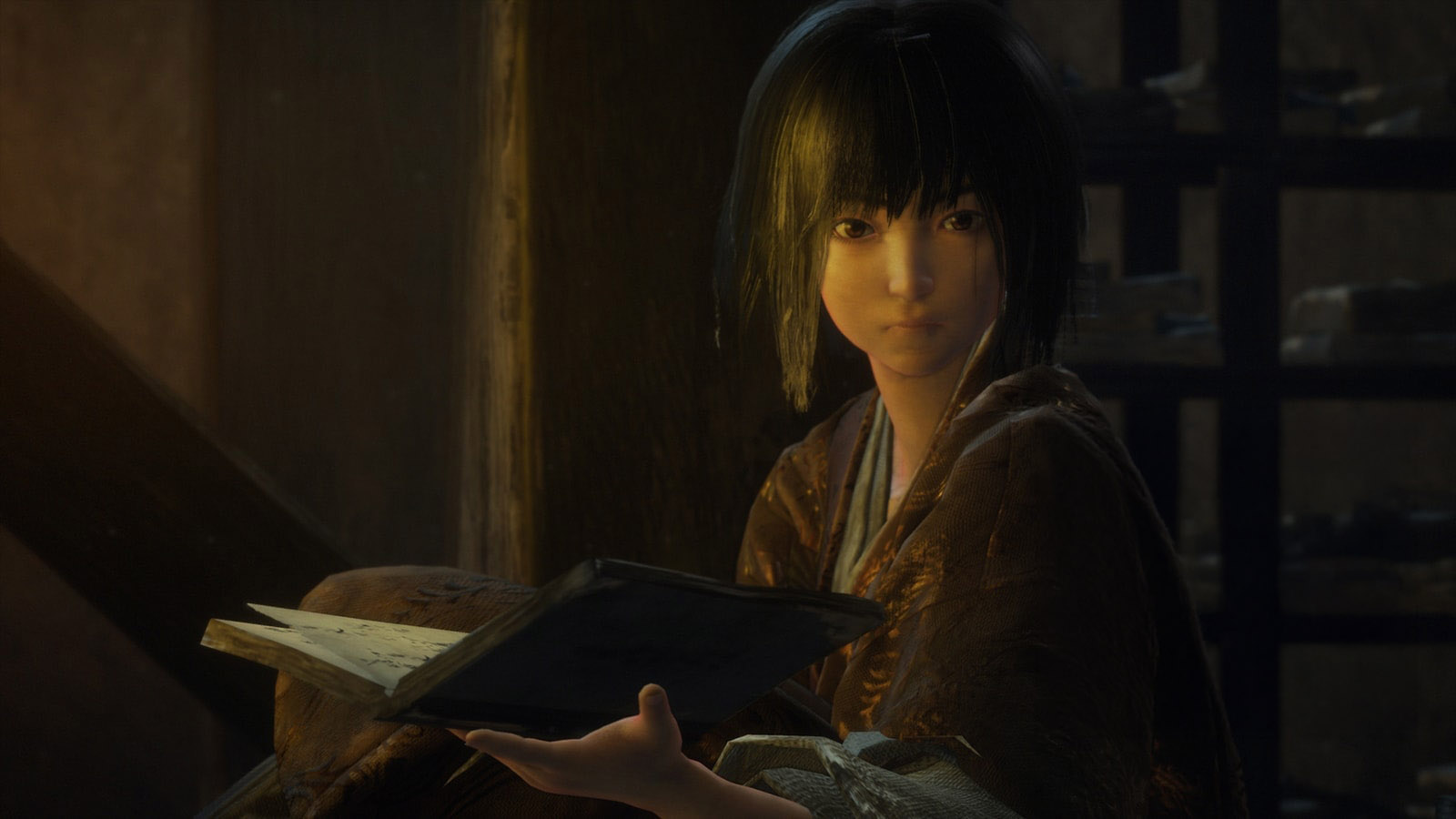 © FromSoftware
Introduction: The Stagnation of Immortality and the Two “Vessels” Bound to the Mortal Realm
In the highly multi-layered mythological system of Sekiro: Shadows Die Twice presented by FromSoftware, the core theme that permeates the narrative is “immortality.” However, in this work, immortality is never depicted as a divine blessing or a supreme culmination. It is defined as a “Stagnation” that dams the natural flow of life, a curse that can only exist by twisting the laws of the mortal realm and exploiting the life force of those around it. In the frontier land of Ashina, placed at the center of this curse and burdened with the karma of the world, are two young children: Kuro, the “Divine Heir,” and the “Divine Child of Rejuvenation,” born from the fanaticism of Senpou Temple.
This article focuses on these two children, destined to be “vessels” harboring divine power in the land of Ashina, where gods and apparitions breathe. How did they come to realize the harsh fates imposed upon them, and how did they come to harbor the monumental resolve to “correct the laws of the world” on their small shoulders? By integrating the historical and philosophical backgrounds (Japanese Buddhist thought and the Shinto View of life and death) decipherable from fragmented in-game texts, item lore, and environmental storytelling, we will unravel the origins and causal relationships of Kuro, the innate divine vessel, and the Divine Child of Rejuvenation, the artificially created divine vessel. Finally, we will examine the deep structure of the two wishes they ultimately derived—“Immortal Severance” and “Return”—from an academic perspective.
1. Kuro, the Divine Heir: The Undefiled Divine Vessel and the Awareness of “Stagnation”
1.1 The Mechanism of the Dragon’s Heritage Blood and the Truth of Dragonrot
Kuro is a young boy raised as an adopted son of the Hirata family, a prominent clan in Ashina, but his body harbors the power of the “Divine Dragon,” a god from a foreign land said to have crossed over from its homeland far to the west. The power of this “Dragon’s Heritage” is to forge a pact of immortality (a blood oath) that rewrites the concept of death by sharing his own blood with a chosen subject.
However, the power of the Dragon’s Heritage is not a magical blessing that generates infinite life force from nothing. Its essence lies in the “unconscious usurpation of the lives (vitality) of others.” When the one who has received the blood of the Dragon’s Heritage (Wolf) resurrects from death, they snatch vitality from healthy humans around them as compensation. This deprivation of vitality manifests as “Dragonrot,” a bizarre disease characterized by severe coughing and coughing up blood, which spreads throughout the world.
In Japanese Shinto, water and life are believed to maintain their purity by constantly flowing and circulating. This is called “purification.” Immortality is the act of artificially damming this flow. Just as water that stops flowing becomes stagnant and rots, life force that loses its destination and stagnates becomes “Stagnation,” giving rise to “Kegare (Defilement).” Kuro’s uniqueness lies in the fact that, despite possessing an absolute power that could place him at the pinnacle of authority, he understood the structure of the “Stagnation” brought about by the Dragon’s Heritage with extreme coolness and accuracy, even at his young age. His anguish when grieving for the victims of “Dragonrot” and facing the reality that his very existence was sickening the world leads to a fundamental questioning of the meaning of his own existence.
1.2 The Boundary Between the Mortal Realm and the Eternal Realm: The Absence of Bloodshed and the Mortal Blade
Kuro’s body cannot be harmed by the blades of the mortal realm . This fact suggests that he exists as a kind of singularity, completely detached from the physical laws of the “mortal realm (Utsushiyo).” Bloodshed is a symbol of physical change and the flow of life. Kuro’s body, which sheds no blood, is equivalent to an entity of the eternal realm (Tokoyo) where time has stopped.
The only thing capable of harming his body and making him bleed (i.e., prompting change and pulling him back to the laws of the mortal realm) is the “Mortal Blade (Gracious Gift of Tears),” which possesses the power to sever the laws of the eternal realm . The fact that Kuro was stripped of his life as a human and fixed in the mortal realm purely as a “divine vessel” was his greatest tragedy. Obtaining the Mortal Blade is considered not merely a means to sever immortality, but also the sole ritual for Kuro to reclaim his physical body as “a human who can bleed” (or to earn the right to die as a human).
1.3 The Will of the Predecessor and the Resolve for “Immortal Severance”
Indispensable in discussing Kuro’s resolve is the existence of the previous Divine Heir, “Takeru,” and his attendant, “Tomoe.” In the history of Ashina, Kuro is not the first Divine Heir to agonize over the fate of immortality. Takeru, who once descended from the Fountainhead Palace to Ashina, was also heartbroken by the Dragonrot brought about by his own power and desired “Immortal Severance” to reclaim life and death as a human.
Kuro personally deciphers relics such as Takeru’s diary and the incense burner left in the library of Ashina Castle, tracing the path of his predecessor who once harbored the same anguish . It is surmised that Takeru and Tomoe were unable to retrieve the “Mortal Blade” necessary for Immortal Severance from Senpou Temple, nor could they return the Divine Dragon to its homeland. Ultimately, through Tomoe’s suicide (or some incomplete ritual), they attempted to grant Takeru a human death.
In this historical context, Kuro’s wish to “sever immortality” is not merely his personal whim, but carries the significance of fulfilling a long-held desire inherited from his predecessor. The scene where he commands his attendant, Wolf, saying, “Direct your blade at me,” is deeply tied to the Buddhist concept of “liberation (Moksha).” While it is an order of self-sacrifice predicated on his own death, it is simultaneously an extremely compassionate decision that urges Wolf, as an individual human being, to break free from being a “tool bound to his lord (the Iron Code of the Shinobi)“.
2. The Divine Child of Rejuvenation: The “False Vessel” Born of Fanaticism and Obsession
2.1 The Corruption of Senpou Temple and the True Nature of the Rejuvenating Waters
If Kuro is an “innate vessel bestowed by heaven,” then the Divine Child of Rejuvenation, imprisoned in the Inner Sanctum of Mt. Kongo’s Senpou Temple, is an “artificial vessel created by the madness and obsession of adults.” The contrast between these two forms the most crucial symmetry in the narrative structure of this work.
The monks of Senpou Temple were originally seekers of truth who should have followed Buddhist teachings (Impermanence (Shogyo Mujo)) to attain enlightenment and aim for liberation from Samsara. However, upon discovering the existence of the “Rejuvenating Waters” welling up in the land of Ashina—Waters of the Fountainhead altered by the power of the Divine Dragon and imbued with immortal properties—they strayed from the path of Buddha and became obsessed with the physical eternity of bodily immortality.
The Rejuvenating Waters are a degraded version of the Dragon’s Heritage, and continuously drinking them causes an “insect” to reside within the body. Those who become “Infested” can no longer die, but it is merely a physical stagnation (putrefaction) unaccompanied by the salvation of the soul. This signifies a descent into the obsession of the “Realm of Asura” or the “Hungry Ghost Realm” in Buddhism. To surpass this incomplete immortality of the Infested, the monks of Senpou Temple dabbled in abominable experiments to create an “artificial divine vessel” that would serve as a true Dragon’s Heritage.
2.2 Symbols of Sacrifice: Pinwheels and the Souls Trapped in the Halls of Illusion
Behind the Divine Child of Rejuvenation lies a gruesome history that leaves one speechless. Along the path leading to the precincts of Senpou Temple, the countless “Red and White Pinwheels” and “White Pinwheels” offered everywhere symbolize the souls of the numerous children who fell victim to human experimentation . The red and white pinwheels represent the mingling of blood (red) and innocence (white)—a meager tribute to the children who lost their lives or were transformed into grotesque figures by the experiments with the Rejuvenating Waters.
The Divine Child of Rejuvenation herself is nothing more than a “successful case,” the sole survivor atop countless sacrifices. The fact that she lives on in solitude within the isolated space of the Inner Sanctum is partly to maintain her purity as a divine vessel, but it is also a manifestation of the profound survivor’s guilt she harbors.
The “Halls of Illusion,” which is directly connected to her mental world, is a peculiar space where the Seeing Monkey, Hearing Monkey, Speaking Monkey, and Invisible Monkey roam. This is a space that embodies the Buddhist teaching of the “Three Wise Monkeys (see no evil, hear no evil, speak no evil).” However, in this work, the original meaning of “not seeing, hearing, or speaking evil” is inverted, functioning as an ironic metaphor that the monks of Senpou Temple “turned a blind eye, turned a deaf ear, and kept their mouths shut to the reality of the atrocious human experiments on children.” The Divine Child of Rejuvenation constantly feels the presence of “everyone” (the souls of the deceased children) in these Halls of Illusion, living while bearing their regrets.
2.3 Survivor’s Guilt and “Cold Blood”
The immortality of the Divine Child of Rejuvenation is not sacred like Kuro’s, but a cold immortality smeared with blood, insects, and obsession. Her body temperature is extremely low, and she is constantly described as “cold,” which is considered a manifestation of the nature of artificial immortality to strip away the heat of life (i.e., circulating vitality).
To clarify the differences in the nature of the two “vessels,” the following table organizes the facts presented in the game and the elements inferred from the environment.
| Characteristics / Elements | Innate Vessel: Divine Heir (Kuro) | Artificial Vessel: Divine Child of Rejuvenation |
|---|---|---|
| Origin of the Vessel | Innate (Bloodline that crossed over from the West) | Artificial (The result of human experiments by Senpou Temple) |
| Source of Immortality | Divine Dragon (The foreign god itself) | Rejuvenating Waters and Infested (The Divine Dragon’s power degraded by mingling with Ashina’s water) |
| Expression of Life | Dragonrot (Robs others of vitality and causes stagnation) | Accumulation of distinct coldness and “Rice” (Sharing her own flesh and blood) |
| Physical State | Impervious to mortal blades (Does not bleed) | Can be wounded but regenerates (Bleeds and experiences pain) |
| Harbored Wish | Immortal Severance (End the chain of Stagnation and die as a human) | Return (Return the god to its homeland and restore the natural order) |
As this comparison shows, although Kuro and the Divine Child of Rejuvenation are situated at opposite poles in terms of origin, both are “beings whose human lives have been distorted by the Stagnation of immortality” and bear the common hardship of being “victims of the obsession of adults.”
3. Two Intersecting Fates: Rice, Snow, and “Sweet Rice Ball”
3.1 The Giving and Receiving of “Rice” as an Altruistic Act
The most symbolic item where the fates of the two children intersect is “Rice.” The Divine Child of Rejuvenation shares Rice that spills from her palms with the visiting Wolf. This Rice is not mere grain. It is a transformation of her cold blood, her very life force itself. Behind her producing Rice even at the cost of shedding blood, one can glimpse the altruistic act of a Bodhisattva in Buddhism (self-sacrifice to save others from suffering)—bearing the feelings of “everyone” who was sacrificed and wishing to at least be of help to others.
In Japanese Shinto and rice-farming beliefs, rice is sacred and considered the embodiment of divine life force (Inadama). However, the Rice produced by the Divine Child of Rejuvenation is extremely anomalous in that something which should naturally grow with sunlight and abundant water is produced in the cold, dark Inner Sanctum, and from the blood of an artificial divine vessel. The act of whittling away her flesh and blood gradually robs her of her body temperature, ultimately transforming the rice into freezing “Fine Snow”.
3.2 Two Souls Connected by the “Sweet Rice Ball”
When this Rice from the Divine Child of Rejuvenation is passed into Kuro’s hands through Wolf, the deep theme of the story reaches a beautiful fruition. Kuro uses the Rice entrusted by the Divine Child of Rejuvenation to make a “Sweet Rice Ball” and gives it to Wolf.
Kuro, who agonizes over scattering the calamity of Dragonrot upon the world through the power of immortality and is unable to grant vitality to others. The Divine Child of Rejuvenation, who became able to produce artificial life force (Rice) at the end of blood-stained experiments, but is lonely because of it. The wishes and life forces of the two “divine vessels” overlap and become one in the form of this Sweet Rice Ball. The special Sweet Rice Ball given by Kuro is described as having “the taste of resolve,” which signifies that Kuro’s spiritual pillar has united with the life force of the Divine Child of Rejuvenation.
Kuro learns of the existence of the Divine Child of Rejuvenation, someone just like him, and deeply sympathizes with her circumstances. This was an extremely important process for them to regain their emotions as “humans” who understand each other’s pain, rather than merely being “vessels as a system.”
4. The Foreign God Known as the Divine Dragon and the True Meaning of “Return”
As the story heads toward its climax, the resolves of the two children converge toward the common goal of “ending immortality,” but their final approaches diverge significantly into two paths. These are “Immortal Severance” and “Return.” Here, we will delve deeply into the process and philosophy of “Return,” which requires a particularly complex ritual.
4.1 The Revelations Shown by the Holy Chapter: Infested and the Holy Chapter: Dragon’s Return
The Divine Child of Rejuvenation understands the true structure of immortality in this world by deciphering scriptures such as the Holy Chapter: Infested and the Holy Chapter: Dragon’s Return left behind by the founder of Senpou Temple. According to them, the Divine Dragon is not originally a god of this land of Ashina, but a foreign entity that drifted from its homeland far to the west. Because the Divine Dragon took root in Ashina and its sacred power mingled with Ashina’s indigenous waters, the water was altered, giving rise to the distorted power of the “Rejuvenating Waters” and the tragedy of the “Infested.”
The Divine Child of Rejuvenation derives a solution not to destroy the Dragon’s Heritage, but to remove the cause of the Stagnation from its root by returning the Divine Dragon itself to its rightful homeland in the west. However, this requires a “sturdy vessel capable of harboring the god’s soul and enduring the journey to the distant west—a cradle.” The Divine Child of Rejuvenation resolves to sacrifice her own body to become that “cradle.”
4.2 The Slaying of the Indigenous God and the Ritual of the “Serpent Viscera”
The ritual to become the cradle is gruesome and full of mythological symbolism. She must consume both the “Fresh Serpent Viscera” and the “Dried Serpent Viscera,” the internal organs of the Great Serpent, which is the indigenous god (the master) of Ashina.
The Great Serpent is a symbol of the indigenous water and mountain gods that ruled the land of Ashina before the Divine Dragon flew in. In order to harbor and carry the power of the foreign god (the Divine Dragon) within, it is necessary to incorporate the immensely powerful life force of the indigenous god (Serpent Viscera) into the artificially created vessel (the Divine Child of Rejuvenation), transforming her own body into an even colder state closer to the divine realm. This is an approach reminiscent of the Shinto ritual of “Kamimukae” (welcoming the gods) or the “Shinbutsu-shugo” (syncretism of Shinto and Buddhism) that integrates different deities.
4.3 Frozen Tears: Sublimation into the Cradle and the Crystallization of Affection
When the Divine Child of Rejuvenation consumes the Serpent Viscera, she is tormented by intense agony that exceeds human limits, and cold tears called “Frozen Tears” spill from her eyes. These Frozen Tears are not merely physiological tears. They are the crystallization of the sorrow of all the sacrificed children, the terror of transforming her own body into a non-human “cradle,” and the deep, Bodhisattva-like affection that still wishes to save Kuro and Wolf despite it all.
| Comparison of Concepts | Immortal Severance | Return |
|---|---|---|
| Ideological Background | Buddhist liberation (complete abandonment of attachment), restoration of Shinto purity | Pure Land Buddhist “return to the Western Pure Land,” reorganization of Shinbutsu-shugo |
| Solution to the Problem | Extinction of the Dragon’s Heritage itself (dispelling Stagnation by destroying the vessel) | Return of the Dragon’s Heritage to its source (restoration of order by relocating the god) |
| Kuro’s Fate | Dies, and the Dragon’s Heritage disappears from this world forever | His physical body is lost, but his soul resides within the Divine Child of Rejuvenation |
| Wolf’s Role | Ends his lord’s life and becomes the next Sculptor (watcher of Shura) | Departs as an “attendant” to escort the Divine Child who has become the cradle |
5. The Consequence of Resolve: The Two Paths Entrusted to Wolf
5.1 Liberation and Self-Sacrifice in Immortal Severance
The “Immortal Severance” that Kuro desired is a path to completely eradicate the Dragon’s Heritage from the mortal realm by ending his own life as the Divine Heir with the “Mortal Blade.” Kuro has seen firsthand how immortality drives the people of Ashina mad. The sight of Genichiro Ashina dabbling in the Rejuvenating Waters under the righteous cause of protecting his country and losing his humanity is the inevitable end brought about by the Stagnation of immortality.
For Kuro, Immortal Severance is not mere suicide, but a sacred ritual to purge “Kegare (Defilement)” from the world. His asking Wolf to assist in his death contains an earnest wish that, through his own death, Wolf himself will be liberated from the curse of the “code that makes the lord absolute” and reclaim his life as an individual.
5.2 The Integration of Souls and a New Journey in Return
On the other hand, in the ending of “Return,” Kuro is made to drink both the “Divine Dragon’s Tears” obtained after the battle with the Divine Dragon and the “Frozen Tears” produced by the Divine Child of Rejuvenation. With this, Kuro’s physical body quietly turns into light and disappears, and his soul settles into the cold womb of the Divine Child of Rejuvenation, who has become the “cradle.”
This is a complete integration of the souls of the two vessels, transcending physical death. The innate vessel and the artificial vessel share each other’s loneliness and pain, becoming a single entity. With Kuro’s soul residing within the Divine Child of Rejuvenation, there is also a suggestion that her body temperature (humanity) slightly returns. They depart from being cursed divine vessels, setting out on a journey toward the unknown “Pure Land” of the western homeland as noble “human” souls who have walked through their harsh fates on their own two feet.
Conclusion: Emergence from Divine Vessels to “True Humans”
The work Sekiro: Shadows Die Twice is a record of grueling swordplay revolving around death and rebirth, and at the same time, it is a story of spiritual growth in which children, exalted as “divine vessels” by fate, rebel against that fate of their own free will and rewrite the laws of the world.
Although Kuro and the Divine Child of Rejuvenation were placed at the center of the curses of the “Dragon’s Heritage” and the “Rejuvenating Waters” respectively, they never drowned in their immense power. Kuro explicitly rejected the power of immortality, which could have become absolute authority, and continued to assert the preciousness of “living as a human and dying as a human.” On the other hand, the Divine Child of Rejuvenation embodied ultimate self-sacrifice and affection by not hating the madness of the adults who created her, but rather bearing the regrets of those who were sacrificed and accepting the transformation into a “cradle” that distanced her even further from humanity.
The resolves of the two children stand in complete opposition to the obsessions swirling in the land of Ashina—Genichiro’s obsession with his country, Senpou Temple’s obsession with immortality, and Owl’s obsession with power. Their wish to “give up one’s own life and dedicate oneself to the future of others (or the normal flow of the world)” is depicted as the sole pure light in Ashina at the end of the Sengoku period, smeared with blood and mud.
The decisions they ultimately reached entailed immense sacrifices, regardless of the path chosen. However, at their core, they share the single point of “purging the Stagnation and returning life to its original flow.” It can be concluded that their resolves and wishes were the sole and greatest key to putting a true end to the history of Ashina, which had been trapped in a chain of death, and to reclaiming the brilliance of circulating life. They shattered their given fates as divine vessels and, through their noble will, emerged as “true humans” more dignified than anyone else.
Dialectics of Immortality and Fate: Sekiro: 11 Meditations on the Dragon’s Heritage and Mortal Struggle
The book version is now available. Read for free with Kindle Unlimited.
Thank you very much for reading to the end. To help support the activities of this archive, a warm donation of a cup of coffee would be highly appreciated.