Memory.06: Sword Saint Isshin Ashina
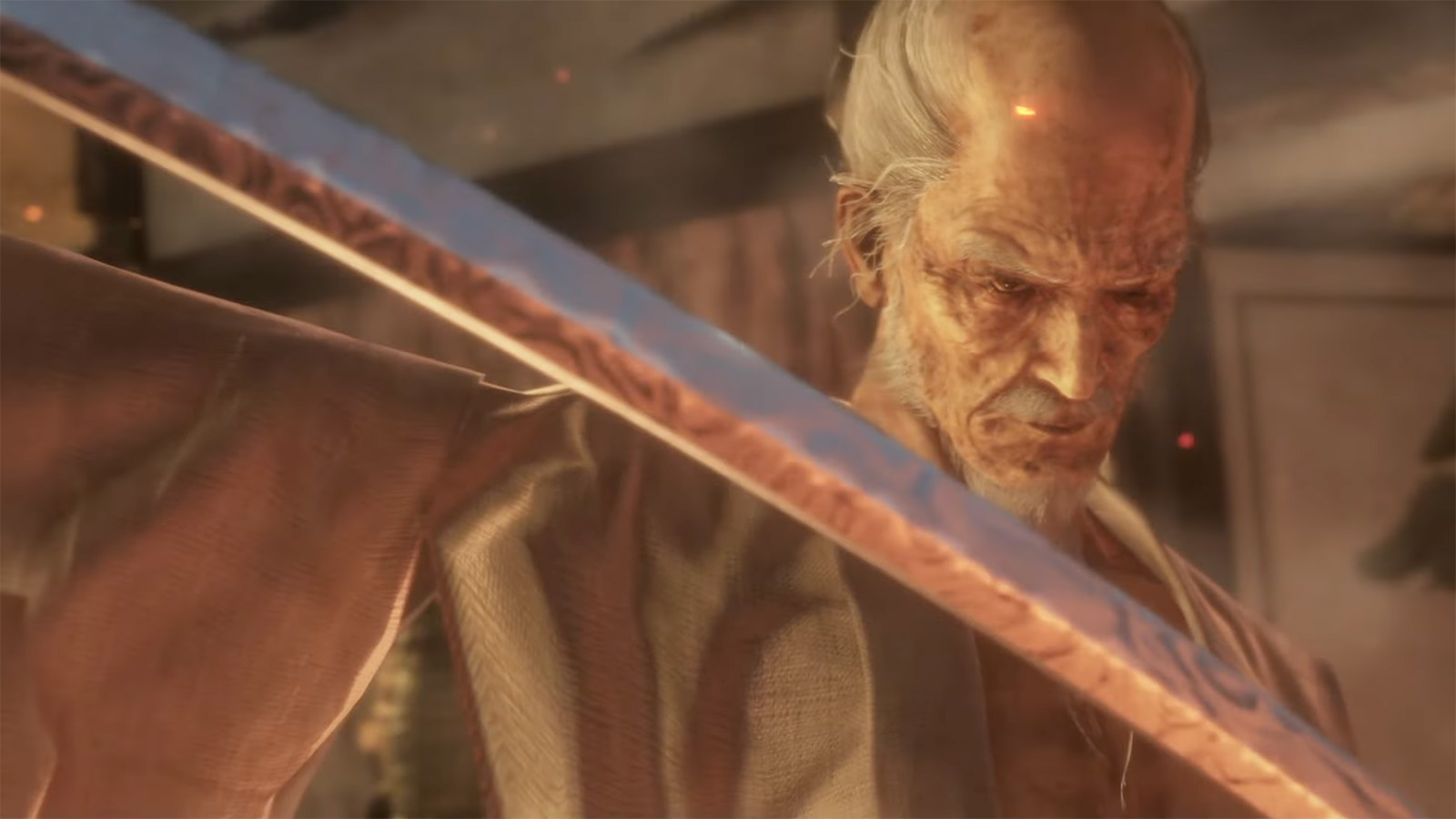 © FromSoftware
Introduction: The Historical and Philosophical Contours of the “Sword Saint,” the Symbol of Ashina
The land of Ashina, the setting of Sekiro: Shadows Die Twice, is constantly in the midst of war, side by side with death. The man who conquered and ruled this land through a rebellion in a single generation, reigning as its absolute symbol, is the “Sword Saint,” Isshin Ashina. In this analysis, we will integrate the fragmented texts scattered throughout the game, dialogues shared over sake, descriptions in the esoteric texts he left behind, and events derived from environmental storytelling to unravel Isshin’s view of life and death, his stance on Shura, and the martial philosophy that led him to be called the “Sword Saint.”
In Japan, the title of “Sword Saint (Kensei)” has historically been used for legendary swordsmen such as Miyamoto Musashi, bestowed upon beings who transcend mere “master swordsmen (Kengo)” or “swordsmen (Kenshi).” It is an honor granted only to those who possess not only superior swordsmanship but also character, spirituality, and a moral and philosophical elevation—those who have, so to speak, stepped into the realm of gods and buddhas.
However, the path walked by Isshin Ashina as depicted in the game is by no means pure and unblemished. His techniques were unrefinedly polished with the blood of his enemies, born from his own thirst to greedily pursue “strength.” Even in his old age, bedridden with illness, his existence—single-handedly keeping the invasion of the Interior Ministry (the central government) in check—transcends the boundaries of a single human being, making him the embodiment of the indigenous beliefs and history of the land of Ashina itself. In this article, we will reveal the full picture of the history of a dying nation and Isshin’s karma by strictly separating and integrating the explicit “facts” and the “observations” based on historical and Buddhist contexts.
1. Ashina’s Rebellion and the Historical Background of “Heresy”
1.1 Water Spirit Worship, the Acceptance of “Kegare (Defilement),” and the Signal Fire of Rebellion
Indispensable in discussing the history of Ashina is the fact that they were persecuted as “heretics” by the central government (the Interior Ministry). Through in-game texts and dialogues, the harsh conditions under which the people of Ashina were once placed are clearly stated. When offered “Ashina Sake,” Isshin reminisces as follows: “The Waters of the Fountainhead flow and flow. We of Ashina were a people who loved that land. But we were heretics, and we were weak. We were trampled upon as a matter of course, and for a long time, we could not even pray to the waters of the spring.”
What can be inferred from this testimony is the historical background that Ashina’s indigenous beliefs were based on Shinto-like “water deity worship” and a spiritual reverence for the “Rejuvenating Waters” flowing from the Fountainhead Palace. From the perspective of the Interior Ministry (the central samurai government and forces with orthodox Buddhist values), Ashina’s beliefs, which are connected to immortality and the Dragon’s Heritage, were likely perceived as a heretical cult contrary to the laws of nature, or as “Kegare (Defilement)” in Shinto and “Stagnation” in Buddhism. In a historical context, this overlaps with the structure in which Japan’s central government oppressed local indigenous beliefs (such as the Emishi or Hidden Christians) and forced assimilation.
For the people of Ashina, who had been trampled upon for a long time and forbidden even to worship their sacred grounds, the era when all of Japan fell into war was the “perfect opportunity” to reclaim their homeland and pride. The rebellion initiated by Isshin can be interpreted not merely as an act based on ambition or a lust for power, but as a holy war to liberate the oppressed indigenous people and reclaim their faith in the stolen water source.
1.2 The Death Match with General Tamura and the Establishment of the “Ashina Arts”
In his youth, Isshin threw himself single-mindedly into death matches, polishing his techniques with the blood of his enemies. The culmination of this, which decisively secured Ashina’s rebellion, was his one-on-one duel with General Tamura, a powerful warlord of the Interior Ministry, as depicted in the opening cinematic.
As a matter of fact, on the gruesome remains of a battlefield, Isshin crossed blades with Tamura, who wielded a large cross-shaped spear (a sickle-shaped spear), and struck him down. What is extremely important is that after this death match, Isshin picked up the large spear used by Tamura as a spoil of war and made it his own. This spear was later bestowed upon the mighty warrior Gyoubu Oniwa (Gyoubu Masataka Oniwa), whom Isshin had discovered, and it came to guard the gates of Ashina Castle as Gyoubu’s unbreakable, beloved spear. Furthermore, in the late stages of the story, Isshin himself, resurrected from the underworld in his prime, pulls this large spear from the ground in his second phase and attacks Wolf (Sekiro) with overwhelming power combining sword and spear.
This series of events vividly illustrates Isshin’s martial philosophy: “Choose no means to win, and incorporate even the enemy’s strength into oneself.” To solidify his rule over Ashina, he systematized his combat experience into the “Ashina Arts.” Breathing within it is the logic of a conqueror who, unbound by formal beauty or tradition, pursues only victory and strength, no matter how unrefined. It should be noted that Isshin has a deep scar on his left eye and is blind in it; while it is not explicitly stated whether this was caused by his death match with Tamura or his battle with “Tomoe,” which will be discussed later, the scar is an indelible proof that he has walked the edge of death countless times.
2. View of Life and Death and the Resolute Philosophy Toward “Shura”
2.1 The Denial of Immortality and Devotion to the Laws of Nature
The land of Ashina is filled with the temptation of “immortality.” The Rejuvenating Waters, the Infested, and the Dragon’s Heritage. Genichiro Ashina, Isshin’s grandson by adoption, resolves to dabble in heretical powers (the Rejuvenating Waters and the blood of the Dragon’s Heritage) to save the dying Ashina and to counter the overwhelming military might of the Interior Ministry. However, Isshin himself was extremely negative toward these “powers of immortality.”
He had accepted the fact that his lifespan was coming to an end due to illness, and he did not desire to live on, or to sustain the nation, by going against the laws of nature. For Isshin, who sought the ultimate death matches as the Sword Saint, “death” was an indispensable element to make life shine, and it is only by overcoming the fear of death that “martial arts” reach their zenith. Clinging to the power of immortality is nothing but an act of discarding one’s pride as a warrior and distorting one’s existence as a human being. Therefore, to stop the rampage of Genichiro, who loved his country, Isshin secretly supported Wolf (Sekiro) through Emma.
2.2 The Sculptor and Emma: The Blade that Severs Shura and the Watchful Gaze
Indispensable for deeply understanding Isshin’s character and philosophy is his thorough attitude toward the concept of “Shura.” While the Realm of Asura from a Buddhist perspective is a world trapped in endless conflict and anger, Shura in this work is defined as “a being who has forgotten even the reason to cut, possessed only by the joy of killing.” Isshin deeply understood the law of causality in which a person transforms into a Shura through the accumulation of the Karma of killing.
Through the events of offering sake in the game, the past causal relationships of the main characters, including Isshin, intersect. The following table summarizes the facts obtained from the dialogues over sake.
| Type of Sake | Facts and Philosophy Revealed from Dialogue |
|---|---|
| Monkey Booze | ”Those who go on killing will eventually become Shura. They forget even the reason, trapped only by the joy of killing.” Isshin mentions that he once saw the “shadow of Shura” in Wolf’s eyes as well, and warns, “If you stray from your reason to cut, I will cut you down.” |
| Ashina Sake | It is told that when the Sculptor (Sekijo) was once consumed by the flames of hatred and nearly became a Shura, Isshin cut off his left arm with the “Ashina Cross,” preventing his complete transformation into Shura. |
| Dragonspring Sake | It was Isshin who picked up Emma, an orphan on the battlefield, and entrusted her to Dogen. Isshin speaks of the sight of Dogen making the Shinobi Prosthetic and Emma growing up helping him as a warm memory. |
What can be inferred from this is the “responsibility” Isshin feels toward Shura. He saved the Sculptor’s life by cutting off his arm, but he must have also understood that the “flames of hatred” smoldering within the Sculptor had not completely extinguished. It is presumed that Emma learned swordsmanship from Isshin and always stayed by the Sculptor’s side because she bore the role of a “second (Kaishakunin)” to peacefully cut him down should he nearly become a Shura again.
In the route where Wolf follows the “Iron Code” and chooses the path of Shura (the Shura ending), it is the inevitability of this karma that Emma, and then the sick, elderly Isshin, stand in his way. Isshin declares, “I must cut you down. Before you fall to Shura,” and musters his final strength to strike Wolf down. Shura destroys the boundary between the living and the dead, bringing chaotic slaughter to the world. Severing it was the final settlement as a conqueror for Isshin, who had carved out the land of Ashina with blood.
3. The Zenith of Martial Arts “Mushin Arts” and the Secret Maneuvers of the “Tengu”
3.1 The Greedy Quest for Strength and the Establishment of the “Mushin Arts”
The young Isshin continued to fight seeking the survival of Ashina and his own strength, bringing his techniques to fruition as the “Ashina Arts.” However, Isshin’s martial arts were not completed with that. Throughout his life, he greedily continued to absorb the techniques of opposing schools if he saw them as superior. What was born at the end of this was the “Mushin Arts.”
“Mushin” refers to the state of “no-mind, no-thought” in Zen Buddhism. In swordsmanship, it represents the zenith where the mind is not fixed on a single object but flows like water, reacting naturally to any situation (a philosophy akin to Takuan Soho’s The Unfettered Mind).
| Genealogy of Martial Arts Deciphered from Esoteric Texts |
|---|
| Ashina Esoteric Text |
| Mushin Esoteric Text |
The secret techniques “Dragon Flash” and “One Mind,” which Isshin is said to have created in the game, indicate the pinnacle of his martial arts.
-
Dragon Flash: Unleashes a shockwave from a high-speed drawing slash. It is a technique that embodies the fact that in his youth, his blade was already swung faster than he could think about how to cut.
-
One Mind: Unleashes a god-speed flurry of slashes. It is the state of nothingness reached by the elderly Isshin, achieving a speed invisible to the eye by putting his soul solely into the swing of the blade.
3.2 Secret Maneuvers as the “Tengu of Ashina” and National Defense
Isshin is not a monarch who merely sits deep within the castle. Despite his sick body, he donned the mask of the “Tengu of Ashina” and single-handedly continued to hunt the Interior Ministry’s spies (whom he calls “rats”) infiltrating the castle town.
In Japanese folklore, Tengu (especially Daitengu and Sojobo) are depicted as terrifying monsters tied to mountain worship, as well as gods of martial arts and guardian deities. The legend of the Kurama Tengu (Sojobo) teaching swordsmanship to Minamoto no Yoshitsune is famous. The act of Isshin donning the Tengu mask symbolizes that he himself is the “indigenous guardian deity” of the land of Ashina.
Meeting Wolf in the guise of the Tengu, Isshin names him “Sekiro (One-armed Wolf)” and requests him to hunt rats. Then, acknowledging Wolf’s growth, he bestows upon him the “Ashina Esoteric Text” and the “Mushin Esoteric Text,” passing on his own martial arts. This traces the mythological structure of the Kurama Tengu bestowing martial arts upon Yoshitsune, and at the same time, it is proof that Isshin saw in the heretical Shinobi named Wolf the same “martial talent that single-mindedly seeks strength” as himself. Isshin’s love for his country is proven not by commanding from the throne, but by his action of continuing to swing his sword on the front lines until the very last moment when his lifespan runs out.
4. Crossing Blades with the Foreign Blade “Tomoe” and the Sublimation of Martial Arts
4.1 The Brink of Death Brought by the Heretical Blade
In discussing the trajectory of Isshin’s martial arts, the shadow of the existence named “Tomoe” is extremely dark. Tomoe was a foreign female warrior (some say of the Okami Clan, or one who drew their blood) who served Takeru, the former Divine Heir, and descended from the Fountainhead Palace (the divine realm) to Ashina. She was Genichiro’s master and imparted heretical techniques such as the “Lightning of Tomoe” and “Spiral Cloud Passage.”
When offered Unrefined Sake, Isshin passionately begins to speak of his battle with Tomoe. He praises her, saying, “Tomoe… There are few masters of the sword like her. It was like a dance. When you looked into those eyes, you felt as if you were being drawn into the bottom of the ocean,” and confesses, “I was completely captivated, and nearly died. I have lived a long time, but that was the closest I have ever come to death.”
4.2 The Adaptability to Incorporate Even Lightning
As a matter of fact, there is no technique to generate lightning on his own within the skills of the elderly Isshin. However, in the final battle, Isshin in his prime, resurrected from the underworld, naturally performs the “Lightning Reversal,” parrying natural lightning with his sword and striking it back at his opponent.
What is considered from this is the fact that Isshin, through his past death match with Tomoe, burned her flowing movements and the nature of “lightning” into his eyes, sublimating them into his own martial arts. While rejecting the heretical powers (the Dragon’s Heritage and the Rejuvenating Waters) themselves, he greedily makes the countermeasure against “lightning” as a martial arts technique his own. This extraordinary adaptability and learning ability are precisely the factors that make him the Sword Saint, and the zenith of the “Mushin Arts.” Some speculate that the scar on Isshin’s left eye was inflicted during this death match with Tomoe, but in any case, he was an absolute warrior who made even the techniques of an enemy who nearly killed him his own sustenance.
5. The Black Mortal Blade “Open Gate” and the Karma of Resurrection
5.1 The Ideological Conflict with Genichiro and “Pity”
The relationship between Isshin and his adopted grandson Genichiro was torn apart by deep affection and a tragic difference in ideology. While Isshin understood Genichiro’s extraordinary obsession and patriotism toward Ashina, he deeply lamented that Genichiro would “discard himself in pursuit of strength.”
Upon learning that Wolf had obtained the “Crimson Mortal Blade (Gracious Gift of Tears)” at Senpou Temple, Isshin mutters to himself, “So he (Genichiro) has the black one… To discard oneself in pursuit of strength, how tragic…” For Isshin, strength meant elevating one’s techniques and spirit to the absolute limit within a finite life. Therefore, the sight of Genichiro abandoning his humanity and trying to gain strength through the curse of immortality appeared as nothing but “tragic” in the eyes of his grandfather, who had mastered the martial arts.
5.2 The Gate to the Underworld “Open Gate” and the Offering of the Dragon’s Heritage
In the late stages of the story, as Ashina Castle is engulfed in flames by the all-out attack of the Interior Ministry, Genichiro, who stood before Wolf, is defeated and realizes that he can no longer save Ashina with his own power. Here, he uses the other Mortal Blade, the “Black Mortal Blade (named: Open Gate),” and opens the gate to the underworld using his own life as an offering.
The concept of Yomi (the underworld) in Japanese mythology and the ritual in this work are closely connected. Based on the description of the “Black Scroll” in the game and the nature of the items, the functions and differences of the two Mortal Blades are summarized in the following table.
| Comparison of the Mortal Blades | Crimson Mortal Blade (Name: Gracious Gift of Tears) | Black Mortal Blade (Name: Open Gate) |
|---|---|---|
| Primary Power | The power to sever immortality. Causes the Divine Dragon to shed tears (Gracious Gift of Tears). | The power to open the gate to the underworld (Yomi) and bring forth life. |
| Conditions for Use | Because it brings death once to the one who draws it, it can only be wielded by immortals (such as those bound by the Dragon’s Heritage). | Opening the gate requires an offering of “Dragon’s Blood” and the sacrifice of the caster’s own life. |
| Historical Background | Bestowed upon Wolf by the Divine Child of Rejuvenation at Senpou Temple. Indispensable for the ritual of Immortal Severance. | The blade concealed by Genichiro. It is also suggested that Tomoe may have possessed it in the past. |
The reason Genichiro wounded Kuro with the black blade just before the final battle was not out of mere malice, but to obtain the “Dragon’s Blood” necessary for the ritual of “Open Gate.” By slashing his own neck and offering the Dragon’s Blood and his own life, he called back the strongest being from the underworld to the living world—namely, “Isshin Ashina in his prime.”
5.3 The “Wishes” Dwelling in the Prime Form and the Consequence of Bushido
The rule that the dead returning from the underworld appear in the “Peak of their prosperity” during their lifetime is clearly stated in the text of the Memory of Battle. Why did the “Sword Saint, Isshin Ashina,” having escaped the illness of old age and resurrected at the physical peak, have to fight Wolf? It is because the ritual of resurrection by the Black Mortal Blade possessed the nature of binding the one called back to the “Final wishes” of the caster.
Genichiro’s final wish is none other than “to save and restore the nation of Ashina.” And to do so, it was necessary to seize the power of the Dragon’s Heritage and create an immortal army, making Wolf, who sought to sever the Dragon’s Heritage, the greatest obstacle that absolutely had to be eliminated.
Isshin himself was negative toward the power of immortality, personally held affection for Wolf, and acknowledged his growth as the “One-armed Wolf” more than anyone else. However, faced with the “wish” entrusted by his grandson at the sacrifice of his own life and humanity, going against it would violate his duty as a warrior (Bushido). Isshin declares, “It is the final wish of my pitiful grandson. I will resurrect this Ashina with my blood,” and stands before Wolf as the greatest wall, using every weapon at his disposal: his beloved sword, the large spear taken from General Tamura, and a repeating firearm.
What lies there is not hatred or personal grudge. It is the “duty to fulfill his grandson’s wish” and the pure joy of martial combat to see “who is stronger, the grown Wolf or himself in his prime.” While despising heresy, he is ultimately resurrected by the heretical art (the Black Mortal Blade) used by his grandson, and swings his blade to protect the country. This very contradiction is the symbol of the tragic karma borne by the nation of Ashina.
6. The Symbol of the Sword Saint “Hesitation is Defeat” and the Conclusion in the Silver Pampas Grass
6.1 The Denial of “Hesitation” as a Philosophy
The symbolic line of Isshin in this work, which can be said to be his greatest teaching and last words to Wolf, is “Hesitation is defeat.”
This is not merely advice in combat to “not rest your hands from attacking,” but a phrase that forms the foundation of Isshin’s view of life and death and his philosophy. The thought of reading the trajectory of a sword, the fear of death, the doubt toward one’s own beliefs—every “hesitation” that arises in battle delays the body’s movement for just an instant, and that leads directly to death. Conversely, believing in one’s own techniques and resolve, and continuing to act without stagnation (Mushin), is the only way to survive an extreme death match.
This phrase resonates as a truth of martial arts, and at the same time, as a truth of life. His grandson Genichiro hesitated and struggled between his wish to save Ashina and the means to accomplish it (falling into heresy). On the other hand, Isshin, while accepting his own time of death and the fate of Ashina’s ruin, showed absolutely no “hesitation” in swinging his sword until the very end. Knowing that he was destined to die, he made his resurrected prime body leap into action, devoting his entire soul purely to cutting down the formidable enemy (Wolf) before him.
6.2 Scattering in the Field of Silver Pampas Grass, the End of an Era
The final battle between Wolf and the Sword Saint takes place, ironically, beyond the “secret passage” where the story began, in a beautiful field where silver pampas grass sways in the wind. The structure in which everything concludes in the very place where Wolf once had his left arm cut off by Genichiro and suffered a desperate defeat is extremely literary. This vast field of pampas grass functions as environmental storytelling that metaphorically represents the “boundary between this world and the next (the banks of the Sanzu River or Sai no Kawara)” in the Japanese view of life and death.
At the end of the death match unfolding in the thunderstorm, the Sword Saint in his prime finally falls to his knees before Wolf’s blade. At the moment of death, Isshin’s attitude is incredibly graceful. Without leaving words of resentment or struggling in fear of death, he sits in Seiza, accepts his own death, and offers his neck. And just before receiving the seconding of Immortal Severance (Shinobi Execution / Immortality Severed) by Wolf’s “Crimson Mortal Blade,” he quietly utters only, “Do it! Well… done… Sekiro… farewell.”
This final moment is the complete opposite of the numerous bosses trapped by the curse of immortality and attachment (Karma) (such as the Sculptor who turned into the flames of hatred, or the Guardian Ape that continues to move even after its head is severed). Despite Isshin being an “immortal” being temporarily called back from the underworld by the Black Mortal Blade, his spirit remained completely that of a “mortal human.”
In his heart at the moment he realized his defeat, there was no “hesitation.” “Hesitation is defeat.” He carried through his own philosophy until the very last moment, and gracefully scattered along with praise for the young Shinobi who had surpassed him. The death of the man named Isshin Ashina signifies the complete end (setting sun) of the single nation of Ashina. However, that ruin is by no means a miserable one; it is eternally engraved in the memory of the player (Wolf) along with the field of silver pampas grass as the “beautiful death” of a human who reached the zenith of martial arts.
Conclusion: The Single “Myth” of Isshin Ashina
Isshin Ashina is neither merely the lord of a nation nor an ordinary master of martial arts. He was a kind of “mythological” existence who led the oppressed indigenous people to conquer the country, donned the Tengu mask to protect the castle town, blocked the path of Shura, and made even heretical techniques his own sustenance.
Against the overwhelming tide of the era that was the Interior Ministry (the establishment of a unified government), the nation of Ashina was destined to fall sooner or later. Because Isshin himself understood this, he chose not to rely on immortality, but to fight through as a human being. The reason he is called the Sword Saint is not only because he possesses swordsmanship beyond that of ordinary men (the Mushin Arts). It lies in his spirituality, having cut away all the weaknesses that make humans human—the attachment to life, the fear of death, and his own Karma—with the blade of “Mushin,” and having lived through simply following his own beliefs.
Encompassing or severing everything—the obsession to “save the country” held by Genichiro, and the Karma of “slaughter” that trapped the Sculptor—he finally entrusted his fate to the “Shinobi who carries out his will” named Wolf. The life and death of the Sword Saint, Isshin Ashina, is the most powerful and most human answer to the “distortion of life and death” depicted in the story of Sekiro.
Dialectics of Immortality and Fate: Sekiro: 11 Meditations on the Dragon’s Heritage and Mortal Struggle
The book version is now available. Read for free with Kindle Unlimited.
Thank you very much for reading to the end. To help support the activities of this archive, a warm donation of a cup of coffee would be highly appreciated.