Memory.02: Stagnation of Immortality
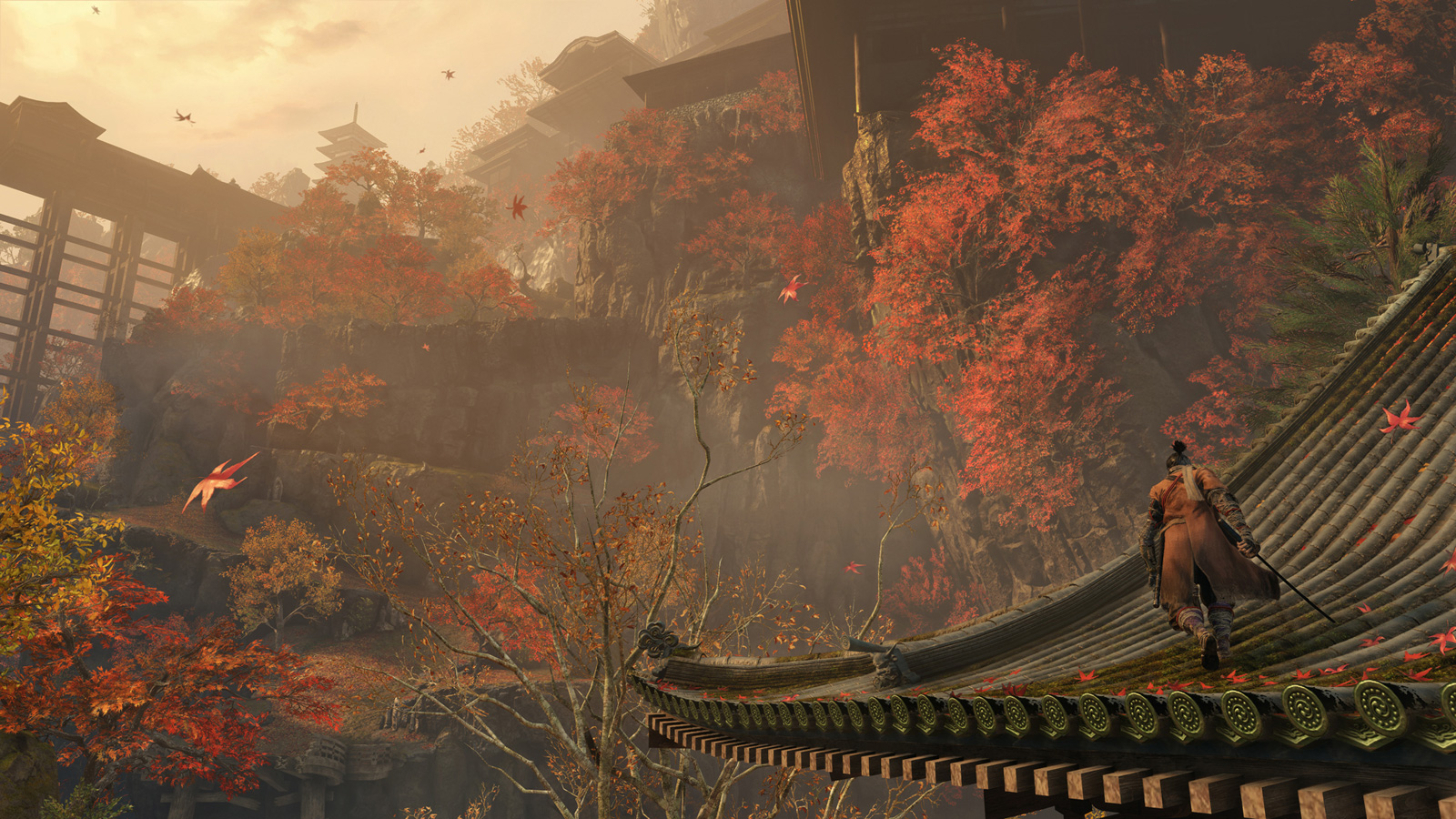 © FromSoftware
Introduction: The Mythology of “Water” Surrounding Ashina and the Transmigration of Life
Ashina, the setting of Sekiro: Shadows Die Twice crafted by FromSoftware, is a land situated in a snowy region, blessed with harsh nature and abundant water sources. However, the fundamental factor transforming this land into a gruesome scene of carnage smeared with blood and mud is not merely invasion by foreign enemies, but the paranormal concept of “immortality” rooted in the very soil of Ashina. The philosophy flowing at the core of this work is an exceptionally cruel fusion of the concept of “Kegare (Defilement)” from ancient Japanese Shinto and the ideology of “Impermanence (Shogyo Mujo)” from Buddhism. In other words, it presents the thesis that “water is pure precisely because it continues to flow, and life is precious precisely because it exists within the transmigration of repeated death and rebirth.”
The “Stagnation of immortality,” the central theme of this article, refers to the entire process in which the cycle of life, which ought to flow naturally, is dammed up by artificial or mythological intervention and left to rot. The three forms of immortality rooted in the land of Ashina—the “Dragon’s Heritage,” the “Rejuvenating Waters,” and the “Infested”—each undergo different processes but ultimately lead to the common consequence of a “distortion of life and death.” By synthesizing item descriptions scattered throughout the game, environmental storytelling, and fragmentary testimonies from NPCs, this report will thoroughly unravel the causal relationships from a historical and philosophical perspective, revealing how these three forms of immortality violated the laws of nature and eroded the minds and bodies of the land of Ashina and its inhabitants.
1. Dragon’s Heritage: The “Absolute and Blasphemous Eternity” Brought by a God from a Foreign Land
The origin of all immortality in Ashina lies in the “Divine Dragon,” a heretical god said to have drifted from its western homeland. The power of immortality brought by this Divine Dragon is the “Dragon’s Heritage.” As a fact within the game, Kuro, the Divine Heir of the Dragon’s Heritage, can bestow the power of “Resurrection”—the ability to reject death and regenerate the physical body—by sharing his blood with his vassal. At first glance, this power may seem like a divine blessing, but unraveling the deeper layers of the narrative reveals it to be an “invasive concept” that fundamentally destroys the natural laws of Ashina.
1.1 The “Foreign God” Known as the Divine Dragon and the Rejection by the Land
The exact reason why the Divine Dragon traveled from its western homeland to Ashina is not explicitly stated in the work. However, texts from items such as the “Sakura Droplet” suggest that this god acted as a kind of foreign deity (marebito) in the land of Ashina, driving out the indigenous gods and natural laws that had existed there since ancient times, and taking root. In Japanese Shinto, gods (kami) are nature itself; while they may rage as violent spirits (aramitama), they never completely rewrite the very laws of life. Yet, the Divine Dragon brought the laws of the eternal realm (tokoyo) into the climate of Ashina.
As an observation deduced from this, it can be said that the blood of the Dragon’s Heritage plays a fatal dissonance with the View of life and death originally held by the land of Ashina. The reason Kuro desires “Immortal Severance” stems from his guilt that his blood drives people mad and unjustly continues to steal the lives of those around him. At the same time, this is a manifestation of the land of Ashina itself rejecting the immortality of the Divine Dragon as a “foreign body.” The Divine Dragon itself, as a result of being severed from its true homeland, is missing its left arm and sits enshrined in the Fountainhead Palace in a seemingly diseased state. The fact that even a god will experience Stagnation if it takes root in incompatible soil emphasizes the importance of “transmigration” in this work.
1.2 The Mechanism of Resurrection and the “Expropriation of Life”
The immortality brought by the Dragon’s Heritage is not a miracle that creates something from nothing. As a fact within the story, “Resurrection” through the power of the Dragon’s Heritage is triggered when the vassal sustains a fatal wound and their life is exhausted, but its energy source is not the vassal’s own inner strength; rather, it is sustained by exploiting the life force (the essence of the living) from the living beings around them.
This cruel causal relationship is clearly demonstrated during the course of the medicinal research on “Dragonrot” conducted by the physician Emma. Dragonrot is an incurable disease that afflicts those around the vassal of the Dragon’s Heritage as the vassal repeatedly undergoes death and Resurrection. According to Emma’s testimony, in order to return to life beyond one’s natural allotted lifespan, the power of the Dragon’s Heritage steals life force from the living nearby. As a result of this life force being stolen, “blood stagnates” within the bodies of the victims, leading to the onset of Dragonrot, which is accompanied by severe coughing and hemoptysis.
The observation drawn from this is that the power of the Dragon’s Heritage is a system that abuses the network of “Dependent Origination” (Engi: the Buddhist concept that all beings exist in mutual dependence). Life is originally meant to fulfill its individual lifespan and return to the earth, thereby circulating into the next life. However, the vassal of the Dragon’s Heritage deviates from this cycle, forcibly diverting the resource of others’ lives for their own regeneration. In other words, the immortality of the Dragon’s Heritage is “eternal life through the redistribution of life,” possessing a kind of epidemiological parasitic structure, and is therefore absolute and blasphemous.
2. Dragonrot: Blood Stagnation and the Physical Manifestation of “Karma”
Let us delve deeper into Dragonrot, the byproduct of the Dragon’s Heritage. Dragonrot is not merely an infectious disease, but a highly symbolic phenomenon in which the “distortion of life and death” manifests in the form of a physical illness.
2.1 Illness as “Stagnation” and the Ritual of Purification
Examining the mechanisms of the “Recovery Charm” and the “Dragon’s Blood Droplet” given by Emma makes the true nature of Dragonrot clearer. According to the item description, the Dragon’s Blood Droplet is “a drop spilled when the Divine Heir of the Dragon’s Heritage thinks of the lives spilling away.” By offering this droplet through a Sculptor’s Idol (Dragon Vein), the stolen life force returns to its rightful owners, and the Dragonrot is cured.
The crucial fact here is that the root of the illness is described as “blood stagnation.” In the worldview of Ashina, “flowing water” is a symbol of life and purity. Blood is also a part of the water flowing within the body and the source of life force. When life force is forcibly extracted by the power of the Dragon’s Heritage, the void cannot be filled, and the circulation of blood halts. It is considered that this “halt = Stagnation” triggers a physiological reaction in the form of coughing, attempting to expel impurities (Kegare (Defilement)) from the body. The act of offering the Dragon’s Blood Droplet is synonymous with the Shinto ritual of “Misogi” (purification), and can be said to be a metaphysical purification process to make the stagnated water flow once again.
2.2 The Distortion of “Causality” from a Buddhist Perspective
From a Buddhist perspective, Dragonrot is the manifestation of a distortion in “Karma.” Originally, all living beings repeat the cycle of reincarnation according to their own Karma. However, by escaping death, the vassal of the Dragon’s Heritage unconsciously forces the Karma of death, which they themselves should bear, onto others. The fact that every time Wolf (the player) accumulates deaths, connected individuals such as the Sculptor, Fujioka the Info Broker, and the Memorial Mob suffer and cough up blood, is a metaphor for how Wolf’s “attachment to life (or attachment to fulfilling his lord’s orders)” distorts the fates of others tied to him by karmic bonds (en).
The “Blood Sample” coughed up by those suffering from Dragonrot can be seen as a letter of indictment from the world against surviving at the expense of others’ lives. The power of immortality is never free; someone, somewhere unseen, is always forced to pay the price. This fact demonstrates that the sweet concept of immortality is, in essence, a seed of ruin that depletes its surroundings.
3. Rejuvenating Waters: The “Blasphemy and Degradation of the Sacred” Brought by the Thirst for Immortality
If the Dragon’s Heritage is the power of a god itself, the “Rejuvenating Waters” are the blasphemous product of humans, captivated by that divine power, attempting to artificially recreate immortality. The concept of “Ochimizu” (rejuvenating water), sung of as the water of youth in the Man’yoshu, is redefined in this work as “water that degrades and accumulates Kegare (Defilement) as it flows downstream.” The “fragrant water” flowing from the Fountainhead Palace loses its divinity as it heads downstream toward the Ashina Depths, pooling merely as “thick water.”
3.1 The Origin of the Rejuvenating Waters and the Birth of the “Red-Eyed”
According to texts related to the item “Rejuvenating Waters” and the description of the “Red Lump,” the old water welling up in Ashina alters in composition as it flows down from the Fountainhead Palace, becoming a potent drug that drives people mad. As an in-game fact, Doujun (or his master, Dosaku), a key figure in Ashina, repeatedly conducted inhumane human experiments using these Rejuvenating Waters in the Abandoned Dungeon, under the righteous cause of saving Ashina from destruction by the invading forces of the Interior Ministry.
Those who ingest the Rejuvenating Waters, or consume a “Red Lump” in which its components have thickly precipitated, transform into a ferocious state known as “Red-Eyed.” Those who become Red-Eyed lose their sense of pain and gain a resilient body that fears no death, but on the other hand, they completely lose their reason and rampage like beasts. Furthermore, they uniformly harbor a fatal weakness: an “extreme fear of fire.” Genichiro Ashina is also one of those who willingly drank the Rejuvenating Waters to protect his country, gaining the power of the Red-Eyed.
3.2 The Accumulation of Kegare (Defilement) and the Fall into the Realm of Beasts
The observation derived from this phenomenon is that the Rejuvenating Waters are “degraded immortality,” that is, the ultimate form of “Kegare (Defilement)” in Shinto. The water flowing from the heights of the Fountainhead Palace flows ever downward, absorbing the mud of the lower world, human desires, and the defilement of death. By the time it reaches the Ashina Depths, the water is no longer something that nourishes life, but putrid water that causes life to stagnate.
The phenomenon of becoming Red-Eyed signifies a fall into the “Realm of Animals” within the Buddhist Six Realms of Samsara. As a result of desiring eternal life (the realm of the gods), they lose their human reason (the human realm) and are reduced to beasts acting solely on instinct (animals). This is the irony of the causality brought about by the Rejuvenating Waters. The tragic resolve of the Ashina soldiers to discard their humanity in order to save their nation ironically transformed them into monsters that pollute the land of Ashina.
3.3 The Primal Fear of Fire and Purification
The reason they fear fire so extremely is that fire is a symbol of “purification” in Shinto and Buddhism. For those whose physical bodies are forcibly fixed by stagnated water (Rejuvenating Waters), “fire”—which burns away old cells and evaporates Stagnation—is an absolute natural enemy that denies their very existence. The fact that the Red-Eyed berserkers cower and lose their will to fight upon seeing fire is none other than their biological instinct, remaining in their deep psyche, feeling a primal fear of having their “unnatural life” purified. In Japanese customs, such as the welcoming and sending-off fires of Obon, fire plays the role of guiding souls to their proper place. Souls trapped by the Rejuvenating Waters can be said to be in a state of rejecting that guidance.
4. Mibu Village as the “Hell of the Terminus” and the Hungry Ghost Realm
The Stagnation of the Rejuvenating Waters manifests in its most gruesome form in “Mibu Village.” This village, whose name is written as “where water is born,” is ironically the terminus where the Waters of the Fountainhead precipitate most thickly and completely stagnate. Within the ecosystem of Ashina, Mibu Village is like the bottom of a massive filter where all impurities wash up.
4.1 Eternal Labor and Madness
As a verifiable fact within the game, the inhabitants of Mibu Village have become semi-immortal beings by continuously drinking the “fragrant water” (thickly pooled Rejuvenating Waters) given to them by the village priest. However, their appearance is far from divine; their skin is rotting and discolored to an earthy hue, and having lost their sanity, they eternally till the fields or wander the village raising voices of resentment. Even when struck down, they crawl out of the mud time and time again to attack Wolf.
The village priest, dreaming of a “bridal procession to the Fountainhead Palace,” makes the villagers drink the water and consumes massive amounts of it himself, undergoing a metamorphosis into the form of a noble (a slug-like aberration). The sight of the priest blindly believing he will reach the phantom palace while clutching the “stone of Mibu Village” (Shelter Stone) is the pinnacle of the psychological madness brought about by the Stagnation of immortality. The Shelter Stone itself is presumed to be a type of calculus formed within the bodies of those who have continuously drunk the Waters of the Fountainhead over many years, making it nothing less than a physical “crystal of Stagnation.”
4.2 Mibu Village as the Hungry Ghost Realm
Upon reflection, Mibu Village is the embodiment of the “Hungry Ghost Realm” in Buddhism. Hungry ghosts are beings who cannot satisfy their desires and suffer eternally from hunger and thirst. Because the inhabitants of Mibu Village cannot die, they continue their labor eternally. While dreaming of reaching the “false pure land” of the Fountainhead Palace, they are, in reality, trapped between life and death in the most defiled mire. The mist covering Mibu Village and the constantly falling rain visually represent the “Stagnation” of their time, which will never flow.
Furthermore, the presence of the “Corrupted Monk (Illusion)” guarding the path to Mibu Village suggests a cold-blooded power structure in which the Fountainhead Palace intentionally confines the villagers to the lower world, using them as a seedbed to continuously drink water eternally and generate “Shelter Stones.”
5. Infested: The “Irony of Blind Faith and Physical Decay” into Which Senpou Temple Fell
The pursuit of immortality was conducted in its most organized and religious form at Mt. Kongo, Senpou Temple. Here, a third form of immortality known as the “Infested” is the object of worship. The monks of Senpou Temple abandoned the true teachings of Buddha and stepped onto a heretical path in search of the eternity of the flesh.
5.1 The Mechanism of Parasitic Immortality Known as the Centipede
As a matter of fact, giant “centipedes” parasitize the bodies of the monks of Senpou Temple, the Guardian Ape, the Corrupted Monk, and others. Whether they are decapitated or suffer fatal wounds, they continue to function as the centipede within manipulates the host body. This centipede is an immortal creature spawned by the influence of the water of the Fountainhead Palace (Rejuvenating Waters), and it lives eternally while devouring the flesh of its host.
The item “Holy Chapter: Infested” records that they revered this centipede as the “grace of Buddha” or “proof of enlightenment.” To escape the fear of death, they gladly accepted making their own bodies a seedbed for the insect.
5.2 The Oppositional Structure of “Dragon and Centipede” in a Mythological Context
Hidden within the lore of the Infested is a rich mythological and folkloric background of Japan. In Japanese folklore, the centipede is often depicted as the natural enemy of the “dragon (or serpent).” A representative example is the legend of Tawara Toda (Fujiwara no Hidesato) saving the dragon god of Lake Biwa from the giant centipede of Mount Mikami. While the dragon dances in the heavens and is a sacred being symbolizing pure water, the centipede crawls through the dark earth and swarms over carrion, serving as a symbol of the “Kegare (Defilement) of the earth.”
Here lies the spectacular irony and causality into which the monks of Senpou Temple fell. Upon consideration, the monks yearned for the power of immortality brought by the “Divine Dragon (god)” and attempted to draw closer to it. However, what they obtained was not the power of the dragon itself, but the parasitism of the “centipede,” the dragon’s natural enemy and a symbol of Kegare (Defilement). Though they aimed for the heavens, the result was having their bodies hijacked by an insect closest to the bottom of the earth. This can be interpreted as a severe punishment from the world upon those who attempted to imitate the realm of the gods (Dragon’s Heritage) with shallow human wisdom (Rejuvenating Waters and insects).
5.3 Breaking Precepts and Sokushinbutsu as the Abandonment of “Impermanence (Shogyo Mujo)”
The corruption of Senpou Temple begins with the complete denial of “Impermanence (Shogyo Mujo),” the fundamental ideology of Buddhism. In Buddhism, enlightenment (moksha) means escaping the wheel of reincarnation and discarding attachment to the present world. However, the monks of Senpou Temple became trapped by the ultimate attachment to “eternal life.”
They ceased to enshrine the true Buddha as their principal image, and instead began to worship mummified Sokushinbutsu (living buddhas) and high monks who had become immortal as the Infested. Furthermore, to create a “Divine Child of Rejuvenation” that artificially imitated the Dragon’s Heritage, they abducted many children and repeatedly conducted atrocious human experiments. The countless pinwheels offered at Mt. Kongo are meant to console the souls of the sacrificed children, strongly reflecting the motif of the Sai no Kawara (the riverbed of the underworld).
The sight of the monks who attained immortality merely sitting quietly in Zen meditation, continuing to chant sutras manipulated by insects even as their bodies rot away, is the most grotesque form of the “distortion of life and death.” While the true Sokushinbutsu in sects like Shingon Buddhism is an act of self-sacrifice to turn one’s own body into a Buddha to save sentient beings, the monks of Senpou Temple merely preserved their bodies out of their own fear of death. Far from attaining enlightenment, their state of being eternally confined in the prison of the flesh is, ironically, the very “eternal suffering (Avici Hell)” they feared most.
6. Immortality of Beasts: The “Eternal Sorrow” Shown by the Guardian Ape
The phenomenon of the Infested is not limited to humans. The “Guardian Ape” encountered in the Sunken Valley, located in the Ashina Depths, is a tragic example of an animal possessed by immortality.
As an in-game fact, this giant ape continues to live with a massive sword thrust through its neck. Upon its defeat, it is revealed that a giant centipede parasitizes its body. According to item descriptions, the Guardian Ape was once mated with a female ape, but only the Guardian Ape drank the Rejuvenating Waters, became Infested, and attained immortality. As a result, the female ape lived out her natural lifespan and died, leaving only the Guardian Ape to live on in solitude for an eternity.
The reason the Guardian Ape continues to protect the precious flower known as the “Lotus of the Palace” is that the flower emitted a scent that attracted female apes. The observation deduced from this is that even animals cannot escape the Stagnation of immortality. A beast that should have lived by instinct and died according to the natural cycle has been severed from the natural world by the irregularity of becoming Infested, experiencing a madness-filled solitude. Immortality in animals, too, pollutes the land of Ashina not as an evolution, but as an “ecological error.”
7. Fountainhead Palace and the “False Pure Land”: The Distortion at the Source of Immortality
The “Fountainhead Palace” itself, the source of the Rejuvenating Waters and the Infested, is by no means a pure divine sanctuary. The Fountainhead Palace that Wolf reaches in the late stages of the story is depicted as a beautiful pure land adorned with elegant architecture reminiscent of Heian picture scrolls and cherry blossoms in full bloom. However, the ecology taking place there is also dominated by the ultimate “Stagnation of immortality.”
7.1 Palace Nobles and the Exploitation of the “Water of Youth”
As a matter of fact, the “Palace Nobles” residing in the Fountainhead Palace possess lifespans akin to immortality, but their bodies have withered with age, degenerating into aberrations like slugs or mollusks. In order to maintain their lives, they must suck the “Water of Youth” (life force/vitality) from those who have arrived in bridal processions from the lower world (for example, the priest of Mibu Village, or the Okami Warriors who once reached the palace).
When Wolf is spotted by them, they play the sound of a flute and execute an attack that sucks out Wolf’s vitality, instantly aging him (the Enfeeblement status abnormality). What is seen here is the exact same “structure of life exploitation” as the system where the Dragon’s Heritage steals the lives of others to achieve Resurrection. Immortality in the Fountainhead Palace is not self-contained; it possesses a vampiric nature that constantly requires new victims. Behind the facade of a beautiful divine sanctuary, an ecosystem has been constructed that can only be sustained by devouring the lives of others. This can also be considered a biological metaphor for the historical structure in which Heian nobles lived elegant lives by exploiting the people of their manors.
7.2 The Great Colored Carp and “Endless Desire”
Furthermore, the “Great Colored Carp” symbolizes the aquatic ecosystem of the Fountainhead Palace. At the bottom of the waters of the Fountainhead Palace, a giant colored carp reigns as the master. Meanwhile, the Pot Nobles in the lower world (Harunaga and Koremori) thirst to become the new “Great Colored Carp” themselves by collecting “Treasure Carp Scales.”
This setting, based on the Chinese legend of the “Dragon’s Gate” (the lore that a carp will become a dragon if it successfully climbs a waterfall), represents the endless desire of the inhabitants of the Fountainhead Palace to draw closer to the “Dragon (= the Divine Dragon, which is perfect immortality).” However, the Pot Nobles cannot collect the precious scales with their own hands and rely on outsiders like Wolf. And even if they were to become the Great Colored Carp, they would merely become beings that swim around the bottom of the water eternally, ultimately destined to meet their death by being poisoned (fed Truly Precious Bait) by someone else.
As a matter of fact, the corpse of the Great Colored Carp does not remain in the Fountainhead Palace, but washes up in the Sunken Valley in the Ashina Depths, even deeper than the “Guardian Ape’s Watering Hole.” This fact brilliantly expresses the “cycle of Stagnation,” showing that the immortality of the Fountainhead Palace is by no means eternal, and ultimately precipitates to the bottom of Ashina as a massive Kegare (Defilement). Even in the divine sanctuary, corruption begins the moment one is trapped by the desire for immortality, and not a single pure thing exists.
8. Comparative Analysis: The “Hierarchy of Stagnation” Shown by the Three Forms of Immortality
Here, we will structurally compare the three forms of immortality rampant in the land of Ashina to clarify their nature and causal relationships. The following table organizes the mechanisms of each form of immortality and their philosophical meanings.
| Form of Immortality | Origin and Mechanism of Supply | Impact on Body and Mind | Impact on Others and Structure of Exploitation | Philosophical/Symbolic Meaning and Consequence |
|---|---|---|---|---|
| Dragon’s Heritage | Divine Dragon (foreign god from the western homeland). Absorbs the life force of others to achieve “Resurrection.” | The body completely regenerates, with no aging or decay. Reason and memory are also maintained. | With every death of the vassal, it steals life from the living nearby, spreading Dragonrot (blood stagnation). | Absolute Stagnation. The forced abuse of the laws of nature (Dependent Origination). The transfer of the Karma of death onto others. |
| Rejuvenating Waters | Water flowing down from the Fountainhead Palace, thickly stagnated at the bottom of Ashina. | Becoming Red-Eyed. Loss of pain sensation and hypertrophy of the body. Extreme aggression and fear of fire. | No direct exploitation, but they go mad and attack their surroundings indiscriminately. | Accumulation and degradation of Kegare (Defilement). The fall from humanity to the Realm of Animals. The rejection of purification (fire) due to an unnatural life. |
| Infested | The immortal Undying Centipede (parasitic organism) spawned by the influence of the Rejuvenating Waters. | The host’s body continues to function even if decayed or damaged. Will is lost, dominated by the insect’s instinct. | To create a new Divine Child of Rejuvenation, numerous children are sacrificed (human experiments). | Blasphemy and blind faith. The denial of Impermanence (Shogyo Mujo). The ultimate irony of seeking the heavens (dragon) only to fall to the earth (centipede). |
The deep insight that can be read from this data is the rule that as the power of immortality distances itself from the “original (the Dragon’s Heritage of the Divine Dragon),” its nature degrades into something more grotesque and accompanied by more material decay.
The Dragon’s Heritage appears beautiful and even sacred at first glance, but behind the scenes, it sickens the entire world through the system of Dragonrot. On the other hand, the Rejuvenating Waters and the Infested directly destroy the body and mind of the individual who ingests them, mass-producing monsters in a visible form. Just as water flows down from the Fountainhead Palace to the lower world, the power of immortality also increases its Kegare (Defilement) by intertwining with human desires and Karma, strengthening its nature as “Stagnation.” The moment the power of a god passes into human hands, it becomes not salvation, but the trigger for absolute ruin.
9. The Philosophy of “Immortal Severance”: Return to Transmigration
As discussed thus far, “immortality” in the world of Sekiro is not a divine grace, but a “Stagnation” that dams up the natural cycle of life. Just as water rots when it stops flowing, if life does not have the end known as death, it will decay, harm others, lose its reason, and fall into beasts and insects.
9.1 The Meaning Held by the Gracious Gift of Tears and the Mortal Blade
The reason Kuro desires “Immortal Severance” even at the risk of his own life is to correct this distortion of life and death, and to return the land of Ashina to the true transmigration of life. It is highly symbolic that the weapons required to sever immortality are two great swords (Gracious Gift of Tears and Open Gate) known as the “Mortal Blade.”
The red Mortal Blade, “Gracious Gift of Tears,” is, as its name suggests, a sword meant to “humbly receive the tears” from the Divine Dragon. The Divine Dragon is the root of immortality, and its very existence is the cause of Ashina’s Stagnation. However, when Wolf confronts the Divine Dragon in the game, it is depicted not as a “subjugation,” but as the ritual of the “Gracious Gift of Tears.” As mentioned earlier, the Divine Dragon itself has fallen into an incomplete state as a result of being severed from the homeland where it truly belongs and taking root in the land of Ashina. The act of making a god shed tears is an emotional purification (catharsis), and a metaphor for the moment when stagnated water (life) begins to flow once again.
On the other hand, the Black Mortal Blade, “Open Gate,” possesses the power to open the gate to the underworld and resurrect the dead in their prime by offering one’s own life as a sacrifice. Genichiro Ashina used this sword to save his country, but it was nothing more than an act that further deepened the Stagnation of immortality. The two Mortal Blades possess polar opposite natures—the power to end immortality and the power to prolong it—embodying the clash of philosophies surrounding Ashina.
9.2 The Endings as the “Normalization of the View of life and death”
The endings chosen by Wolf (“Immortal Severance” and “Return”) are both actions aimed at resolving this Stagnation of immortality. In the “Immortal Severance” ending, Kuro himself accepts death and ends his own bloodline, thereby completely erasing the foreign concept of the Dragon’s Heritage from Ashina. In the “Return” ending, the Dragon’s Heritage is harbored within the body of the Divine Child of Rejuvenation, and delivered back to its true western homeland along with the Frozen Tears.
What these endings suggest is a reaffirmation of the Buddhist and Shinto truth that “the dignity of life is established precisely because it is finite (impermanent).” While Genichiro Ashina and the monks of Senpou Temple, who desired immortality, all fell into madness and ruin, those who accepted their own deaths and entrusted hope to the next generation (Kuro, Emma, the Sculptor, etc.) continued to maintain their spiritual nobility, clearly speaking to the theme of this work.
Conclusion: What Lies at the End of Stagnation, and the Chain of Life
The “Stagnation of immortality” is not merely a fantasy magic or curse. It is the result of the “pinnacle of human Karma”—fearing change, clinging to the present, and attempting to preserve oneself even at the expense of others—exerting physical and environmental impacts on the world.
The Dragon’s Heritage, due to its purity, twisted the laws of the world and brought about an “absolute Stagnation” that stole the lives of those around it. The Rejuvenating Waters caused an “accumulation of Kegare (Defilement)” where the yearning for immortality flowed downward with the water, degrading humans into beasts. And the Infested betrayed the teachings of Buddha, giving rise to a “mental breakdown and blind faith” that mistook the decay of the flesh for enlightenment.
These three forms of immortality, though different in shape, vividly demonstrate the “terror of water that does not flow.” Within the beautiful yet perishing miniature garden of Ashina, FromSoftware depicted “how life deprived of death loses its dignity” through overwhelming environmental storytelling and fragments of text.
The “Mortal Blade” wielded by Wolf is not merely a weapon for killing enemies. It can be said to be a sacred ritual tool for carving open the river of life dammed up by desire and attachment, allowing the stagnated water to flow once again into the great ocean (Samsara). The snow accumulating in Ashina will eventually melt, becoming pure water to nourish the land. Only when that water flows away to the lower seas without delay will the world finally regain the “normal cycle of life and death.”
The philosophy that Sekiro: Shadows Die Twice thrusts upon us through its severe difficulty and profound worldview is none other than the cold yet infinitely beautiful truth that “death is the final piece that completes life.” Stagnation is exorcised, and life flows. That very aesthetic of impermanence is the greatest key to unraveling the history of Ashina.
Dialectics of Immortality and Fate: Sekiro: 11 Meditations on the Dragon’s Heritage and Mortal Struggle
The book version is now available. Read for free with Kindle Unlimited.
Thank you very much for reading to the end. To help support the activities of this archive, a warm donation of a cup of coffee would be highly appreciated.