Rune.04: Theme and Philosophy Analysis
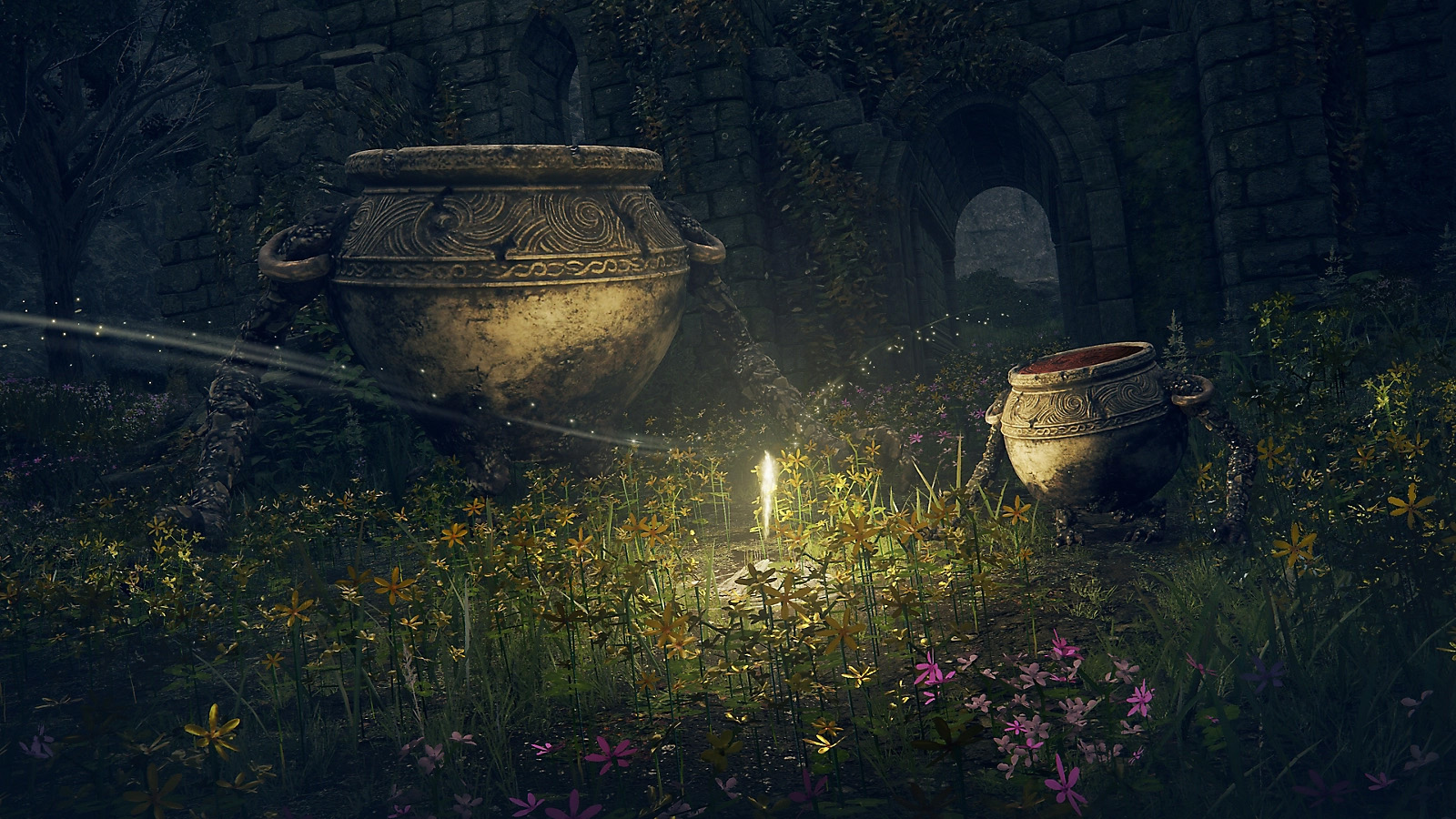 © FromSoftware
The mythological framework presented by FromSoftware in Elden Ring and its expansion, Shadow of the Erdtree, transcends the boundaries of mere dark fantasy, serving as an exquisitely intricate philosophical and literary testing ground. Fusing the mythological foundation laid by George R. R. Martin with the existential game design of Hidetaka Miyazaki, this work serves as a metaphor for the structural issues of modern society and the fundamental nature of the human spirit.
The primary themes addressed in this article can be broadly distilled into three structures of conflict. First is the clash between the “eternity (stagnation)” aimed for by the Golden Order and “change,” which is the essence of life. Second is the “curse of becoming a god,” illustrating the tragedies born from attempts to bring “perfect order” to the world. Third is the biopolitical construction of boundaries—the “grace and exclusion” that inevitably arise to maintain order.
In analyzing these themes, this article will strictly distinguish between concrete lore existing within the game (facts such as item descriptions and environmental evidence) and the speculations formed by the global player community (contextual and structural theories). Building upon this, we will introduce real-world ideological perspectives—such as Friedrich Nietzsche’s Übermensch and Ressentiment, Giorgio Agamben’s Homo Sacer (bare life), the concept of Kegare (defilement) in Japanese Shinto philosophy, and Western alchemical concepts like the Rebis (hermaphrodite) and Nigredo (blackening)—to delve to the utmost depths of the existential theses this work thrusts upon us.
1. The Conflict Between “Eternity (Stagnation)” and “Change”—From the Perspectives of Shinto and Nietzschean Philosophy
1.1 The Structure of the Golden Order and a Teleological Cosmology
The Golden Order, established by Queen Marika by removing Destined Death (the Rune of Death) from the Elden Ring, is an absolute system that literally aspires to immutability and eternity. As crucial facts for understanding the structure of this Golden Order, there are two incantation descriptions in the game that explain Golden Order Fundamentalism: “Law of Regression” and “Law of Causality.”
According to the factual text, Fundamentalism explains the Golden Order through two forces. Regression is “the pull of meaning; that all things yearn eternally to converge,” and Causality is “the pull between meanings; that which links all things in a chain of relation.” As meticulous analyses of the Japanese text in the overseas community have pointed out, the word “Regression” (Kaiki) carries the nuance of Samsara or a cycle, where all things return to their starting point in a circular motion. Furthermore, “Causality” (Inga) suggests the absolute Buddhist and philosophical connection between cause and effect, akin to karmic retribution (“You reap what you sow”).
What these two laws signify is an extremely rigid “teleological totalitarianism.” The force of Regression functions to converge all phenomena into a single fundamental “meaning” (the Golden Order), permitting no deviation or mutation from the system. Meanwhile, the force of Causality binds all existence within an inescapable chain of relationships. As long as this system functions perfectly, true “change” or “novelty” cannot be born in The Lands Between. As Goldmask later discovers, the sole and greatest element of uncertainty (a bug) in this Order, which ought to be eternally immutable, was “the fickleness of the gods no better than men.”
1.2 Eternity as “Defilement”—Stagnation and Rot in Shinto Philosophy
The Golden Order, which sought to construct an eternal order, paradoxically brought “rot” to the world. Here, the game’s themes resonate deeply with the concept of Kegare (defilement) in Japanese Shinto, which has also been the subject of lively discussion within the community.
In Shinto philosophy, Kegare does not mean Western moral evil (Sin), but rather the “withering of spirit” (Ki-gare), meaning the depletion of life force or “stagnation due to the loss of fluidity.” According to brilliant speculations by the community, the direction continuing from the Dark Souls series and Sekiro consistently harbors a “fear of water, blood, and time ceasing to flow and becoming stagnant.” Water remains pure as long as it continues to flow, but the moment it stops flowing, it begins to rot.
In Elden Ring, the myth of Malenia and the Goddess of Rot most symbolically embodies this concept of “stagnation equals rot.” The Lake of Rot deep underground is the destination of flowing rivers like the Siofra and Ainsel Rivers, a massive terminus where all impurities precipitate and stagnate. While flowing water nurtures “life” such as the Ancestral Followers and the Eternal Cities, stagnant water breeds nothing but the death known as “rot.”
By excluding Destined Death, the Golden Order halted the natural cycle of life, driving the entire world into a colossal “stagnation” in the name of eternity. The philosophical paradox that the very attempt to preserve the world eternally results in rotting it from the inside out lies at the foundation of this game’s cosmology.
1.3 “The Last Man” and the Antithesis to a Frictionless World
Analyzing this stagnant world and the existential crisis of the people living within it through the lens of Friedrich Nietzsche’s philosophy is extremely important for deciphering the game’s themes. Nietzsche presented the concept of “The Last Man” in his magnum opus, Thus Spoke Zarathustra.
“The Last Man” is the ultimate fate of a humanity devoid of creativity, having completely eliminated risk, danger, and struggle from life, merely enjoying modest daily pleasures and comforts, blinking and saying, “We have invented happiness.” If modern society is a world where safety nets and algorithms have eliminated friction and eradicated pain, then The Lands Between prior to The Shattering, under the aegis of the Golden Order, can also be said to have been a “world of the Last Man” stripped of the fear of death.
However, the human spirit (or its hardware-like structure) is designed to function only in environments where friction and struggle exist. In a world deprived of struggle, the spirit is tormented by boredom and anxiety, rotting itself away. The narrative of this game, which dismantles the nostalgia of Campbell’s The Hero with a Thousand Faces, confronts the player with the madness inherent in a safe, meaningless utopia.
1.4 The Tarnished as the Übermensch and Amor Fati
With the shattering of the Elden Ring, the world was torn apart, and pain and struggle were brought forth once again. Into this merciless and unreasonable world, the player—the “Tarnished,” who was once stripped of grace and returned after literally experiencing “death”—is thrown as an existential subject.
As philosophical observations from overseas suggest, the Tarnished is the embodiment of Nietzsche’s Übermensch. The Übermensch is one who, in an age of nihilism where absolute values (God) have collapsed, does not rely on externally provided meaning, but creates new values and rules through their own “Will to Power.” The process by which the Tarnished successively overthrows mighty Demigods and gods themselves is nothing less than the violent praxis of Nietzsche’s declaration that “God is dead.”
The overwhelming difficulty and unreasonableness inherent in the gameplay itself function not merely as a burden for entertainment, but as a philosophical apparatus that prompts “Self-overcoming” within the player’s own mind. To rise no matter how many times one dies, to explore the world by one’s own will, and to affirm desperate situations while continuing to fight. That is the state of Amor Fati in Nietzschean philosophy, and it is a powerful message of the affirmation of life that this game unleashes toward a frictionless modern society.
2. The Price of Creating Perfect Order—Alchemical Transmutation and the “Curse of Becoming a God”
2.1 The Marriage of Red and White—Marika and Radagon as the Rebis
The existence of a god embodying “eternity” and “perfect order” is in itself a prison (a curse) that strips away one’s own agency. This theme is heavily reflected in the relationship between Queen Marika and Radagon, the hound of the Golden Order, through the symbolism of Western alchemy.
As a matter of fact, using the “Law of Regression” on the hidden statue of Radagon in Leyndell, Royal Capital reveals the definitive text: “Radagon is Marika.” They are a single entity sharing one physical body, despite possessing two distinct minds. This structure has been widely interpreted within the community as a metaphor for the alchemical Rebis (hermaphrodite).
The Rebis, which appears in the final stage of the Magnum Opus in alchemy, is the product of the union between the “Red King” and the “White Queen,” symbolizing the perfect harmony of opposing natures (male and female, sun and moon, spirit and matter) and divinity (the Philosopher’s Stone). As lore based on facts, Radagon has red hair and gifted the “amber egg” (red/gold) to Rennala of the academy, while Marika reigns as the symbol of gold (or white). This integration of red and white (gold) signified the construction of a literal “perfect vessel” to maintain the absolute law of the world known as the Golden Order.
| Alchemical Symbol | Character in Elden Ring | Contrast of Nature and Role |
|---|---|---|
| Red King | Radagon | Masculinity, proactivity, blind faith in Golden Order Fundamentalism, repairer of the system |
| White Queen | Marika | Femininity, receptivity, the anguish of being a god, destroyer of the system |
| Rebis | Marika=Radagon as a god | The vessel of perfect divinity. However, a “fractured perfection” where conflicting wills clash internally |
2.2 The Tragic Rebis—The Fracture of Perfection and the Dissolution of Self
However, following deep philosophical reasoning, one must evaluate the union of Marika and Radagon as a “failed Rebis.” A truly perfected Rebis should maintain perfect harmony without causing internal self-contradiction.
As a fact, item descriptions clearly indicate that while Marika attempted to shatter the Elden Ring, Radagon attempted to repair it. This fatal conflict of wills within a single body suggests the “impossibility of attempting to become perfect order (a god).” Becoming the vessel for the absolute law (the Golden Order) to completely rule the world was an act that tore apart one’s own humanity, emotions, and the unity of the soul. Marika imprisoned herself by becoming a god, ultimately having no choice but to resort to self-destruction—shattering the order of the world along with her own flesh.
2.3 The Contradiction of the Age of Compassion—The Discarding of Love (Trina) and a Totalitarian Dystopia
The trajectory of the Empyrean Miquella in Shadow of the Erdtree repeats this theme of the “curse of becoming a god” in the most tragic and ironic manner. Miquella sought to right the wrongs (Original Sin) of his mother Marika and establish an “Age of Compassion” devoid of blood and struggle. However, the means to achieve that goal paradoxically led to the complete collapse of his own divinity and humanity.
As a fact, on his journey to the Realm of Shadow, Miquella abandoned his Great Rune, discarding his golden flesh, strength, fate, and even St. Trina—his other half representing “love”—into the depths of the earth (the Garden of Deep Purple). According to facts related to Trina and NPC dialogue, Trina is “Miquella’s love itself,” and she conveys to the Tarnished: “Please stop Miquella. Godhood would be his prison.”
Here lies the greatest philosophical paradox presented by this game. To become a “god who embraces all and fills the world with compassion,” Miquella had to physically and mentally sever his very “capacity to love” (self-love and individual love for others).
According to astute speculations by the community, the “compassion” of Miquella, having lost love (Trina), is no longer based on empathy or consideration for others, but is merely a mechanical system of “brainwashing (charming)” that forcibly strips the subject of their will. His “Age of Compassion” would completely eradicate struggle and pain from the world, but at the cost of entirely stripping all of humanity of their free will. From a Nietzschean perspective, this signifies the completion of the worst kind of totalitarian dystopia (an Age of Mind Control), robbing humanity of all possibilities for existential projection and forcibly remaking them into livestock-like “Last Men.” The throne of a god is a cursed prison that strips away human wavering from the one who sits upon it, turning them into a mere execution device for the law.
2.4 Yorishiro (Vessel) and Original Sin—The Ritual of Nigredo at the Gate of Divinity
The price of becoming a god is not limited to personal internal loss; it demands the thorough sacrifice and exploitation of others (the objectification of others). This cruel system is clearly demonstrated in the structure of the “Gate of Divinity” located in the deepest part of Enir-Ilim in the Realm of Shadow.
As a fact, the “Secret Rite Scroll” states: “A lord will usher in a god’s return, and the lord’s soul will require a vessel.” As linguistic analyses of the Japanese text in the overseas community have revealed, the word “vessel” (Yorishiro) refers to an object possessed by a divine spirit in Shinto. This indicates a visceral structure of domination that consumes and invades the flesh of another as a mere “container.” In fact, to resurrect the soul of his Promised Consort Radahn, Miquella utilized the corpse of his own maternal half-brother, Mohg, as a convenient “vessel,” modifying his flesh at will.
Furthermore, applying alchemical interpretations from the community to the design of this “Gate of Divinity” brings a spine-chilling mythological background to the surface. The Gate of Divinity is constructed not of stone, but of a mass of countless raw bodies and corpses. There is a strong speculation that this is a massive apparatus representing the ultimate extension of the “Jarring” ritual performed by the Hornsent upon Marika’s people (the shamans).
In alchemy, the initial process for creating a perfect entity (the Rebis or the Philosopher’s Stone) is called Nigredo (blackening or putrefaction). It is a cruel procedure where all materials are heated and melted, destroying the ego to reduce them into a black, uniform substance. The act of the Hornsent slicing up shamans and stuffing them into jars along with criminals to form a single mass of flesh (what they called “good people”) was exactly a grotesque ritual of Nigredo to attain divinity.
The most prominent theory in the community regarding Marika’s “Original Sin” and the “seduction and betrayal” mentioned in the trailer is that Marika utilized, or usurped through seduction, this alchemical ritual system of the Hornsent (the Gate of Divinity constructed from the corpses of countless shamans) to ascend to godhood herself.
The divine seat is a bloodstained altar that can only be reached by grinding down the lives of countless others as “vessels” (materials). The very act of Miquella abandoning everything to aim for the divine seat in order to “bury the Original Sin” was nothing more than a “repetition of the Original Sin” by making Mohg a vessel. This is the epitome of the grim irony presented by this game: that the act of seeking perfection inevitably entails violence.
3. Grace and Exclusion—Agamben’s Homo Sacer and the Chain of Ressentiment
3.1 The Biopolitics of the Golden Order and “Bare Life”
“Perfect order” inevitably requires “those who belong on the outside” (the excluded defiled) in order to define the pure who belong on the inside. This mechanism of exclusion by the Golden Order aligns astonishingly perfectly with the biopolitical paradigm of Homo Sacer proposed by the Italian philosopher Giorgio Agamben.
In Agamben’s theory, Homo Sacer refers to a figure originating from ancient Roman law: “one who may be killed but not sacrificed.” The sovereign (defined by Carl Schmitt as he who decides on the state of exception) establishes their absolute power and the boundaries of the community by creating a “State of Exception” that falls outside the protection of the law. Those designated as Homo Sacer are banished from the political and religious community, permitted only to live as mere biological life, or “Bare Life.” They are subjected to a “double exclusion”: while anyone who kills them cannot be charged with legal murder, they are simultaneously denied even the value of being a sacrifice in religious rituals.
In The Lands Between, the Omen, the Albinaurics, the Misbegotten, and the Tarnished themselves—who were once stripped of grace—are positioned precisely as this Homo Sacer. Under the Golden Order, the dead are granted an honorable death known as “Erdtree burial,” returning to the roots of the Erdtree (a kind of ritual sacrifice and integration into the whole). However, the Omen, bearing the sign of horns, are denied even this cycle of Erdtree burial (being offered as a sacred sacrifice); they are either killed by having their horns excised or discarded into the subterranean depths of the Royal Capital.
The radiant order known as the Golden Order continuously and intentionally creates the state of exception of the “defiled” solely to define and maintain its own pure blood and sanctity. What this structure reveals is the fact that order is by no means something that saves all of humanity, but rather a runaway violent apparatus of biopolitics built upon scapegoating those who do not fit the system.
3.2 The Hornsent and the Jarring Ritual—The Inversion of Sovereignty and the Dynamics of Ressentiment
This structure of exclusion and persecution had already been established in the history of the “Hornsent” in the Realm of Shadow, in the era before Marika laid down the Golden Order.
As a fact, the Hornsent worshipped the horns growing on them as “proof of being chosen by the sacred Crucible,” forming a privileged class. On the other hand, they subjected Marika’s people (the shamans)—who lacked horns but possessed the trait of their flesh melding harmoniously—to the gruesome ritual of being “sliced into jars along with criminals.” To the Hornsent, the shamans were precisely the Homo Sacer of the society at that time.
Here, Nietzsche’s concept of Ressentiment (the resentment and desire for revenge of the weak against the strong) carries heavy significance. Marika, who was a persecuted Homo Sacer, directed a blade of tremendous Ressentiment toward her former rulers, the Hornsent, after ascending to a sovereign (god) through the Gate of Divinity. She ordered her son, Messmer the Impaler, to thoroughly massacre the Hornsent as heretics, concealing their very existence and history within the Realm of Shadow.
An even more fascinating fact is the psychological state of the NPC “Hornsent” who appears in the DLC. Turning a blind eye to the cruel Jarring ritual (Nigredo) his own race inflicted upon the shamans, he swears revenge, stating that the betrayal and massacre they suffered at Marika’s hands can never be forgiven and that the Erdtree is their enemy, becoming a follower of Miquella for the sake of rebellion. He, too, is possessed by an intense Ressentiment toward Marika.
The historical dynamism depicted in Elden Ring is an endless chain of Ressentiment and exclusion, where “the ruled (Homo Sacer) rises to become the sovereign, inverting the former rulers into the new Homo Sacer, thereby breeding further revenge.” There is no perfect good or perfect evil here; only the Nietzschean “Will to Power” and the accompanying exclusion of others ruthlessly drive history forward.
3.3 The Ideology of the Haligtree—An Attempt from a Tree Structure to a Rhizomatic Sanctuary
Functioning as an antithesis within the game to the biopolitics of the Golden Order based on such an absolute hierarchical structure (a tree structure) was the “Haligtree” that Miquella attempted to grow.
As a fact, while the Erdtree is a privileged system that monopolizes pure blood and the cycle of Erdtree burial, the Haligtree functioned as a sanctuary accepting those rejected by the Golden Order (Albinaurics, Misbegotten, Omen, etc.). Borrowing the concepts of French philosophers Gilles Deleuze and Félix Guattari, if the Erdtree is a centralized and transcendent “arborescent (tree) model,” then the ideology of the Haligtree—which sought to encompass diverse foreign elements as they were and blur boundaries—can be interpreted as an attempt at a more horizontal and decentralized “rhizomatic model.”
However, as facts show, the Haligtree ceased its growth when Miquella was taken away by Mohg, sinking into rot without ever becoming the likeness of a god. Furthermore, as analyzed in the previous chapter, with Miquella himself ultimately aiming for the Gate of Divinity and transforming into another totalitarian system (a new transcendent tree structure) known as the “Age of Compassion” that strips others of their will, the dream of this rhizomatic sanctuary can be said to have been completely crushed.
3.4 The Affirmation of Darkness and Solitude—Existential Liberation in the Age of Stars
The biopolitics of the Golden Order, the chain of Ressentiment, and Miquella’s totalitarian dystopia. Functioning as the most fundamental philosophical answer to shatter the domination by all these “systems (orders)” is Ranni the Witch and the ending of the “Age of Stars.”
As excellent philosophical observations in the community point out, Ranni rejects the deception of The Greater Will and the Two Fingers, fundamentally denying the “radiant yet subservient order.” The “Age of Stars” that Ranni aims for is an attempt to distance absolute meanings (teleology) such as gods and orders from the earth, liberating humanity into darkness, solitude, and the chill of the starry night.
This is the pinnacle of “Existentialism” preached by Jean-Paul Sartre, Albert Camus, Martin Heidegger, and others. In an absurd world where absolute gods and moral standards (essence) do not exist, humans are condemned to be free, and must choose (project) their way of life through their own responsibility and will.
In Ranni’s ending, the player discards the “Golden Order, which guarantees absolute safety and meaning but excludes others and stagnates,” and sets sail into a “truly free and autonomous sea, with no guarantees, where the view is cold and dark.” This is a metaphor for Nietzsche’s “open sea,” signifying the transition from a given Duty (obligation/order) to a self-assumed Freedom (liberty/existence). Freedom is accompanied by the price of solitude, despair, and darkness, but it is depicted as a far more human and dignified existential choice than remaining in a fabricated miniature garden of grace (the world of the Last Man).
| Faction / Form of Order | Nature of the System and Treatment of Boundaries | Philosophical / Ideological Metaphor |
|---|---|---|
| Golden Order (Marika/Radagon) | Absolute, teleological system. Eternal stagnation and exclusion of foreign elements. | Biopolitics / Homo Sacer: Establishment of sovereignty through the creation of a state of exception. Alchemy (Rebis): Self-contradiction and collapse in the pursuit of perfection. |
| Hornsent Culture (Gate of Divinity) | Worship of the Crucible. Elitism and the exploitative consumption of another race (shamans). | Nigredo (Blackening): A maddening alchemical process through the Jarring ritual. Ressentiment: A chain of resentment through the inversion of the strong and the weak. |
| Age of Compassion (Miquella) | Elimination of conflict. Forced interference with the mind and the coercion of equality. | The Last Man: A dystopia that strips away struggle and pain, extinguishing existential freedom. |
| Age of Stars (Ranni) | Distancing of the order. Liberation into a godless world. Affirmation of solitude and the cold night. | Existentialism: The assumption and projection of free will in a meaningless and absurd world. |
Conclusion: Existential Projection and the Creation of Meaning in an Absurd World
The philosophical theme thrust upon us by the vast mythological world of Elden Ring and Shadow of the Erdtree is a scathing critique of human history and power structures themselves—how the construction of a perfect utopia inevitably inverts into tragedy and the exclusion of others.
The eternal “Golden Order” sought by Marika caused the world to stagnate (Kegare/rot) by rejecting flux, driving countless Homo Sacer (bare life) underground. The “Gate of Divinity,” where the Hornsent piled up countless corpses to attain godhood, was the product of a maddening alchemy (Nigredo) that ground down others as tools (vessels). And the “Age of Compassion” that Miquella aimed for to settle those bloodstained Original Sins was also nothing more than a repetition of a new curse—discarding his own love (Trina) and robbing people of their free will.
True divinity (perfection) does not exist, and the very process of pursuing perfection and attempting to solidify a system destroys the world and the self. Amidst this despairing and absurd worldview, FromSoftware is by no means advocating nihilism or defeatism.
The player, thrown into the world as a graceless “Tarnished,” overcomes countless unreasonable deaths, explores the unknown world by their own will, and continues to defy gods possessing overwhelming power. That in itself is nothing less than a grand praxis of Nietzsche’s Amor Fati—“to not deny the cruelty and pain of life, but to affirm it as it is, and to create one’s own value within it.” This work is an extremely modern and profound philosophical tome that reinstates the “meaning of struggle” lost in our safe, frictionless modern society, and proudly extols the dignity of rowing out into the harsh sea of existence.
Cosmology of Shattering and Gold: Elden Ring: 11 Meditations on the Lands Between and Mythology
The book version is now available. Read for free with Kindle Unlimited.
Thank you very much for reading to the end. To help support the activities of this archive, a warm donation of a cup of coffee would be highly appreciated.