Rune.10: Godwyn the Golden
 © FromSoftware
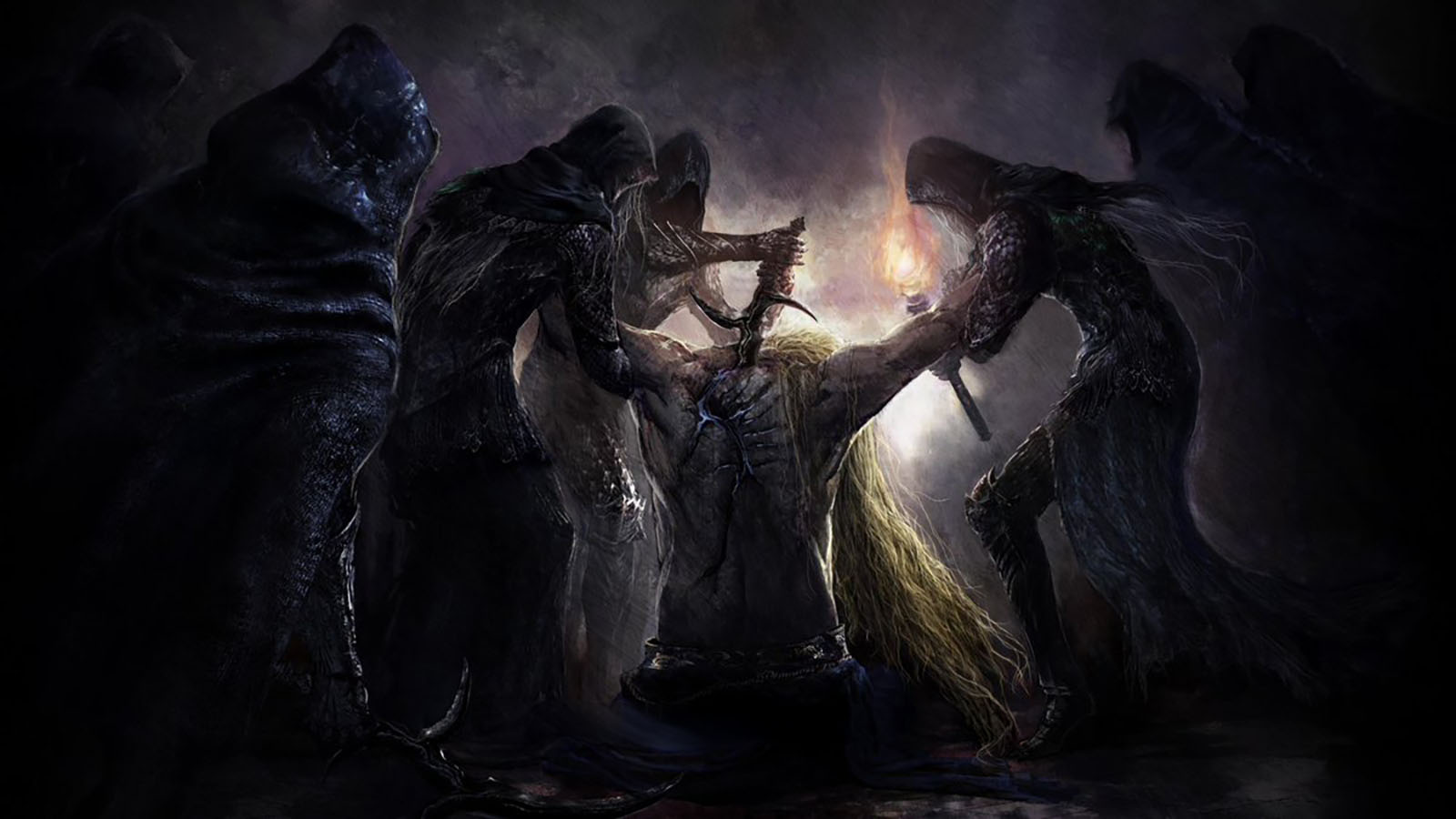
In The Lands Between, there exists a peculiar Demigod who, despite playing a profoundly crucial role as a turning point in history, has left behind no living words, continuing to assert his presence solely as a soulless husk of flesh. This entity is known as “Godwyn the Golden,” or later, the “Prince of Death.” Born to Queen Marika and Godfrey, First Elden Lord, this prince embodied absolute perfection as the symbol of the Golden Lineage. His death served as the direct catalyst for the global collapse known as the shattering of the Elden Ring (The Shattering).
Godwyn’s existence cannot be confined to the mere framework of an assassination victim. His life and death expose the structural flaws of the Golden Order, which championed eternity, while simultaneously serving as a highly sophisticated literary and mythological metaphor that embodies the game’s fundamental themes of “blessing and exclusion” and “liberation from fate.” Everyone projected their love, desires, and personal ambitions onto him. Godwyn was the most worshipped, most exploited, and most desecrated “empty vessel” in the history of The Lands Between. This report comprehensively examines his lineage, historical role, the inner conflicts that emerge as a mirror of others’ intentions, and the philosophical significance presented by his way of life (and death), incorporating fragmented historical records and linguistic interpretations.
1. Lineage and Curse (Blessing): The Sacrificial Fate Borne by the Golden Prince
1.1 The Golden Lineage and the Tragedy of the “Perfect Being”
It is widely speculated that Godwyn was born as the firstborn child of Queen Marika and Godfrey, First Elden Lord. He was a direct descendant of the Golden Lineage, and the fact that he himself was referred to by the title “Golden Prince (Prince of Gold)” can be confirmed from the text of the item “Dragonbolt Grease” used by the Ancient Dragon Knights, as well as from the dialogue of the Finger Reader Crones in the Japanese version.
It is a well-known fact that many of the other Demigods who inherited Marika’s blood were born bearing some form of defect or curse. Morgott and Mohg, imprisoned underground as Omen; Miquella, cursed with eternal childhood; and Malenia, harboring innate rot—they all suffered from “impurities” resulting from the potency of their divine blood. Among them, only Godwyn is depicted as a “flawless being” who bore no curses whatsoever, perfectly inheriting Godfrey’s valor and Marika’s divine golden radiance.
However, this “perfect blessing” was precisely the greatest “curse” within the mythological structure. James Frazer’s classic anthropological work, The Golden Bough, is an unavoidable text when unraveling the character of Godwyn in this game. The core theme of The Golden Bough is the myth of regicide (Rex Nemorensis), which dictates that “in order to maintain fertility and the order of the world, the most perfect and powerful divine king (or his surrogate) must be ritually slain before he grows old and feeble.” The fact that the Finger Reader Crone in the Deeproot Depths explicitly refers to Godwyn as “a scion of the golden bough” strongly suggests that he was designed from the very beginning as a “sacrifice to renew the world.” His perfection is what fashioned him into the most valuable offering (sacrifice).
| Title / Appellation | Era / State | Implications and Mythological Symbolism |
|---|---|---|
| Golden Prince (Prince of Gold) | In life | The legitimate heir of the Golden Lineage. The flawless ruler who united the knights of the Ancient Dragon cult and commanded both gold and lightning. |
| Scion of the Golden Bough | In life to post-death | Direct descendant of the Erdtree. A fatalistic metaphor as the “golden bough” destined to be the victim of ritual regicide. A Frazerian sacrifice. |
| First of the Dead | After the Night of the Black Knives | The first Demigod in history to meet their demise. A martyr of Destined Death. |
| Prince of Death | After becoming the source of Those Who Live in Death | A soulless body that encroaches upon the world as Deathroot. The object of worship for Those Who Live in Death. |
1.2 The Mystery of the “Unwanted Child” Spoken by the Ghost of the Church of Pilgrimage and Marika’s Ambition
A spirit lingering near the Church of Pilgrimage on the Weeping Peninsula leaves behind the following words while gazing at a Walking Mausoleum: “The mausoleum prowls. Cradling the soulless demigod. O Marika, Queen Eternal. He is your unwanted child.”
Generally, the foremost among the soulless Demigods is Godwyn. If this “he” refers to Godwyn, a decisive contradiction arises: he, who was ostensibly her beloved son, was actually an “unwanted child” to Queen Marika. This contradiction gives rise to a ruthless speculation: that Marika herself began to harbor doubts about the foundation of the Golden Order and explore the depths of her own dogma, and that she came to resent Godwyn, the very symbol of the Golden Order, or perhaps even birthed him from the start to serve as a trigger for ruin (a scapegoat). It has been pointed out that Marika may have betrayed Maliketh, the Black Blade, to have a fragment of the Rune of Death stolen from his blade. For her, Godwyn’s death can be interpreted as a signal fire of rebellion against The Greater Will, or a necessary evil to destroy the rigid order she herself had created.
2. Historical Role and Major Actions: Between Mercy and Ruthlessness
2.1 The Ancient Dragon War and Assimilation into the Golden Order
Godwyn’s greatest historical achievement during his life was his valor in the “Ancient Dragon War.” In the early days of Queen Marika’s reign, the Erdtree was attacked by the Ancient Dragons, the former lords of the world. In this desperate battle, where the walls of Leyndell, Royal Capital were breached for the first time by the Bolt of Gransax, Godwyn led the vanguard and defeated the fearsome Ancient Dragon Fortissax. However, instead of obliterating the vanquished, he made the highly unprecedented choice to befriend Fortissax.
The motivation behind this action is often romanticized as pure “mercy” or “tolerance.” At the same time, however, it was an extremely sophisticated act of political and religious assimilation. The “Ancient Dragon Cult” was established in Leyndell, Royal Capital, and the red lightning of the Ancient Dragons was incorporated into the military might of the Golden Order in a way that did not contradict the faith in the Erdtree. This action by Godwyn proves that he was not merely a warrior, but a statesman worthy of being the “god of the coming age,” possessing the ability to incorporate and manage even heresy within the golden order.
Furthermore, the establishment of this Ancient Dragon Cult serves as a crucial clue in unraveling the historical timeline of the Realm of Shadow. The “Dragonbolt Grease” discovered in the DLC Shadow of the Erdtree is an item said to have been used by the knights of the dragon cult who served the Golden Prince, but its crafting requires “Knot Resin,” which exists only in the Realm of Shadow. This fact suggests that either Godwyn’s establishment of the Ancient Dragon Cult and the activities of his knights occurred before the Realm of Shadow was veiled by Queen Marika, or that Godwyn’s knights had somehow mounted an expedition to the Realm of Shadow. This corroborates that Godwyn’s prestige extended beyond the current borders of The Lands Between.
2.2 The Night of the Black Knives: Divided Death and the Remnants of Ritual
The golden age came to an abrupt end in the cold night fog of what is known as the Night of the Black Knives. Godwyn was slain by Numen assassins wielding blades imbued with fragments of Destined Death. At this time, because Lunar Princess Ranni was simultaneously conducting a ritual to slay her own flesh, the cursemark of death was fractured into two, and Godwyn met a twisted demise where “only his soul died, while his flesh lived on.”
Behind the scenes of this assassination drama, many mysteries and conspiracies swirl. One piece of evidence pointing to this is the “Weathered Dagger” entrusted by Fia, the Deathbed Companion. This dagger was originally a special weapon where gold and silver intertwined, and it has been weathered by a black gash. Gold and silver are metals that symbolize the Golden Order (or Marika/Radagon) and the Order of the Night (or Rennala/Ranni) respectively, and it is highly likely that this dagger was used in the plot or served as a catalyst for the ritual. The fact that the original owner of this dagger was D, Hunter of the Dead (and his twin brother) illustrates a historical irony: although the existence of twins was regarded as “inseparable” within the Golden Order, they ultimately became deeply involved in the chain of contradictions that led to the death of Godwyn’s soul and the birth of Those Who Live in Death.
This anomalous situation, in which only his flesh survived, resulted in his corpse, buried at the roots of the Erdtree, mutating into “Deathroot” and spreading throughout the entirety of The Lands Between. He transformed from the Golden Prince into the “Prince of Death,” becoming the unconscious source of Those Who Live in Death.
2.3 The Death Knights of the Realm of Shadow and the “Cadaver Surrogate”
In the DLC Shadow of the Erdtree, Godwyn’s existence reaches a new phase. In the Realm of Shadow, the “Death Knights,” who were once Godwyn’s personal guard, roam. It is said that they seek their “transfigured lord’s cadaver surrogate” in preparation for the coming Age of the Duskborn.
What is extremely important here is the nuance of the word “Wakemi” (分け身) in the Japanese text. Because it is translated into English as “surrogate,” it is easy to mistakenly assume it refers to a surrogate mother like Fia. However, the Japanese word “Wakemi” explicitly means an “alter ego” or “a part of the body/branch severed from the main body.” As indicated by the text of the Death Knight’s Twin Axes and their armor, the Death Knights believe that something similar to the giant visage of Godwyn (a part of his deformed flesh) manifesting beneath Stormveil Castle and in various places across The Lands Between has also taken root and sprouted in the Realm of Shadow. They are attempting to physically recover or protect this “offshoot.”
This suggests that Godwyn’s flesh has transcended the boundaries of a single individual, deteriorating into the “environment itself” that conceptually and physically encroaches upon the world like mycelium or plant roots. Just as Millicent was an “offshoot” of Malenia, Godwyn’s Deathroot also continues to proliferate as its own independent life activity.
3. Inner Life and Conflict (Love, Hate, and Conviction): Those Who Flock to the Empty Vessel
Not a single word uttered by Godwyn himself exists within the game. He has left behind no dialogue speaking of his inner thoughts, nor any diary indicating his will. However, from the extraordinary obsession of the key figures surrounding him, we can paradoxically bring to light what he was burdened with in this world and what he wished to protect. His inner life functions not through his own words, but as a mirror reflecting the “love and hate” and “ressentiment” directed at him by others.
3.1 The Suppression of Perfect Gold and the Ressentiment of the Flesh
In life, as the perfect embodiment of the Golden Order, he was forced to suppress his own emotions and act as an exemplary puppet for his mother Marika and The Greater Will. His profound mercy, which forgave even the Ancient Dragons, is, conversely, the ultimate form of self-sacrifice—“grinding down even his own hostile emotions for the sake of administering the Order.” It is believed that he killed his own desires to the absolute limit in order to maintain the powerful ideology of the Golden Order.
The moment the “shackles of reason” known as the soul were removed, his flesh began to grow boundlessly, transforming into a grotesque, giant aquatic creature-like aberration that hideously encroached upon the world. This can be interpreted as a silent rebellion (an outburst of ressentiment) triggered by his deep psyche against the oppressive system of the Golden Order. The reality that he, who was the perfect prince, took root in the world in the most hideous form demonstrates the explosion of his suppressed instincts and the hidden thirst for life within him.
3.2 Miquella’s Ruthless Prayer and the True Meaning of a “True Death”
The most complex and tragic relationship surrounding Godwyn is the one with his half-brother, Miquella. Miquella mourned Godwyn’s soulless death and offered the Golden Epitaph sword. Its text contains the quiet prayer of a young boy: “O brother, lord brother, please die a true death.” Furthermore, the eclipse ritual at Castle Sol is speculated to have been an attempt to resurrect the soulless Demigod.
On the surface, this is an expression of pure brotherly love, desiring to free his beloved older brother from the curse of his grotesque form. However, when considering Miquella’s true nature—his “ambition for godhood” and his “terrifying power of charm”—this text demands an entirely different, ruthless interpretation. The Japanese text “正しく死んで下さいな” (Please die correctly/properly) carries a more cursing, or thoroughly utilitarian undertone than the English “die a true death,” implying a desire for him to “end the current obstructive situation (his existence as one of Those Who Live in Death) for the sake of my own plans.”
| Differences in Interpretation of the Relationship Between Miquella and Godwyn | Superficial Interpretation (Affectionate Brother) | Hidden Interpretation (Ruthless Candidate for Godhood) |
|---|---|---|
| Prayer of the Golden Epitaph Sword | Pure mourning, pitying his brother’s soulless agony and wishing for true rest (complete death). | A demand to destroy the flesh running rampant as one of Those Who Live in Death, eliminating an obstacle to his own new Order. |
| Words of the Spirit at Castle Sol | A tragedy where the attempt to resurrect the soul of his “Comrade/Friend” Godwyn failed. | A ritual intended to prepare Godwyn as the “vessel” for the Promised Consort, which failed because the flesh had mutated too much. |
| Choice of the Promised Consort | Drawn to Radahn’s strength and kindness from a young age, he had chosen only him as his lord. | Because the plan to use Godwyn as the vessel for his lord collapsed, he chose Radahn (and Mohg’s flesh) as an alternative. |
Miquella later used Mohg as a “vessel (flesh)” to house the soul of his chosen lord, the “Promised Consort Radahn.” As many lore theorists point out, it is highly likely that Miquella initially envisioned Godwyn, who possessed a perfect body, as this “vessel.” However, because Godwyn’s flesh mutated into Deathroot and became an uncontrollable source of contamination, the ritual at Castle Sol ended in failure, leading to the perspective that Miquella reluctantly charmed Mohg as a substitute. Based on this hypothesis, Miquella’s prayer can also be read as an expression of selfish despair: “I wanted you to keep your soulless flesh in a clean state (a true death) so I could use it as a vessel.” Furthermore, the fact that the spirit at Castle Sol refers to Godwyn as a “Comrade” rather than “Lord brother” implies that Miquella viewed him not as a mythological older brother, but as an “ally/material” for his own plans.
3.3 Fortissax and Fia: Pure Devotion and Selfish Motherhood
On the other hand, the Ancient Dragon Fortissax, who crossed blades and formed a friendship with Godwyn in life, continued to stay within the abyss of his consciousness (the Deathbed Dream) to fight against the death within him even after he had become the Prince of Death. Ultimately, Fortissax himself was overcome by the death blight and became a “Lichdragon.” This action by Fortissax proves just how much charisma Godwyn possessed to inspire such deep loyalty and pure affection in others. His existence radiated a light bright enough to forge a fellowship that transcended species.
In contrast, Fia, the Deathbed Companion, does not know the brilliance of Godwyn in life. She is merely projecting her maternal ressentiment and faith of “protecting Those Who Live in Death” onto Godwyn’s soulless flesh. She did not seek to be Godwyn’s “Surrogate,” but rather sought to become the “mother” herself, giving birth to a second life (the Mending Rune of the Death-Prince) by lying with him. To Fia, Godwyn was a convenient “empty vessel” to fulfill her own raison d’être, and regardless of what his own will might have been in life, her love was validated. Godwyn was loved by Fortissax as a symbol of light, and loved by Fia as a symbol of darkness.
4. Philosophical and Thematic Significance: Metaphors and Antitheses in Elden Ring
4.1 Eternity and Change: The Duality of “Ningyo” (Doll / Mermaid)
In the lore of Elden Ring, the Night of the Black Knives, which birthed the greatest tragedy, possesses a linguistic and symbolic duality. The Japanese pronunciation “Ningyo” carries two meanings: “Doll” (人形) and “Mermaid/Fish-man” (人魚).
Ranni, who discarded her flesh to become solely a soul, surviving by using a Doll as her vessel. In contrast, Godwyn’s flesh, whose soul was killed, continues to live while metamorphosing into the form of a hideous aquatic creature, a Mermaid. These two are extreme antitheses born as a result of the fracturing of the concept of “death,” the cycle of life.
| Elements of Comparison | Lunar Princess Ranni (Doll / Ningyō) | Godwyn the Golden (Mermaid / Ningyo) |
|---|---|---|
| What was lost | Original flesh | Original soul |
| What remained | Soul, will, intellect | Flesh, vitality, unconscious proliferation |
| New form | Artificial Doll | Deformed mass of aquatic flesh (Mermaid/Fish-man) |
| Symbolized ending | Age of Stars (Abandonment of the Order, solitary freedom) | Age of the Duskborn (Assimilation of death, stagnant eternity) |
If Ranni symbolizes “liberation and change from the Golden Order (Age of Stars),” then Godwyn’s corpse is the symbol of “the stagnation and corruption inherent in the Golden Order (eternal death).” The arrogant attempt to “seal Destined Death” at the foundation of the Golden Order caused the worst systemic bug: the proliferation of flesh that cannot die. Godwyn’s form serves as a philosophical warning of how an eternity that excludes death degrades life into a blasphemous state.
4.2 Blessing and Exclusion: To the Father of the Perfectly Discriminated
The Golden Order is a harsh system that clearly distinguishes and excludes the blessed from the unblessed (such as the Fell Omen, Misbegotten, and Albinaurics). In life, Godwyn was the “greatest beneficiary of grace” who reigned at the pinnacle of that system, an absolute figure of power.
Ironically, however, through his assassination, he arrived at the position of the source (Prince of Death) of “Those Who Live in Death”—the very targets most fiercely hated and thoroughly hunted within the Golden Order. This downfall illustrates the “unity of light and shadow” in Elden Ring. As the history of the Realm of Shadow shows, wherever gold is born, shadow is inevitably born as well. The structure in which the one at the pinnacle of gold suddenly becomes the god of the most downtrodden outcasts mercilessly exposes the fictitious nature of the absolute dualism built by Marika. Without his own volition, Godwyn became the greatest piece of evidence indicting the deception and discriminatory structure of the Golden Order.
4.3 Liberation from Fate: Significance as a Hollow Throne
The Tarnished, the player of this game, strikes down numerous Demigods and aims for the throne of the Lord. While many Demigods struggle for their own causes, ambitions, or curses, Godwyn alone possesses no will whatsoever.
However, precisely because he possesses no will, he was able to accept Fia’s ressentiment and harbor the “Mending Rune of the Death-Prince.” The “Age of the Duskborn” brought about by this rune is an ending that incorporates “life within death,” which the Golden Order rejected, into the laws of the world. Just as Godwyn incorporated the Ancient Dragons into the Golden Order in life, in death he also became the foundation of a new order that encompasses the boundary between life and death, through Fia and the Death Knights who utilized him.
He was never liberated from his fate. While Ranni stole Destined Death with her own hands to free herself from her destiny, Godwyn had Destined Death unreasonably forced upon him, bound to the world as an eternal sufferer. What his way of life (and death) thrusts before us is the unspeakable cruelty of mythological destiny: that one created as a “perfect vessel” continues to be used as a “vessel to support the world” even after being broken.
Conclusion: The Redefinition of Order Brought About by the Eternal Sacrifice
The existence of Godwyn the Golden is the central axis of the mythological tragedy in Elden Ring. While he was the golden culmination born of Marika’s ambition, he was offered as a sacrifice to advance the world to its next stage, much like the dying divine king in The Golden Bough.
It is impossible to state definitive facts about his inner thoughts. Did he anticipate the assassination? Was he aware of Marika’s betrayal? What did he think of Miquella’s cruel prayer? Or was there an agreement hidden behind Ranni’s plot? However, it can be said that the contrast between his overwhelming “silence” and his physically rampant “flesh” expresses his inner conflict—a silent roar against the Golden Order that forced perfection upon him.
Godwyn transformed from a radiant, exemplary prince into an indescribable avatar of death. Yet, in either state, he never lost his unique trait of “assimilating others.” In life, the Ancient Dragons; in death, Those Who Live in Death. As a result of the world’s ressentiment and love-hate being poured into the empty vessel that was him, he destroyed the old Golden Order and opened the door to a new order that encompasses death. It can be concluded that Godwyn the Golden is the most noble and most pitiful “absolute receiver,” who was able to transform the world only through the complete loss of his self.
Cosmology of Shattering and Gold: Elden Ring: 11 Meditations on the Lands Between and Mythology
The book version is now available. Read for free with Kindle Unlimited.
Thank you very much for reading to the end. To help support the activities of this archive, a warm donation of a cup of coffee would be highly appreciated.