Rune.05: Messmer the Impaler
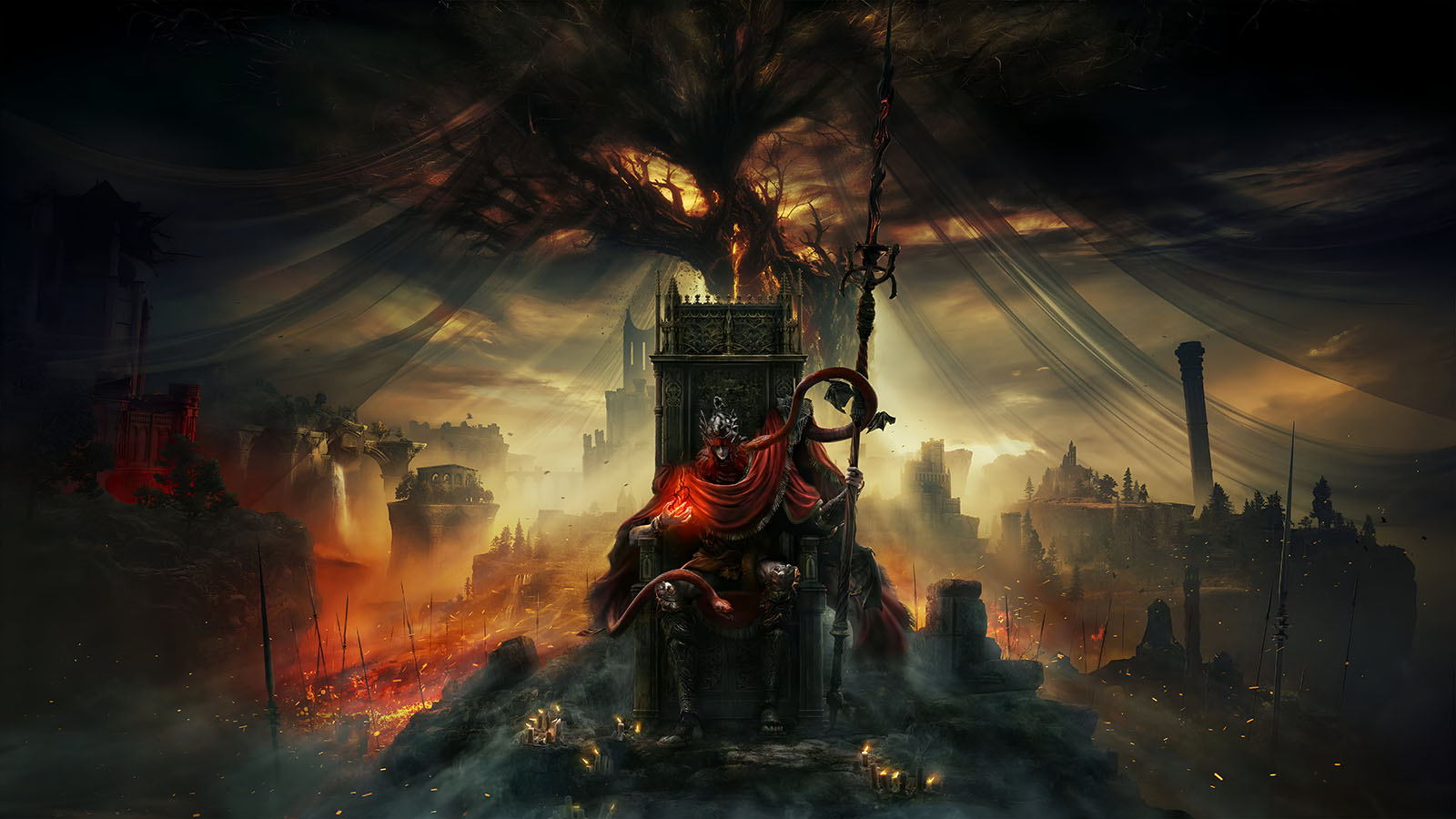 © FromSoftware
In the history of the Erdtree that rules over The Lands Between, there exists a peculiar Demigod whose existence was intentionally concealed and buried in the darkness of history. That is “Messmer the Impaler.” Despite being of the direct bloodline of Queen Marika the Eternal, he was sealed away in the graceless Realm of Shadow and forced into an endless, gruesome crusade (purge).
This article thoroughly unravels the curse etched into his origins, his historical role, his relationships with his followers, and above all, the love, hatred, and conflict swirling within him, from literary and psychological approaches. The existence of Messmer is not merely that of a cruel tyrant. His way of life is the very “excluded shadow” essential for the establishment of the absolute order known as the Golden Order, and it strongly bears the tragic aspect of a scapegoat burdened with his parent’s sins. By tracing his life, this article brings into relief the true structure of “grace and curse” and “eternity and change” that underlies the worldview of Elden Ring.
1. Origins and Curse (Grace): The Fate of Harboring Fire and Serpent
1.1 Observations on the Background of His Birth and Kinship
Messmer is a Demigod belonging to an extremely early generation, born to Queen Marika as his mother. It is highly likely that his existence predates the other Demigods who stand on the center stage of the Erdtree’s history, and upon his banishment to the Realm of Shadow, all records concerning him were erased by Marika’s own hands.
Although there is no explicit mention of his father, his symbolic “red hair” strongly suggests that he either draws the blood of Radagon, the second Elden Lord, or possesses the nature of an Empyrean born from a single god, Marika and Radagon. In fact, Messmer had deep connections with other prominent Demigods. In particular, he acted as an “older brother figure” to the young General Radahn (the Redmane), and it can be read from the text that a solid bond existed between them.
Furthermore, indispensable to discussing Messmer is his extremely close relationship with Melina. In-game texts explicitly state that Messmer has a younger sister who bore a “vision of fire.” Melina, too, is burdened with the duty of burning herself as the “Kindling Maiden” to set the Erdtree aflame, and both inherently possess the destructive nature of “fire.” Given the common initial “M” seen in the naming conventions of twins like Miquella and Malenia, and the visual characteristic that both have their left eye closed, it is inferred that Messmer and Melina are twins born from Marika’s “vision of fire,” or existences that form a pair.
| Type of Butterfly | Symbolized Demigod | Inherent Nature and Influence |
|---|---|---|
| Aeonian Butterfly | Malenia the Severed | Scarlet Rot. Irreversible physical decay and stagnation. |
| Nascent Butterfly | Miquella | Eternal youth. The cessation of growth and preservation of purity. |
| Smoldering Butterfly | Melina | Kindling. Fuel for destruction, or a catalyst for renewal. |
| Black Pyrefly | Messmer the Impaler | Dark flame. Direct destruction and purification that burns everything to ashes. |
As the symbolism of the butterflies above indicates, Messmer and Melina were brought into this world embodying “entropy (change and collapse),” which the Golden Order abhors most.
1.2 An Innate Curse: The Abyssal Serpent and the Vision of Fire
From birth, Messmer harbored two terrifying “curses (or the flip side of grace)” within his body.
The first curse is the “Base Serpent / Abyssal Serpent” writhing within him. In the world of the Golden Order, serpents are detested as symbols of apostasy and god-devouring (blasphemy). His mother, Marika, feared this wicked serpent lurking within her child. As a result, she gouged out Messmer’s eye with her own hands and, in its place, embedded an “Iris of Grace” to seal the serpent’s power. This ritual of enucleation and sealing possesses a dual nature: it is a “protection of love” from mother to child, while simultaneously being a “thorough suppression of abnormality.” If likened to certain lore or biblical interpretations, Messmer lived a paradox: he was burdened with the role of a Cherubim (angel) blocking the path to the Tree of Life (the Ancient Ruins of Rauh and the Erdtree) with a flaming sword, while simultaneously harboring the very serpent of the Garden of Eden within his body.
Furthermore, it has been pointed out that this Abyssal Serpent may have a conceptual connection to Outer Gods, such as the “God-Devouring Serpent” to which Rykard cast himself, or the “Formless Mother.” Just as the Formless Mother craves wounds and grants power to accursed blood, Messmer’s inner serpent was an entity that gnawed at his flesh and robbed him of light.
The second curse is the dark kindling known as “Messmer’s flame” hidden within him. This flame possessed a dangerous power capable of burning the “Sealing Tree” located in the Ancient Ruins of Rauh, and by extension, burning the Erdtree itself to ashes. In the world of Elden Ring, for the Golden Order that champions eternity, “fire” is the greatest taboo that brings about change and ruin. Just as prophets were exiled from their homelands for seeing visions of fire, it is easy to imagine that Marika, too, was wary that Messmer’s vision of fire would become a calamity threatening the eternal order she was building.
Although Mother Marika bestowed upon her child the alms of the Iris, she ultimately could not withstand the fear, hiding and abandoning Messmer in the Realm of Shadow. The fate Messmer bore was not the “glory of a child of god,” but rather the role of a “containment vessel for a bug that threatens the divine order.”
2. Historical Role and Major Actions: The Unending Crusade in the Realm of Shadow
2.1 The Purge of the Tower Folk (Hornsent) and the Motive for the Crusade
In the main game and past history, the most decisive action Messmer took was the “crusade into the Realm of Shadow,” triggered by the command of his mother, Marika. As a historical fact, he led a mighty army to mercilessly trample the indigenous “Hornsent (People of the Tower)” of the Realm of Shadow, slaying their divine beasts and burning their tower settlements with fire.
As Needle Knight Leda speaks of a “purge without Grace or honour” and “cleansing by fire,” this war was neither a defensive battle nor a territorial expansion, but aimed at pure “annihilation.” The Hornsent deeply resent the fiery tyranny of Messmer, and the Hornsent Grandam bares fierce hatred, stating that Messmer and his lot “stripped us of everything, and ruined it all” and “betrayed us, and burned us.”
Here, it is necessary to separate fact from speculation. As a historical fact, it is confirmed that Marika ordered the purge of the Hornsent, and Messmer executed it. On the other hand, regarding the “motive,” speculation based on environmental evidence accounts for the majority. The most compelling theory is that this purge was a proxy for Marika’s personal revenge. In the past, the Hornsent abducted the residents of Marika’s homeland, the “Shaman Village,” and performed a gruesome “jarring (a ritual of sanctification)” by slicing their flesh and stuffing them into great jars. It is believed that Marika sought to erase the culture and very existence of the Hornsent from the face of the earth as retaliation for the horrific agony suffered by her compatriots. Messmer was merely chosen as the blade of his mother’s revenge, burdened with the role of burning everything to ashes. Regarding the time when this crusade began, since Rennala gifted her younger sister Rellana a parting gift of black hair, it is inferred to be an event that occurred before (or around the same time) Radagon abandoned Rennala to return to Marika.
2.2 The Roster of Messmer’s Army and Psychological Domination
Under Messmer’s command gathered an extremely powerful and peculiar army. What is particularly noteworthy is the fact that the main officers and soldiers comprising his legion were not merely cold-blooded killers, but those alienated from the mainstream society of the Erdtree, or those who deeply resonated with Messmer’s inner self.
| Faction / Key Figures | Background and Role | Relationship with Messmer |
|---|---|---|
| Fire Knights (Kood, Salza, etc.) | Knights from noble families exiled from the upper echelons of the Erdtree. Wielders of fire incantations. | They truly understand the “cursed flame” and “destiny of agony” borne solely by Messmer, pledging absolute loyalty to share his fate. |
| Rellana, Twin Moon Knight | A princess of the Carian Royal Family. Combines glintstone sorcery with fiery swordplay. | Abandoned her family and status to follow Messmer to the Realm of Shadow. Acts as his “sword,” showing personal devotion. |
| Commander Gaius | An Albinauric who lost both legs. A master of gravitational magic. | An Omen in the Golden Order, but a close friend of Messmer, having trained together as older brother figures to Radahn. |
| Black Knights (Andreas, etc.) | The main force of the army. Later rebel upon learning of Messmer’s serpentine nature. | Even after being betrayed, Messmer deeply mourned them not as “disposable pawns” but as “brothers-in-arms.” |
The Fire Knights form the core of Messmer’s army, but they too were not monolithic. For example, Fire Knight Salza despised barbaric destruction and risked his own life refusing to burn the Ancient Ruins of Rauh. Hilde advocated for the preservation of species and guarded the specimens in the Storehouse. Their helms are adorned with winged serpents, which served the role of a “wise friend” to keep the wicked Abyssal Serpent lurking within Messmer in check and suppress its power. Thus, Messmer’s forces were not driven by a single destructive impulse, but were a group harboring intellect and conflict.
Furthermore, what is particularly noteworthy is the use of the “Iris of Grace” and the “Iris of Occultation” within Messmer’s army. To quell the fears of the soldiers on the gruesome battlefield, the priests of the Erdtree used these irises to force “blind faith in the name of grace” or “complete darkness (sensory deprivation).” As the fate of Fire Knight Queelign shows, Messmer’s forces were constantly exposed to their mental limits, barely maintaining their form as a unit through the psychological domination known as Mother Marika’s grace (the irises).
3. Inner Self and Conflict (Love, Hatred, and Conviction): Trauma and Ressentiment as a Scapegoat
What should be emphasized most in this report is the analysis of Messmer’s extremely human and heartbreaking inner self, hidden beneath the mask of the “Impaler” depicted as a mad king of slaughter. He is by no means a sadist who enjoys violence itself. At the root of his behavioral principles lies an intense cognitive dissonance: a fanatical “love and sense of duty” toward his parent, and the “despair and ressentiment (grudge)” at the end of being betrayed.
3.1 Trauma-Conditioned Obedience
Despite having the terrifying moniker of the “Impaler,” in the game’s depictions, Messmer never shows any emotional arousal such as mocking his enemies or celebrating the triumph of slaughter. His atrocities are somewhat ritualistic, and his emotions seem detached.
Analyzed from a psychological and literary standpoint, this is not sadism but a typical example of “trauma-conditioned obedience.” Despite having his eye gouged out by his mother, having the abominable serpent sealed within him, and being banished to a graceless land, he merely continued to mechanically execute the function of “purge” ordered by his mother. To numb the immense guilt for the atrocities he was committing, he mentally reduced himself to “a flame that executes Marika’s will.” In his pleading call of “Mother… Marika…” during the boss fight, the dignity of a ruthless general is absent, and the figure of a helpless child begging for love shines through.
3.2 Love for Brothers-in-Arms and the Structure of Loneliness
As mentioned earlier, he shows deep mourning for the rebellion and death of Black Knight Huw. This is clear evidence that he deeply loved his soldiers not as mere chess pieces, but as “brothers-in-arms” who bled together. Messmer heavily relied on Gaius, an “Albinauric,” and accepted the Fire Knights, who were “exiles.” For him, the army was a kind of pseudo-family where those who had fallen from the grace of gold gathered.
However, behind that affection lies absolute loneliness. The only ones who truly understood him were a few Fire Knights, and once his true nature as a “serpent” was exposed, even his subordinate Black Knights turned their blades against him. While commanding a crusade to purify the “defilers of purity (Hornsent)” with fire, he harbored the self-contradiction that he himself bore the most defiled “curse of the serpent,” and continued to endure it. What he wanted to protect might not have been merely Marika’s orders, but the very “place to belong” he had built together with his equally abandoned soldiers.
3.3 Self-Sacrifice as the Golden Scapegoat
Messmer reigned as a “symbol of terror,” taking upon himself the brunt of all the curses, anger, and grief in the Realm of Shadow. Just as the Hornsent Grandam spits, “A curse upon the strumpet’s progeny,” the resentment of the Hornsent was concentrated on Messmer.
By gathering hatred upon himself as the “root of all evil,” Messmer was trying to protect his mother, Queen Marika, from the direct guilt and blame of the crusade. This is the ultimate self-sacrifice, a manifestation of his painfully deep attachment and loyalty to his mother. To continue playing the villain forever for the sake of the parent who banished him—what Messmer wanted to protect was Marika’s dignity and the infallibility of the Golden Order.
3.4 Ressentiment Toward the Lightless and the Collapse of Conviction
Messmer’s psychological conflict reaches its peak, and collapses beyond repair, encapsulated in his dialogue during the battle with the player (the Tarnished).
“Mother, wouldst thou truly Lordship sanction, in one so bereft of light? Yet…my purpose standeth unchanged. Those stripped of the Grace of Gold shall all meet death. In the embrace of Messmer’s flame.”
This dialogue contains deep despair and indignation at absurdity. Messmer himself is an entity severed from the Erdtree by his mother and stripped of light (grace). Precisely because he has lost the light, he has justified his banishment and acts of slaughter by imposing upon himself the strict rule that “those bereft of light must be eradicated for the sake of the Golden Order.”
However, the Tarnished who appeared before him was also “bereft of light.” Despite this, the Tarnished is receiving Marika’s guidance (grace) and is about to become a Lord. Here, Messmer faces a fatal contradiction. It is the realization of the absurdity: “Why is it that, despite both being bereft of light, an unknown mongrel intruder is guided by mother’s grace to become a Lord, while I, her own son, must be left in the dark and forsaken?”
At this moment, the ressentiment (repressed grudge) toward his mother that he had sealed at the bottom of his heart bursts forth. Even so, he mutters as if to convince himself, “My purpose standeth unchanged,” and wields his flame once again as a defense mechanism. In order not to have the very meaning of his existence fundamentally denied, he had no choice left but to follow his fanatical duty and burn the target before him to ashes.
3.5 The Release of Repression and the Final Curse
In the second phase of the battle, Messmer finally crushes the “Iris of Grace” in his right eye with his own fingers, releasing the wicked Abyssal Serpent that had been gnawing at him (Base Serpent Messmer). This signifies that he has destroyed with his own hands the “mother’s seal (nominal love and absolute repression)” that had bound him for many years, and has finally accepted the hideous heresy within himself. The power that the winged serpents had suppressed finally runs rampant, and he transforms into a terrifying serpent deity.
And at the moment of defeat, squeezing out his final breath, he spits decisive words toward the mother he once blindly believed in.
“Mother… Marika… A curse…upon thee…”
These final words are not merely the spiteful remarks of a loser. They are the purest and most heartbreaking self-assertion of a son who, for thousands of years in the darkness, concealed his mother’s sins, took the curses upon himself, and was conveniently used and discarded while begging for love. Only through his own death was he finally freed from the curse of being “a flame that executes Marika’s will,” returning to a single soul that accuses his mother’s deeds as “sins.”
4. Philosophical and Thematic Significance: A Way of Life as the Antithesis of the Golden Order
In the overall narrative structure of Elden Ring, Messmer’s existence bears extremely important philosophical and meta-thematic significance.
4.1 The Embodiment of Original Sin and Entropy
In the text of his Remembrance, it is written that Messmer was hidden away in the Realm of Shadow, “keeping company with the original sin, and with hatred that would not be confined.” The Japanese original text “hajimari no tsumi” has an even more fundamental and metaphysical resonance than the English “Original Sin.” As contrasted with the “causality that persists from the beginning” in Miquella’s text, this sin is thought to refer to Marika’s act of betrayal committed at the Gate of Divinity, or the very act of severing gold from the Crucible of life.
| Text Subject | Vocabulary Used (JP/EN) | Nuance and Philosophical Background |
|---|---|---|
| Remembrance of the Impaler | はじまりの罪 (Original Sin) | The original sin Marika committed in the process of attaining godhood. Messmer is a remnant of the past “confined together” with this. |
| Miquella’s Great Rune | はじまりから続く因果 (Causality) | The chain of history generated by the original sin. Miquella’s future-oriented attempt to “transcend and embrace” this. |
The Golden Order holds “eternity” as its supreme mandate, and extremely abhors death, decline, and change. The motif of “fire” shared by Messmer and his younger sister Melina is the greatest antithesis to this eternal order. Just as forest fires in the real world burn down old trees and prompt the germination of new life, fire means “destruction” as well as “renewal.” In some analyses, Messmer is said to symbolize the “Law of Entropy (irreversible change and collapse)” in the world’s system. To make her own order eternal, Marika thoroughly tried to eliminate and separate this factor of change (the children with the vision of fire) from the system. Messmer was sealed away precisely because he was a fundamental bug to the system known as the Golden Order, that is, a “reset button that forces change to the next generation.”
4.2 The Accusation of “Grace and Exclusion (Scapegoat Structure)”
One of the underlying themes of this work is the cruel truth that “behind a beautiful order, there always exists violent exclusion and exploitation.” The brighter the light of the Erdtree shines, the darker its shadow becomes.
Messmer is a character who embodies this “shadow” itself. According to “René Girard’s scapegoat mechanism” in sociology and religious studies, for a community (the Golden Order) to maintain peace and unity, an existence that bears all impurities and is banished is absolutely essential. Messmer was forced to bear the original sin of the Golden Order, the “Original Sin,” and was dumped into the physical and conceptual garbage dump that is the Realm of Shadow. His existence functions as a metaphor that vividly confronts the player with how the “grace of gold” is built upon a bloodstained foundation.
4.3 Liberation from Destiny Seen in the Contrast with “Miquella’s Path”
In the DLC “Shadow of the Erdtree,” Messmer has a strong structural contrast with another important Demigod, Miquella.
To overcome his mother Marika’s “Original Sin” and become a new god who encompasses all, Miquella actively reached the Realm of Shadow, abandoning everything including his own flesh and love. While Miquella attempted to “bury (or transcend) the sin and embrace the whole of it,” Messmer was forced into “keeping company with the original sin” and the unreleased hatred.
If Miquella is a “future-oriented” god who actively attempts to transform destiny, Messmer is a “ghost of the past” bound to past sins, forced to clean up Marika’s mess for eternity. Messmer himself had neither the will to escape that curse nor the strength to sever his blind faith in his mother. Therefore, the player (the Tarnished) defeating Messmer can be interpreted not merely as the removal of an obstacle, but as a cruelly merciful “salvation (liberation from destiny)” that frees him from the abusive curse known as the Golden Order and puts an end to his endless, meaningless crusade.
Conclusion
“Messmer the Impaler” is the Demigod burdened with the harshest fate in the history of the Erdtree. While fulfilling the gruesome historical role of “eradicating the culture of the Hornsent” as the blade of his mother Marika’s revenge, he was simultaneously erased from all records as a dangerous element harboring the “Abyssal Serpent” and the “fire of destruction” that threatened the Golden Order.
What swirled within him was not the madness of a tyrant, but the “blind faith in a parent” as an abandoned child, and the “trauma-conditioned obedience” to a harsh reality. Adored by heretics such as the Fire Knights and Rellana, he was a ruthless commander, but at the same time, the lonely king of the wounded who had been ostracized by the world.
When confronted with the decisive absurdity that his loyalty meant nothing to his mother through his encounter with the lightless Tarnished, he finally shattered the iris of repression with his own hands, and in the end, died cursing his mother. Messmer’s life is the ultimate tragedy that demonstrates the hypocrisy inherently harbored by a “perfect order (the Golden Order)” and how absolute power sacrifices even its own kin for self-preservation. His blazing dark flame continues to eternally embody the inevitable omen of collapse (entropy)—that in a world which blindly believes in eternity, hidden sins and repressed pain will one day inevitably burn everything to ashes.
Cosmology of Shattering and Gold: Elden Ring: 11 Meditations on the Lands Between and Mythology
The book version is now available. Read for free with Kindle Unlimited.
Thank you very much for reading to the end. To help support the activities of this archive, a warm donation of a cup of coffee would be highly appreciated.