Rune.08: Starscourge Radahn and Malenia the Severed
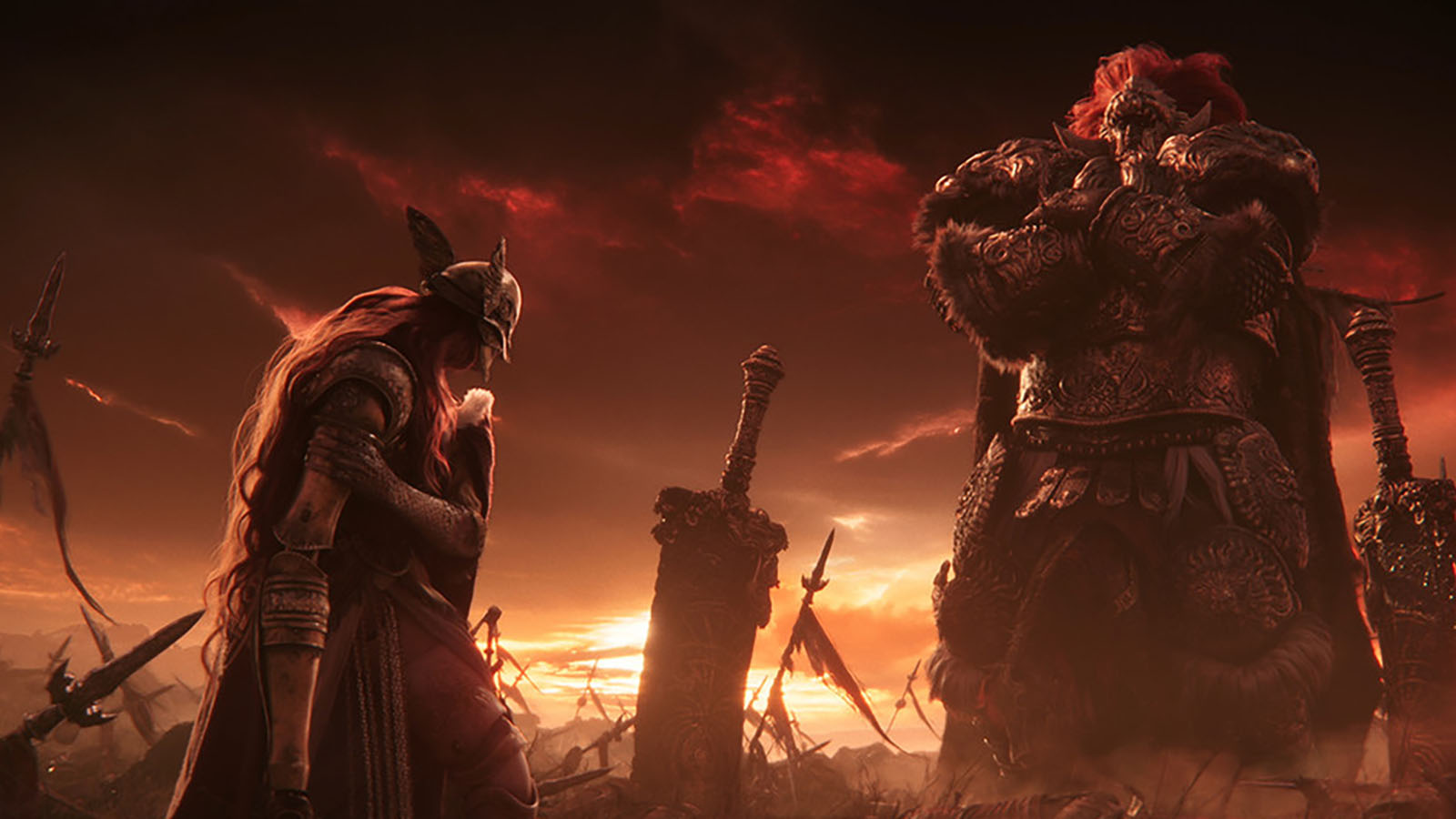 © FromSoftware
The Shattering, which marked a historical turning point in The Lands Between and the Realm of Shadow, was not a mere power struggle, but a fierce collision of love, hatred, and conviction among those possessing godlike power. This report focuses on the lives and inner worlds of the two Demigods, Starscourge Radahn and Malenia the Severed, who triggered the Battle of Caelid—the de facto climactic showdown of that great war. In particular, it comprehensively examines from historical, psychological, and philosophical perspectives how the two confronted their destinies and ultimately met their ruin within the mythological framework of the “Age of Compassion” and its associated “vow” by Miquella, as revealed in the DLC Shadow of the Erdtree.
1. Origins and Curses (Blessings): The Twin Pillars Bearing Polar Opposite Destinies
Although both Radahn and Malenia are Demigods of Empyrean lineage, they stand in extreme contrast regarding the backgrounds of their births and the nature of the “curses” or “blessings” they bore from birth. These innate conditions serve as the absolute foundation for their subsequent behavioral principles and inner conflicts.
1.1 Starscourge Radahn: A Gigantic Physique and the Primal Scene of a Fractured Family
Radahn is a hero who emerged from outside the conflict over the throne of the Erdtree. He was born to Rennala, Queen of the Full Moon of the Raya Lucaria Academy, and Radagon, a hero who led the forces of the Erdtree and later became the second Elden Lord of the Golden Order. His physique was extraordinarily gigantic, and his abnormal physical strength and resilience stood out even among the Demigods. However, this immense size was also a kind of “curse of isolation” for him.
The first decisive trauma in his life was the “fracturing of his family,” when his father Radagon abandoned his mother Rennala and left to become Queen Marika’s consort. It is suggested that this event cast a deep shadow over the hearts of him and his younger sister, Ranni the Witch. Radahn took pride in the red hair he inherited from his father, harbored an intense admiration for Godfrey, First Elden Lord, and cultivated his pride as a lord of the battlefield within his self-consciousness. Yet, beneath his fierce exterior lay a deep compassion for the weak. As noted in the “Remembrance of a God and a Lord,” in his youth, he possessed both “strength” and “kindness,” standing in stark contrast to Miquella and others who suffered from the afflictions (curses) they bore. The fact that his primary motivation for studying gravitational magic in Sellia was “to continue riding his scrawny beloved steed Leonard” clearly demonstrates that his essence lay not in a violent desire for conquest, but in a “kindness” dedicated to protecting what he did not want to lose.
1.2 Malenia the Severed: The Bloodline of a Single God and the Incurable Disease of the Scarlet Rot
On the other hand, Malenia is a unique existence (an Empyrean) born of a “single god,” Queen Marika and Radagon. However, as the price for her noble and singular bloodline, she harbored the gruesome curse of the “Scarlet Rot” from birth. This curse eroded her body from the inside, robbing her of her limbs and eyesight, and forcing upon her a destiny where it would eventually corrode her very mind.
For Malenia, life was an endless battle against ceaseless self-destruction. To resist the progression of the rot, she sought the teachings of a blind swordsman and mastered flowing sword arts, suppressing the stagnant, lingering divine essence of rot within her through the concept of “flowing water.” Her overwhelming swordplay was not merely a proof of martial prowess or a warrior’s path to supremacy, but rather a desperate defense mechanism to maintain her own “dignity” and “ego.” And the sole light in her heart, her absolute anchor of dependence, was her twin brother, Miquella, who, while bearing the curse of “eternal childhood” himself, made infinite efforts to cure her rot.
| Attributes / Inner Self | Starscourge Radahn | Malenia the Severed |
|---|---|---|
| Background of Birth | Rennala and Radagon (The intersection of sorcery and gold) | Queen Marika and Radagon (Self-reproduction by a single god) |
| Innate Conditions | Extraordinary gigantism, abnormal physical strength, and golden magic | A deteriorating body, blindness, and the destiny of the Scarlet Rot |
| Spiritual Pillar | Admiration for the hero Godfrey, compassion for his beloved steed Leonard | Absolute devotion, love, and dependence on her brother Miquella |
| Trauma of Loss | The collapse of his family and lack of love due to his father’s defection | The fear of bodily rot and the ceaseless loss of self-identity |
| Self-Expression and Defense | Binding destiny through gravitational magic and martial might on the battlefield | Suppressing the rot through flowing sword arts and purifying herself as a “blade” |
2. Historical Roles and Major Actions: Intersecting Facts and Speculations
Historically, the greatest singularity where these two Demigods intersected was the existence of a “vow” among the three of them, including Miquella, and the gruesome Shattering in Caelid that it consequently triggered. Here, we will clearly distinguish between confirmed historical facts and speculative interpretations derived from circumstantial evidence.
2.1 [Fact] The Childhood Vow and Miquella’s Plan
The first confirmed fact is that a “vow” was made between Miquella, Malenia, and Radahn in their childhood. Witnessing the gruesome curses borne by himself and his sister, as well as the limitations of the Golden Order, Miquella yearned to realize an “Age of Compassion” that would rewrite the world itself. To build that ideal world and become a god, he needed a “Lord (consort)” to support him.
As a fact indicated by the “Remembrance of a God and a Lord,” the one Miquella chose as his Lord was the young Radahn. Miquella saw in Radahn a “strength” and “kindness” that stood in polar opposition to their own cursed existences. Miquella pleaded with Radahn, “If we honor our part of the vow, promise me you’ll be my consort.”
Furthermore, the clear historical facts that followed are as follows:
-
Radahn mastered gravitational magic in Sellia, completely halting the movement of the stars (destiny) in the night sky.
-
During The Shattering, Malenia marched from the Haligtree in the far north to Caelid in the deep south, engaging in a battle to the death with Radahn.
-
In the midst of that mortal combat, Malenia bloomed the “Scarlet Aeonia,” sinking the entirety of Caelid into rot.
-
Despite being afflicted by the fatal rot, Radahn refused to die, surviving as a madness-stricken beast.
-
Around the same time, Miquella was taken from the Haligtree by Mohg, Lord of Blood, and headed to the Realm of Shadow.
2.2 Speculative Interpretation: The Alteration of the Vow and the True Intent Behind Binding the Stars
By piecing these facts together, the motives behind the actions of the two begin to surface.
Speculation on Radahn’s Agreement and Subsequent Change of Heart Regarding the Vow: It is highly likely that in his youth, Radahn was initially cooperative with Miquella’s vow. The designs of his equipment and the greatswords he is said to have wielded in his youth (bearing the symbol of the Haligtree and names like “Light” and “Lord”) suggest that, before he came to rely solely on pure physical martial might, he showed a certain degree of sympathy for Miquella’s ideals. However, he later exhibited a decisive change of heart. While ostensibly Radahn halted the stars to protect the town of Sellia from the calamity of falling stars, it is speculated that his true purpose was “to physically freeze the gears of destiny for the Empyreans.” The plan for the salvation of souls through the “eclipse,” which was underway at Castle Sol, also failed because he halted the stars. Radahn forcibly halted the very destiny of becoming Miquella’s consort through his own overwhelming power.
Speculation on the Correlation Between Malenia’s March and Mohg’s “Abduction”: The primary reason Malenia marched to Caelid is believed to have been “to grant an honorable death to Radahn, who had broken the vow and halted the stars, and to send his soul to the Realm of Shadow where Miquella awaited.” This perfectly aligns with Miquella’s final plan in the Realm of Shadow, which required anchoring the “soul of the Lord” into another vessel (Mohg’s body) in order for Miquella to become a god. The view is highly compelling that Miquella’s abduction by Mohg, Lord of Blood, was a calculated orchestration; Miquella intentionally “charmed” Mohg to guide himself to the Realm of Shadow while simultaneously securing Mohg’s body to serve as the future vessel for Radahn’s soul.
3. Inner Worlds and Conflicts (Love, Hatred, and Conviction): The Most Noble Beast and the Most Desperate Blade
The greatest focal point in delving into the psychological conflicts of Radahn and Malenia is the question of “what they wanted to protect, and what they feared.” Their inner worlds, as read from item descriptions and circumstances, are filled with affection, despair, a sense of duty, and intense ressentiment (resentment and rebellion).
3.1 Starscourge Radahn: The Fear of the Death of Free Will and Ressentiment
Why did Radahn renege on Miquella’s vow—which he might have once accepted—and choose absolute resistance, even going so far as to halt destiny itself? It is none other than because he realized the terrifying truth lurking behind Miquella’s “Age of Compassion.”
Miquella’s greatest power is his “charm,” which compels the affection of others and forces reconciliation. To realize a “compassionate world,” Miquella sought to bleach away the fundamental parts of the human spirit, such as individual free will, conflict, and ressentiment. Radahn was a figure who valued the “honor of a warrior”—fighting the strong head-on and sharing in victory and defeat—above all else. For him, becoming Miquella’s Lord (consort), where even his heart would be forcibly remade and love compelled, was a “defeat of the soul” and an “extinction of the ego” far more terrifying than physical death.
When The Shattering broke out, Radahn’s actions of acquiring the power of a Great Rune, marching on Leyndell, Royal Capital, and clashing with Morgott the Omen King can also be interpreted as a desperate struggle to fend off Miquella’s interference by becoming the physical Lord (the mender of the Elden Ring) himself.
Furthermore, what is particularly noteworthy is his tenacity after being afflicted by Malenia’s rot. Originally, had he intended to accept an “honorable death” in accordance with the vow, he should have lost his life there and sent his soul to the Realm of Shadow. However, even after losing his reason, his feet wearing away, and being reduced to a beast devouring the earth, he continued to bind the stars and survived. This was a profoundly human and intense ressentiment against the destiny decreed by a god, and a manifestation of his ultimate pride: “I would rather live as a monster sunken in madness than become a puppet.” The “honorable death” spoken of by Castellan Jerren of Redmane Castle was not the ritualistic death prepared by Miquella, but a warrior’s death met by his own will at the end of a struggle.
3.2 Malenia the Severed: The Abandonment of Ego and Despair as the “Blade of Miquella”
On the other hand, Malenia’s inner world is shaped by self-sacrifice, an absolute sense of duty, and a succession of irrevocable losses. The reason she marched from the Haligtree in the far north to Caelid in the deep south was not out of personal ambition, but solely for the mythological mission to “slay Radahn, who broke the vow, and complete her brother’s plan.”
Malenia refers to herself as the “Blade of Miquella.” Hidden behind these words is a tremendous inner emptiness and despair. Due to the irresistible curse of the rot, she was constantly exposed to the fear of “ceasing to be herself.” The only means to endure that fear was to abandon her own will and live as a “tool (blade)” for her brother, in whom she placed absolute love and trust. Her love is a pure devotion to Miquella, but at the same time, an intense dependence. If Miquella did not become a god, there was no hope of her rot being cured, and for Miquella to become a god, the vessel that was Radahn was absolutely necessary.
The mortal combat in Caelid far exceeded Malenia’s expectations. The strength of Radahn, fighting while maddened or perhaps while still holding back the stars, was unfathomable, and even with Malenia’s flowing sword arts, she could not overwhelm him. At this moment, the ultimate conflict within her reached its breaking point. To “match (equal and strike down)” Radahn, Malenia deliberately broke her own symbol of dignity—the “will to suppress the rot” inherited from her master. The flower of the Scarlet Aeonia that bloomed on her back signified far more than the dispersal of a biological weapon; it meant the “death of her dignity” and the “collapse of her pride.”
Just before the flower bloomed, she whispered into Radahn’s ear: “Miquella awaits thee, O Promised Consort.” These words are the crystallization of a desperate sense of duty, squeezed out as she was losing consciousness. Her actions—polluting her own continent, discarding her pride, and falling to the level of a monster just to fulfill her brother’s vow—illustrate how cruelly Miquella’s binding curse, driven in the name of “love,” tramples upon individual dignity. Because she wanted to protect Miquella above all else, she ended up destroying everything, including herself.
4. Philosophical and Thematic Significance: The Mythological Antithesis of “Eternity and Change” and “Blessing and Exclusion”
In the overarching themes of Elden Ring, the conflict between Radahn and Malenia, as well as their relationship with Miquella, poses profoundly deep philosophical questions regarding “eternity and change,” “blessing and exclusion,” and “liberation from destiny.” Their ways of life function directly as metaphors and antitheses concerning the very nature of the world.
4.1 The Conflict Between Radahn as Eternity (Stagnation) and Malenia as Change (Rot)
Radahn halted the stars through the power of “gravity,” physically fixing the destiny of the world. This is a metaphor for the “will toward stagnation,” an attempt to eternally preserve the glory of the good old days of the Golden Order (the age of warriors). In contrast, the “Scarlet Rot” wielded by Malenia is a symbol of a “cycle of forced change and reincarnation,” returning all things equally to muck and birthing new life (such as the Kindred of Rot and Aeonian Butterflies) from it.
The composition wherein Radahn, who desired “eternity” and sought to fix destiny, is ironically subjected to the physical collapse of his body by rot—the “ultimate form of change”—is highly symbolic. The microcosm of the entirety of The Lands Between, where the system of the Golden Order aiming for “eternal imperishability” collapses due to internal rot and contradictions, is precisely condensed within the battle between these two.
4.2 The Exclusivity of Blessing (Compassion) and Miquella’s “Totalitarian Love”
What functions as the most terrifying antithesis in this work is Miquella’s “compassion” and “love.” Normally, love and compassion are depicted as positive forces that save the world. However, as the texts in the DLC explicitly state, Miquella’s love (charm) is an ultimate act of exclusion in that it “forcibly unites those who conflict,” and it entails violence (the complete obliteration of free will).
The contradiction that Miquella himself discards his “love (St. Trina),” his own golden flesh, and even his destiny to create a “compassionate world” is the very “process by which individual humanity and emotions, deemed as noise, are pared away for the sake of totalitarian peace.” Malenia willingly assimilated into this system (loss of self), while Radahn tried to flee from it with all his might (preservation of self). Miquella’s “blessing” transforms into the most terrifying “curse” for those who do not subordinate themselves to it.
4.3 The Struggle and Absurdity of Liberation from Destiny
Radahn’s way of life is the greatest rebellion by a creation (a Demigod) against the “destiny (becoming a god’s consort)” decreed by the gods. He rejected the role of “Miquella’s Lord” even to the point of falling into madness. This strongly resonates with the core theme of the game, wherein the player, a Tarnished, destroys the system of the Golden Order and establishes their own order (or mends the world). His action of continuing to bind the stars may have been selfish, but it was his own way of defending “freedom” to the death.
On the other hand, the tragedy of Malenia lies in the fact that, despite her overwhelming strength, she chose to remain a “tool for another (a blade)” to the very end. Even though she had the potential to establish her own order as the “Goddess of Rot” and guide the world into a new cycle, she entrusted that destiny to Miquella of her own free will. Her story highlights the absurdity of destiny and the terror of dependence, showing that immense power does not necessarily lead to spiritual freedom.
The essence that Miquella, who sought godhood, ends up “incomplete” demonstrates how fragile a utopia built upon the sacrifices of others truly is. The vow they promised ultimately scattered tens of thousands of innocent lives and transformed a vast land into a barren wasteland akin to radioactive fallout.
Conclusion: Traces of “Dignity” and “Madness” Left Upon the Rubble
Starscourge Radahn and Malenia the Severed. These two great Demigods met their ruin precisely because they each loved the world and tried to protect something.
To protect the town of Sellia, his beloved steed, and above all, “individual freedom and his dignity as a warrior,” Radahn halted the gears of destiny that were the stars, sinking his body into madness. Because he was too strong, he became a deadweight that dragged down the entire world. Malenia, to realize the “compassionate world” of the brother she loved to the point of madness, discarded her pride and unleashed the power of the rot she herself despised most. Because she was too devoted, she became the “blade of a god” that brought about the most horrific destruction.
What led them to their desperate collision was the dream of the “Age of Compassion” envisioned by Miquella, an innocent monster. Their mortal combat in Caelid was the ultimate presentation of a mythological proposition: to what extent can “individual will (pride)” resist the absolute “execution of destiny (charm and vow)”?
As a result, this battle drew to a close in the form of a mutual defeat. Radahn became a living corpse bereft of sanity, and Malenia fell into a deep slumber, becoming an entity that leaked rot at the roots of the Haligtree. However, the will of “subjugation of the soul” that Radahn rejected, and the maddening strength of the “love for her brother” that Malenia never let go of until the end, became the wedges that prevented the world from being completely and sterilely bleached by Miquella’s order. The scars of their battle are eternally engraved in the history of The Lands Between as the never-fading, bloodstained memories of those who defied, or martyred themselves to, the destiny decreed by the gods.
Cosmology of Shattering and Gold: Elden Ring: 11 Meditations on the Lands Between and Mythology
The book version is now available. Read for free with Kindle Unlimited.
Thank you very much for reading to the end. To help support the activities of this archive, a warm donation of a cup of coffee would be highly appreciated.