Lore.17: Soul of Cinder and the Ashen One
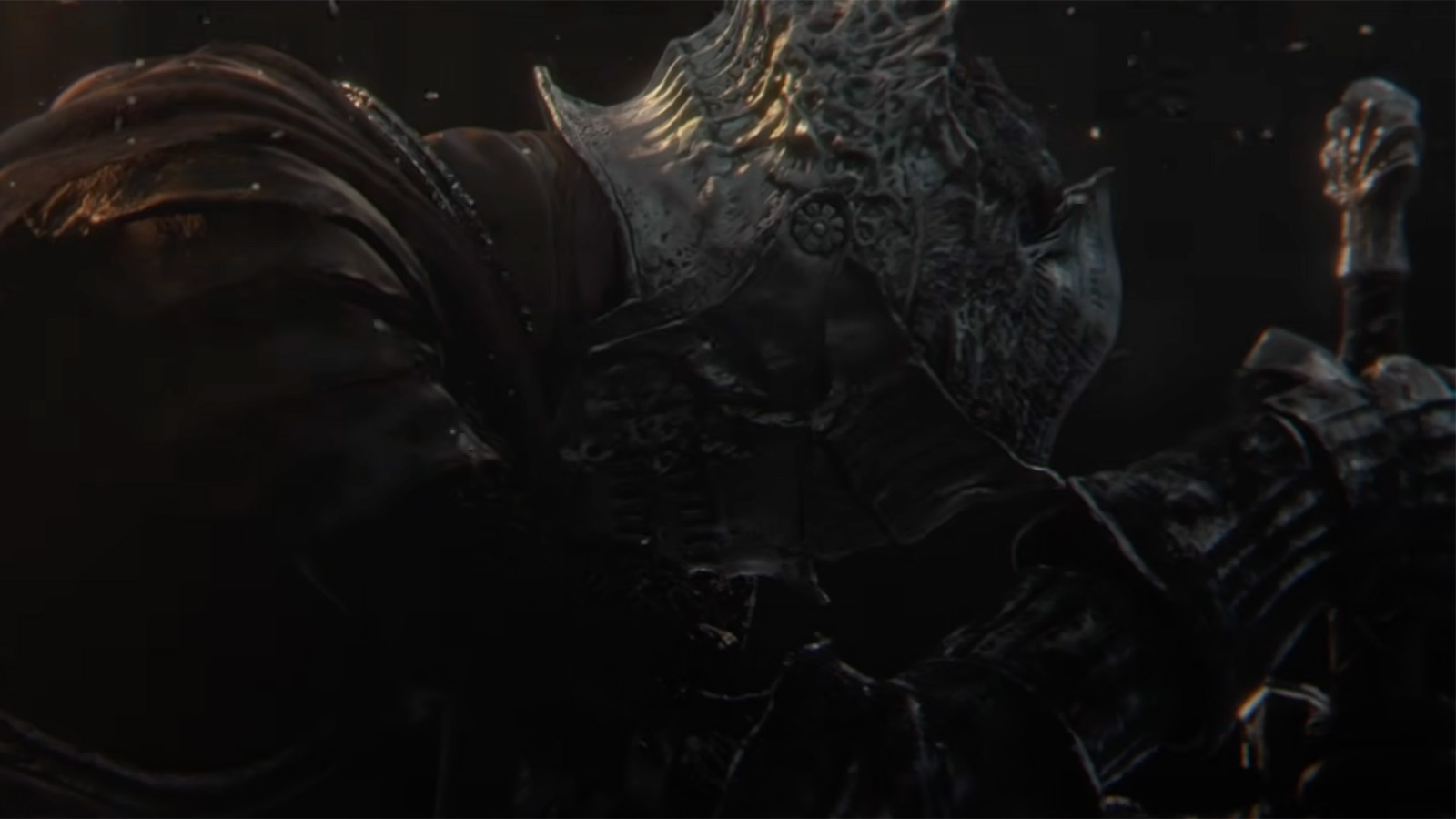 © FromSoftware
Introduction: The End of an Unending Twilight, the Spacetime Where All Things Form The Dreg Heap, and the Black Sun
The endpoint of the mythological epic presented by FromSoftware, and the place where the cycle of tragedy continuing unbroken from past titles converges—that is the “Kiln of the First Flame” in Dark Souls III. The space the Ashen One has reached is no longer the majestic altar enshrined in a vast underground cavern seen in the original Dark Souls. Above the desolate land where ash piles up like snow, a massive “Darkring” resembling a sun floats as if to cover the entire sky, from which a black fluid ceaselessly drips like blood flowing from the world’s open wound.
This apocalyptic environmental storytelling eloquently speaks of the limits of the “Age of Fire,” which has been artificially prolonged to its absolute extreme, and the cosmological endgame where the very logic of the world is collapsing. “The First Flame,” which once established the clear boundaries between light and heat, and life and death, is now a shadow of its former self, barely maintaining its embers amidst the ash. Surrounding it, the High Wall of Lothric and architecture from various eras have been physically drawn together by the distortion of spacetime, forming “The Dreg Heap” as a grotesquely fused wreckage.
The two entities confronting each other at the very edge of this dying world are the “Soul of Cinder” and the “Ashen One” (the protagonist). They are not mere adversaries. They are mirrors reflecting the extreme contradictions and tragedies born of the “Linking of the Fire” system that has been repeated over a long period. One is the “great defense instinct of the system,” a fusion of the memories and souls of the great Lords of Cinder who once linked the fire and tethered the world. The other is a “nameless failure” who once attempted to link the fire but burned to ash, unfit even to be cinder.
This article will unravel the causal relationships and emotional subtleties underlying these two entities through the game’s esoteric item descriptions, environmental storytelling, and historical connections to past titles. Using a philosophical approach encompassing reincarnation and stagnation, the abandonment of duty and free will, and the aesthetics of ruin, we will delve deeply into the existential meaning of the end of the Age of Fire.
1. The Ashen One: The Ontology and Nihilism of a “Failure” Unfit Even to be Cinder
1.1 The Birth of the “Unkindled” and Ostracization from the System
The protagonist of Dark Souls III, the “Ashen One,” possesses a fundamentally different ontological foundation from the protagonists of past series (the Chosen Undead, or the Bearer of the Curse). The narration at the beginning of the game defines them with cruel clarity as “nameless, accursed Undead, unfit even to be cinder.”
As a “fact” within the game, they are those who once bore the duty of the “Linking of the Fire” in some form and attempted to offer themselves to The First Flame. However, the power of the souls they harbored was far too weak to serve as fuel (cinder) to make the fire blaze. As a result, they failed to accomplish the great deed of linking the fire, were merely burned miserably to ash, and were buried in their graves. While past Lords of Cinder (Lord Gwyn, Yhorm the Giant, Aldrich, Devourer of Gods, the Abyss Watchers, etc.) continued to illuminate the world at the cost of their mighty souls, the Ashen Ones were “irregularities” and “losers” whose very value as fuel for the fire was denied by the system.
The “speculation” drawn from this is a gruesome irony: as the system of the Linking of the Fire finally reached its limit and the legitimate successors, the “Lords of Cinder,” abandoned their thrones and fled, the world, as a last resort for self-preservation, had no choice but to resurrect the “ash” it had once forsaken. The tremendous burden of saving the world was ironically thrust upon the shoulders of the lowest beings, who were once the most powerless and abandoned by the system. This reversal of fate is the very root of the nihilism that permeates this work.
1.2 “And so it is, that ash seeketh embers”—The Mechanism of Lack and Thirst
The phrase following the opening narration, “and so it is, that ash seeketh embers,” is a core phrase symbolizing the theme of this work. This single sentence does not merely indicate a behavioral principle of trying to regain lost stats or physical vitality; it expresses the existential mechanism of “lack” and “thirst” harbored by the existence known as ash.
The “Unkindled” are a kind of empty vessel in which even “Hollowing,” the rampant manifestation of humanity, (usually) no longer occurs, having been completely burned away by the fire in the past. Within them, there is neither the hope of the living nor the madness of the Hollows. Precisely because they have nothing, they can only feel the certainty of their own existence by absorbing the souls of others and harboring the “Ember” left behind by former lords in their chests. As the item description for the Ember indicates, it is the “warmth they can never truly make their own.”
This sense of emptiness and the thirst for compensation are the driving forces that compel the Ashen One into endless struggle. They are not driven by a grand cause such as the survival of the world, nor by noble reasons like a sense of duty. They are destined to continue walking a blood-soaked path simply to fill their own void and obtain warmth (proof of existence) for even the briefest of moments. This behavioral principle resonates deeply with the existentialist approach in philosophy—the idea that “a being thrown into this world without an essence (reason for existence) defines itself solely through its own actions.”
2. Soul of Cinder: The Great Defense Instinct of Fire and the Amalgamation of Despair
2.1 The Gravestone of Heroes and the Proxy of the System
The final line of defense and the greatest obstacle the Ashen One confronts at the Kiln of the First Flame is the “Soul of Cinder.” He (or it) is not an individual character with a single personality or will. It is an unconscious amalgamation, or the residual thought of the system, where the souls of gods, sorcerers, pyromancers, clerics, and past heroes—the countless “Lords of Cinder” who have linked the fire thus far—have melted together within The First Flame and come to dwell in a single suit of armor.
The environmental storytelling (visual and motion design) of the Soul of Cinder is extremely eloquent. Its armor is warped by intense heat, half-melted and scorched, and its crown has fused with its skull. This agonizing appearance quietly speaks of how gruesome the act of the Linking of the Fire is, and what lies at the end of soul-grinding self-sacrifice. The Soul of Cinder does not obstruct the Ashen One with any specific malice or sense of duty. It is merely that the sorrowful wish, which could be called an obsession shared by successive lords—“the fire must not be allowed to fade”—has activated as the system’s automatic defense instinct.
The fact that they successively switch tactics (sorcerer’s staff, pyromancy flame, cleric’s talisman, curved sword, spear, greatsword) means that the memories of the countless individuals who once threw themselves into the fire are being replayed like flashbacks. Each strike contains the pride of nameless heroes who once tried to save the world, and the agony of being burned by hellfire. It is the very death cry of a world trying to relive the Age of Fire.
2.2 The Shadow of Lord Gwyn—The Original Sin Born of Fear
When discussing the essence of the Soul of Cinder, one cannot avoid the existence of the first Lord of Cinder, Lord Gwyn. When the Soul of Cinder is driven into a corner and its armor bursts into flames, the collective soul of the countless lords shows a fray, and the oldest and most powerful memory etched in the depths of the fire—the soul of Gwyn—manifests. The figure wielding a greatsword with flames and hurling Sunlight Spears is the very image of the god the player confronted in the original Dark Souls.
Why did Gwyn perform the unnatural Linking of the Fire, even going so far as to offer his own glorious soul as cinder? At the root of it was “fear.” He feared the end of the fire, he feared “humans” who were beings of the Dark, he feared the “Lord of Dark” who would be born from among humans, and above all, he feared the very fact that the world would transition according to natural logic (decline and reincarnation through the passage of time). That is why he sacrificed himself to link the fire, and furthermore, used his own children (the gods) to shepherd humans and bind them with a curse. It was all to ensure that humans would forget their true origins, become Hollow, and prevent the birth of a Lord of Dark who would threaten the gods.
The system of the Linking of the Fire was essentially a chain of curses originating from this “fear of Gwyn,” and a grand deception. The final form shown by the Soul of Cinder harbors the deep sorrow of a single king who once loved the world and simultaneously feared its change. What he tried to protect might have been the radiant world of the gods, but his attachment ultimately pushed the entire world to the breaking point of being “unable to die (the Undead curse).” The Soul of Cinder is the symbol of this original sin, and nothing less than the embodiment of “stagnation” trapped by the curse of past glory.
3. Detailed Verification of the End of the Age of Fire Based on the Separation of Fact and Speculation
To accurately grasp the narrative structure of this work, the “facts” explicitly stated within the game, the “speculations” derived from them as a lore scholar, and the “philosophical and literary implications” they contain are separated and organized in the table below.
| Subject | ”Facts” Explicitly Stated in the Game | ”Speculations” as a Lore Scholar | Philosophical and Literary Implications |
|---|---|---|---|
| Kiln of the First Flame | A massive Darkring (black sun) floats in the sky, and architecture from all eras of the world fills the space as The Dreg Heap. The fire is reduced to mere embers. | No matter how many lives past lords have offered, the lifespan of the fire itself (the system’s capacity) has already reached its limit. Even the concepts of gravity and time are collapsing. | [The Fate of Unnatural Stagnation] The presentation of nihilism: as a result of rejecting natural death (reincarnation) and forcibly prolonging the system, the world cannot even die, but merely rots away hideously. |
| Ashen One | Resurrected as an “Undead unfit even to be cinder” and “therefore seeketh embers.” Given the duty to return the lords to their thrones (or kill them). | Because the world’s life-prolonging system has completely collapsed, it is a failsafe that forcibly drives them toward the source of fire by exploiting the lack and thirst of the ash that was once rejected as defective. | [Existential Thirst] A being without essence continues to struggle to fill its own emptiness with the heat of others (Ember). An endless, futile effort for self-proof. |
| Soul of Cinder | The fused form of the souls of successive Lords of Cinder. Uses various tactics, and when cornered, uses the combat style and miracles (lightning) of the first lord, Gwyn. | While functioning as a defense instinct, “Gwyn’s fear,” which is the most solid foundation of the system, manifests as the ultimate self-defense. | [Ghosts and Grudges of the Past] Great self-sacrifice turns into a mere curse over time. The embodiment of determinism, where the dying wishes of the dead are systematized and bind the future. |
| Fire Keeper | A blind maiden who serves the ash and tends the fire. By being given eyes, she sees a vision of a “world without fire.” | The reason she is blind is an intentional measure by the gods (or the system) to make her avert her eyes from the deception of the Linking of the Fire (the truth that the fire will eventually fade). | [Awakening to Free Will] The process by which a subordinate bound by fate transforms into an accomplice who self-determines the fate of the world alongside the protagonist by learning the taboo truth. |
4. Breaking Free from Fatalistic Determinism: The Truth Revealed by the Eyes of a Fire Keeper and the Great Betrayal
What kind of conclusion the Ashen One will reach, and what kind of end the world will meet, depends heavily on their relationship with the “Fire Keeper,” the being who guides them, and the truth discovered by her. The Fire Keeper is originally obligated to be blind in order to serve the Ashen One and tend the fire. In past series as well, Fire Keepers have been treated merely as vessels to maintain the fire. However, by discovering the “Eyes of a Fire Keeper” in the hidden dark world of the Untended Graves and giving them to her, the story enters an extremely human phase of breaking free from fatalistic determinism.
4.1 The Sealed Vision of Darkness and the Hope Beyond It
Having regained her eyes, the Fire Keeper sees a terrifying truth she had never seen before—a vision of a “world without fire.” She describes it as “a vast stretch of Darkness.” For those who serve and worship the fire, the fading of the fire is an absolute taboo, signifying a great betrayal of their duty.
However, her words continue in a way that overturns the truth concealed by the gods: “But ‘tis a secret… in the far distance. I sense the presence of tiny flames like precious embers left to us by past Lords.”
This passage contains an extremely important insight that fundamentally dismantles the philosophy of “Light and Dark” underlying the entire series. For Gwyn and the gods, “Dark” (the end of fire) was the end of all things, a terrifying nothingness, and absolute evil. Yet, within the darkness the Fire Keeper saw, there existed “embers” as a certain hope.
This suggests that the Age of Fire and the Age of Dark are not a binary opposition like “good and evil,” but a natural process of “reincarnation.” Just as morning eventually comes after night, true new fire (life) can only sprout by once plunging the world into darkness and letting it rest. The Linking of the Fire was nothing more than the act of forcibly keeping this natural arrival of night at bay, allowing the world to merely rot slowly in an unending twilight (stagnation).
4.2 From Blind Subordination to Complicity: The Establishment of Free Will
After seeing the vision of darkness, the Fire Keeper pleads with the Ashen One, “If thy heart should bend… kill me, and strip these eyes from my person.” If the eyes are taken, she will revert to the blind Fire Keeper she once was, and throw herself back into the deceptive system of the Linking of the Fire.
Here, the ultimate question regarding the player’s (protagonist’s) “free will” is presented. While she is a fatalistic being bound by the system, she simultaneously fully accepts and entrusts herself to the protagonist’s choice. Whether to head toward the “great betrayal” of the end of fire, or to become blind again and return to the tragedy of blindly believing in the continuation of fire, everything rests on the Ashen One’s decision. This quiet and melancholic relationship of subordination is proof of an extremely human and precious bond of trust that exists only between the two of them, amidst a world dominated by madness and curses. She is elevated from a mere level-up NPC to an “accomplice” who watches over the dying world alongside the protagonist.
5. The Aesthetics of Ruin and Sorrow: The Three Decisions Made by the Ashen One
Before the Ashen One, who has defeated the ghost of the past known as the Soul of Cinder, an unprecedented ultimate choice is presented. These are not mere branching endings in a game, but answers to the philosophical proposition of what existential meaning an individual finds in a dying world.
5.1 The Prolongation of a System at Its Limit (To Link the First Flame)
The ending where one defeats the Soul of Cinder and offers one’s own body to The First Flame. This is the path of becoming fuel to prolong the world’s life (succumbing to fatalistic determinism), just like the kings of old. However, the explosive, world-engulfing inferno seen when linking the fire after defeating Gwyn in the original Dark Souls does not occur. The fire has already lost the power to blaze; it merely catches slightly on the protagonist’s arms and body, smoldering feebly.
The protagonist simply sits down, staring into the void while quietly burning. This ending is a sorrowful proof that, no matter how much sacrifice is paid, the system has truly reached its limit. It depicts the ultimate futility and despair: the return on the sacrifice paid has completely dried up, and even self-sacrifice can no longer be a means to save the world.
5.2 Übermensch Ideology and Usurpation (The Usurpation of Fire)
The ending where, following the guidance of the Hollows of Londor, one gains the qualification as the “Lord of Hollows” harboring the Dark Sigil, and absorbs The First Flame into oneself. This is not the path of being burned by the fire (subordinating to the system), but of usurping the fire itself and ruling the world with the power of “humans (Hollows),” beings of the Dark.
This choice is the birth of the “Lord of Dark” that Gwyn feared most, signifying the complete end of the history of the gods. This ending, which does not destroy the system but hijacks its core, is akin to the ideology of the “Übermensch” proposed by Friedrich Nietzsche, establishing new rules by one’s own will from within nothingness and darkness. It contains a kind of dark fantasy catharsis where the nameless failure pulls down the old authority of the Soul of Cinder and becomes the supreme ruler of the world, but what kind of world they will rule is shrouded in deep darkness.
5.3 The Darkness of Sorrow and Faint Embers (The End of Fire)
The ending where one summons the Fire Keeper who harbors the eyes, entrusts The First Flame to her, and lets it fade. This is the path of breaking the curse of unnatural stagnation established by Gwyn and welcoming the world’s true “night.”
As seen in some records and testimonies, the extreme change in tone and direction of this ending evokes a deep silence in the player’s heart, and a kind of awe (a spine-tingling sensation) rather than fear. From the perspective of the gods, the act of extinguishing the fire is nothing less than the destruction of the world (the arrival of the Age of Dark). However, for a world that has been stretched to its limit and continues to bleed, it is an act of “mercy” that stops the long, painful life-prolonging treatment and guides the world to a peaceful death (or sleep).
The silence in which the Fire Keeper asks in the darkness, “Ashen one, hearest thou my voice, still?” is not a nothingness filled with terror. Because beyond that darkness lies the faint hope (embers) that tiny flames will appear in the distant future. The Ashen One, resurrected as a nameless “failure,” ironically exercised true free will to “end the logic of the world,” something even the gods could not achieve. The lowest being, unfit even to be cinder, shatters the obsession of successive lords and determines the fate of the world. This reversal, and the aesthetics of ruin in returning the world to darkness, is the most beautiful and sorrowful achievement of this work’s narrative structure.
6. The Embers of Heroes and the Meaning Woven by the Fire Keeper’s Prayer
The causal relationship glimpsed amidst the mortal combat with the Soul of Cinder cannot be simply dismissed as a “battle between the strong and the weak.” It is a clash between a “system that forces oblivion and stagnation” and an “individual seeking self-proof and free will.”
The martial arts and magic of successive lords unleashed by the Soul of Cinder are the crystallization of the pride and sorrowful wishes of those who once scattered to protect the fire. Their choices may have ultimately been wrong. They may have been trapped by the curse originating from Gwyn’s fear, unknowingly causing the world to suffer. However, their spirit of altruistic self-sacrifice and their resolve to burn their own souls to illuminate the world were undeniably noble.
By defeating the Soul of Cinder, the Ashen One does not trample on their wishes. Rather, it can be interpreted that they are ending the bitter toil of their endless defense instinct and liberating their bound souls from the chains of the system. Precisely because they were ash unfit even to be cinder, they were able to deliver the final blow to the suffering of successive lords and put an end to their karma.
And by their side, the Fire Keeper is always present. She stands at the opposite pole of the “past legacy and attachment” embodied by the Soul of Cinder. The “tiny flames in the far distance” reflected in her eyes are the embers left by past lords, but they function not as a curse to enforce the system, but as “precious memories” for those who will live in the future.
In a world sinking into darkness, the silent pact exchanged between the Ashen One and the Fire Keeper is a faint glimmer of humanity resisting nihilism. The era of the “Linkers of the fire” comes to an end here, but her quiet voice affirms that the memories of the embers they left behind were never meaningless.
Conclusion: The Faint Dawn of Humanity Shining in a World Where Ash Dances
In Dark Souls III, the final battle woven by the Soul of Cinder and the Ashen One at the Kiln of the First Flame is a sorrowful yet beautiful ritual to conclude the grand theme of the entire series: the “end of the Age of Fire.”
The system of the Linking of the Fire, which began from Lord Gwyn’s fear, was built upon countless noble sacrifices, but ultimately gave rise to the desperate defense mechanism known as the “Soul of Cinder,” transforming the world into The Dreg Heap where ash settles and spacetime distorts. And to repair (or end) this broken system, the “Unkindled,” once rejected by the system as defective irregularities, are resurrected, hunting former lords in search of embers to fill their own lack—this cycle of bottomless sorrow and irony is the very essence of the lore of this work.
When the Ashen One defeats the Soul of Cinder, what awaits is not a heroic song of triumph or the catharsis of the world regaining its light. A bleeding black sun still hangs in the sky, and ash, the remains of nameless lords, merely piles up at their feet. However, precisely because it is amidst that overwhelming sense of nihilism and aesthetics of ruin, the final choice made by the player (the Ashen One) becomes an extremely personal and precious “declaration of free will.”
The choice to resist the stagnation of forced life-prolongation and quietly extinguish the fire together with the Fire Keeper (The End of Fire) is an act of mercy that releases the world from its unnatural curse and returns it to natural reincarnation. The Age of Dark will certainly arrive. But it is not the abyss of despair that Gwyn feared. As the Fire Keeper saw with her eyes, in the distant future, the tiny embers left by past lords will surely take on a faint heat once again and bring forth new light.
Thus, the nameless accursed Undead ends the endless history of the gods and the karma of the lords, guiding the world into a silent night. What the ash reached at the end of seeking embers was not the maintenance of the system through blazing flames, but the great peace of quietly waiting for the hope that will someday sprout again in the deep darkness. This is the most melancholic and most beautiful form of dawn in a myth set in a dying world of nothingness. This story, which returns the relics of the past to ash and finds the faint warmth of humanity in the darkness, will forever be passed down as a literary masterpiece that transcends the framework of a game and poses existential questions.
Thank you very much for reading to the end. To help support the activities of this archive, a warm donation of a cup of coffee would be highly appreciated.