Lore.02: The Deep, The Abyss, and the Truth of Hollows
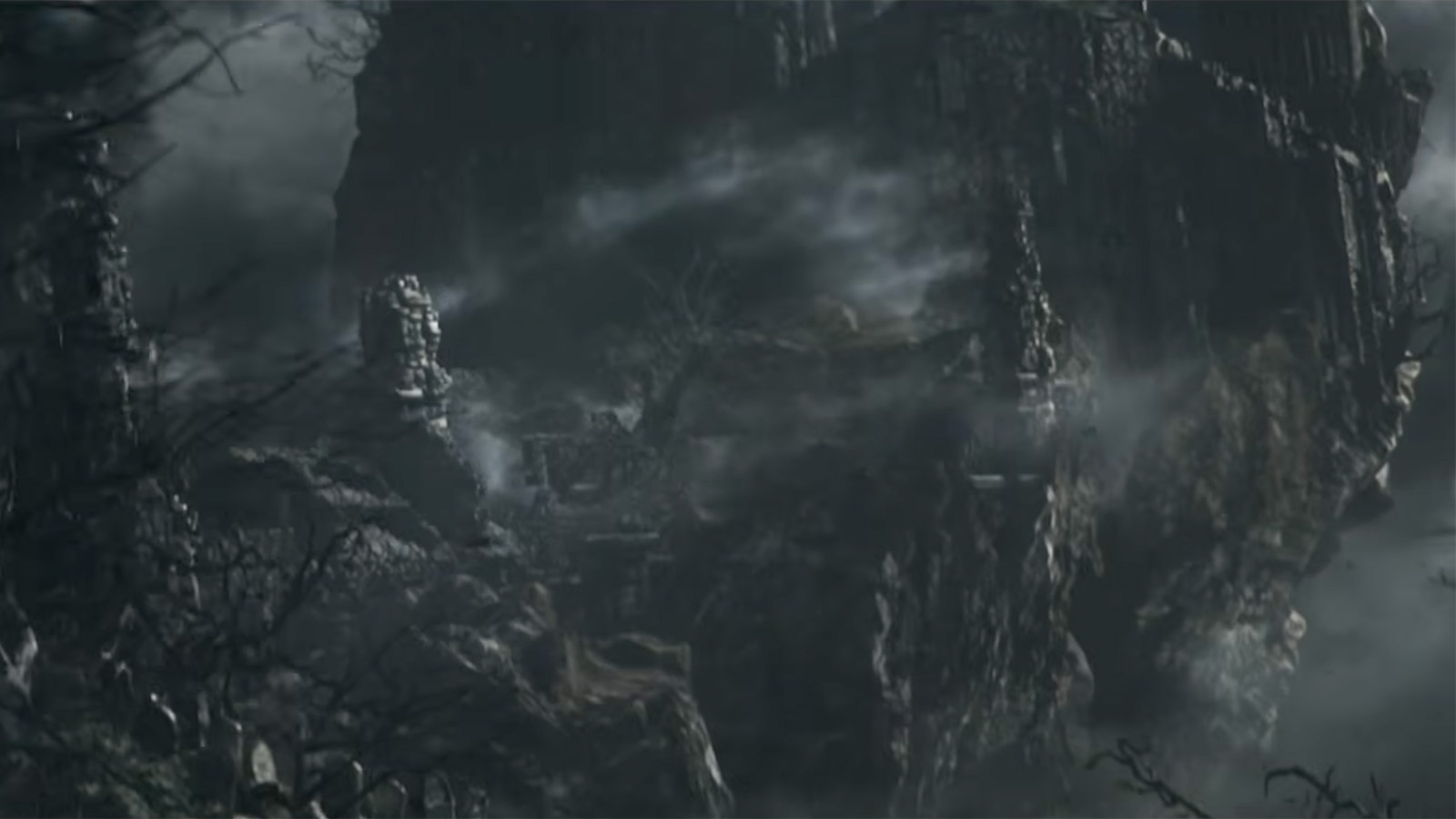 © FromSoftware
In the world of Dark Souls III, where The First Flame fades and the sky takes on the dark red hue of the apocalypse, the workings of life gasp for breath along the extended lines of a system that has reached its absolute limit. The self-sacrifice known as the Linking of the Fire, repeated time and time again, has unnaturally prolonged the world’s life, but simultaneously accumulated immense stagnation and contradiction within the cosmic order. In this twilight age, which could well be called the end of days, the “Dark” that once existed as a singular concept is no longer one. It has undergone a complex and tragic transformation into The Abyss, which runs rampant at the end of its suppression; The Deep, which loses its destination and settles into stagnation; and the Hollow, the true nature of humanity seeking to break free from the shackles of the gods.
This report delves into these three phases of darkness that quietly yet inevitably erode the world amidst the overwhelming sense of nihilism brought about by the end of the Age of Fire. By piecing together surviving texts, environmental storytelling, and fragments of lore analysis left by predecessors, we will highlight the underlying philosophical themes of “the abandonment of duty and free will,” “the collapse of fatalism,” and “the aesthetics and sorrow of ruin,” thereby unraveling the existential significance of humanity in the world of ash.
1. The Twilight of The Abyss and the “Pus of Man” — The Breach of Flesh and Soul at Their Limits
In the era of the original Dark Souls, The Abyss was essentially the rampant outbreak of Humanity (the Dark Soul)—a raging torrent of primal emotions such as anger and sorrow. The threat that led Manus, Father of the Abyss, to swallow Oolacile, and the Four Kings to submerge New Londo, was an intensely “dynamic” force of destruction. However, as endless time has passed and the Age of Fire has been unnaturally prolonged in the era of this game, The Abyss has mutated its nature into a fatal “disease” that rots from within.
1.1 The True Nature of the “Pus of Man” and the Customs of the Undead Settlement
One of the most grotesque phenomena symbolizing this game is the “Pus of Man,” which bursts through the flesh of certain individuals, such as Lothric soldiers and Iudex Gundyr, erupting into the form of a massive, black, beast- or serpent-like entity. This phenomenon goes far beyond mere madness or mutation; it indicates that the very structure of life is collapsing from the inside out.
As an in-game fact, we can observe the conceptual evolution of items that temporarily buff the right-hand weapon with Dark, namely “Black Pine Resin” or “Human Pine Resin.” According to item descriptions, these types of resins are explicitly stated to be “the rotted bodily fluids of humans,” and it is shown that in the Undead Settlement, they were used in the preservation of corpses and burial rituals. Furthermore, there is even a community theory suggesting that the Painted World itself is drawn with (or has become a hotbed of putrefaction for) these “human fluids.”
What these phenomena suggest is the fact that, at the end of an overly prolonged Age of Fire, the darkness known as Humanity has completely rotted within the flesh (the vessel) of people, exceeding its critical volume. The endeavor of the inhabitants of the Undead Settlement to preserve corpses using the rotting bodily fluids of their own brethren carries a desperate, almost farcical sorrow in a world where even death no longer functions normally.
1.2 The Collapse of Fatalism and the Screams of the Flesh
The phenomenon of the “Pus of Man” tells the tale that the fatalistic shackle imposed upon humanity by the gods—the seal of fire known as the Darksign—has finally fallen into physical dysfunction.
To sustain the Age of Fire, the gods (especially Lord Gwyn’s kin) defined humans as fuel for the Linking of the Fire, sealing their inner darkness (their true power) with a ring of fire. However, as cycles and stagnation repeated over countless ages, the suppressed darkness, having nowhere to go, stagnated and finally broke through the prison of the flesh in the utterly hideous form of “pus.” The sight of those harboring the Pus of Man uniformly looking up to the heavens and letting out desperate roars, as if cursing the deceit of the gods, symbolizes the breakdown of fatalism.
In their forms, having lost self-control and turned into massive black beasts, there is none of the pure terror that The Abyss once possessed; there remains only a sense of nihilism toward a long history of deception and the unfathomable sorrow of life. They are the victims of history—abandoned by the order of fire, yet unable to become Lords of Dark.
2. The New Darkness “The Deep” — Water, Stagnation, and the Myth of Putrefaction
The most notable concept newly introduced in this game is “The Deep.” If the aforementioned Abyss (Pus of Man) is a “dynamic and explosive darkness” overflowing from a vessel that has reached its limit, The Deep is a “static and passive darkness” where everything sinks to the bottom and quietly rots.
2.1 Cathedral of the Deep and the Apostasy of the Way of White
The texts related to the religious order based in the Cathedral of the Deep clearly speak of the origins of this new darkness. The description of the miracle “Deep Protection” states that The Deep was originally a peaceful and sacred place, but eventually became the final rest for many abhorrent things. Furthermore, the “Deep Gem” dropped by the Deacons of the Deep and clerics serving the cathedral is a crystallization of the dark power that has settled in The Deep, suggesting that they were originally tasked with the duty of sealing and watching over it.
Once, the clerics of the Way of White designated the place where the world’s dregs gathered as a sacred sealing ground, offering prayers so that evil things would not overflow. However, they gazed into that darkness for far too long. Just as The Abyss drives people mad, The Deep also captivates them, and eventually, they descended into a fanatical devotion to the very thing they were supposed to seal. Here, we find the tragic causality that runs through FromSoftware’s works: “Those with the most noble missions fall the deepest due to the crushing weight and self-contradiction of their duties.”
2.2 Insects, Gnawing, and the Settling Ecosystem of Darkness
The miracle “Gnaw” vividly illustrates the nature of The Deep. The description of this miracle gruesomely depicts countless insects lurking in The Deep swarming the target and tearing through their flesh. While The Abyss is spoken of with motifs such as “beasts” and “gravity,” The Deep is expressed through motifs of “insects” and “cold water.”
Why did The Deep come to be? It is the product of the nature of “water,” the polar opposite of “fire,” and the “stagnation” brought about by the system of the Linking of the Fire. Fire has the nature of flaring up, changing, and eventually fading away, but water remains within its vessel; if its flow stops, it inevitably stagnates and rots. As a result of the Linking of the Fire system being prolonged beyond its limits, an unfathomable amount of the “dregs of life” accumulated at the bottom of the world. Just as sludge settles at the bottom of water, souls and curses with nowhere to go gathered together, and this thoroughly rotted environment is the true identity of The Deep.
2.3 Aldrich’s Vision and the Acceptance of Ruin
Guided, or perhaps instigated, by Pontiff Sulyvahn, the Deacons of the Deep made “Aldrich, Devourer of Gods” the object of their worship. The “Age of the Deep Sea” that Aldrich saw in his dreams is an apocalyptic vision of what is to come after the Age of Fire—a future where everything quietly rots at the bottom of cold waters.
At first glance, it is a desperate and hideous vision of the future, but in terms of being liberated from the eternal suffering of the Linking of the Fire and the pain of being burned, it harbors a certain kind of “peace.” Rather than the agony of burning in flames, it is the slow dissolution of consciousness while being gnawed by insects at the bottom of cold waters. The faith of The Deep is the ultimate nihilistic form of salvation for a world that is no longer repairable. Their stance of moving past the abandonment of duty and accepting ruin itself as a sweet intoxication speaks more eloquently than anything else of the dead end of the Age of Fire.
| Comparison of Dark Concepts | The Abyss / Pus of Man | The Deep |
|---|---|---|
| Fundamental Nature | Rampancy of Humanity (Dark Soul) / Anger and limits | Physical accumulation of stagnated, settled darkness and defilement |
| Symbolic Motifs | Violent darkness, gravity, massive beasts, red eyes | Cold water bottoms, countless insects, sludge, silence |
| Related Phenomena/Miracles | Pus of Man, Dark magic, physical bursting | Gnaw, Deep Protection, a final rest for abhorrent things |
| Philosophical Implications | Explosion of suppressed emotions, collapse of fatalism | Nihilistic acceptance of an unending world, slow putrefaction and drowning |
3. The Truth of Hollows and Londor — The Philosophy of Abandonment and Usurpation
As the Age of Fire reaches its end, The Abyss bursts forth as pus, and The Deep spreads its putrefaction, there exists a faction maneuvering in the shadows to reclaim the true form of humanity and establish a new order. These are the people of Londor, the land of Hollows. The path they present embodies the underlying theme of this game—“the abandonment of duty and free will”—in its most radical form.
3.1 The “Dark Sigil” and the Mechanism of Hollowing
As an in-game fact, Yoel, a Pilgrim of Londor, performs a ritual to brand a “Dark Sigil” onto the flesh of the protagonist (the Ashen One). Superficially, this ritual draws out the target’s true power (granting a free level up), but at the cost of engraving the cursed mark known as the “Dark Sigil” into their inventory.
If one repeatedly dies while possessing this Dark Sigil, the curse accumulates in their flesh, and they gradually undergo “Hollowing,” shriveling up just like the Undead of old. According to the text, the Dark Sigil is defined as a bottomless pitch-black hole from which Humanity seeps out. While the Darksign (the ring of fire) bestowed by the gods was a “shackle of flame” meant to seal humanity’s darkness within, the Dark Sigil is a gaping hole forcibly torn through that shackle—an entrance of darkness leading to infinite nothingness.
3.2 Healing the Curse and the Defiled Fire Keeper Soul
The means to heal this curse of Hollowing is extremely difficult and comes at a great cost. In fact, to seal this sigil, one must purchase the key to the tower behind Firelink Shrine for a massive amount of souls, obtain the defiled “Fire Keeper Soul” enshrined at its peak, and hand it over to the current Fire Keeper.
Upon receiving the defiled soul, the Fire Keeper becomes able to heal the Dark Sigil in exchange for a vast amount of souls, halting the progression of Hollowing. However, this process carries a deep philosophical meaning. The Dark Sigil is essentially the door to the “true form of humanity” as defined by Londor. The act of healing it at such an exorbitant cost to maintain a fleetingly beautiful physical form signifies a clear rejection of Londor’s order. This is precisely why Yuria of Londor forsakes those who undergo this healing.
3.3 Light, Time, and the Singularity of Londor
The very existence of the land of Londor is one of the most perplexing mysteries in this game. Among the deep lore analyses in the community, based on the mythological concept that “Light is Time” spoken of in Oolacile and elsewhere in the original Dark Souls, there are theories suggesting that “Londor does not exist in the current timeline, but is the very land of the future where all fire fades.” There is even an extremely bold hypothesis that “the Fire Keeper and Yuria of Londor might be different manifestations of the same person (conceptually or chronologically).”
Although these remain within the realm of speculation, they strongly suggest that Londor is a heretical and transcendent place that does not exist “within the order of the Age of Fire.” They are unbound by time, merely gazing beyond the inevitable conclusion that is “The End of Fire.”
3.4 The “Lord of Hollows” as the Price of Free Will
In the mythological background continuing from the original Dark Souls, a “Hollow” has been considered a tragic final state—one who has lost their soul and reason, wandering purely on instinct. The gods deemed it an abomination, and humans themselves feared becoming Hollows.
However, the dogma of Londor fundamentally overturns this value system. To them, the beautiful flesh bestowed upon humanity by the gods and the reason that reveres the Linking of the Fire are nothing but a “fleeting guise (deception).” The shriveled Hollow, leaking Humanity and steeped in curses, is the “true, unadulterated form.” When Yoel describes the opening of the Dark Sigil as “drawing out true strength,” it means nothing less than breaking free from the dominion of the gods—that is, “becoming the master of oneself.”
The ending they champion, the “Usurpation of Fire,” harbors a highly complex philosophy. It is the abandonment of the self-sacrifice known as the Linking of the Fire forced upon them by the gods, yet it is also not the passive “End of Fire” that merely sinks the world into darkness. It is an intensely active and arrogant “exercise of free will”—taking the great power of fire into the Hollowed human self, thereby integrating Dark and Fire.
However, this path is by no means a heroic tale filled with hope. To attain true freedom, one must transform their own flesh into a hideous Hollow and stand upon countless sacrifices (including a ritual that feeds upon the life of a spouse). The philosophy of Londor is imbued with a bottomless sorrow and an aesthetic of ruin—the complete discarding of beauty and human morality in exchange for freedom.
| Conflict of Values | Order of the Gods (Age of Fire) | Order of Londor (Lord of Hollows) |
|---|---|---|
| Ideal Form of Humanity | Beautiful flesh and reason illuminated by fire (Fleeting guise) | Hollow leaking Humanity from the Dark Sigil (Truth) |
| The Flame (The First Flame) | To be linked, sacrificing oneself to keep illuminating the world | To be usurped, residing within humanity’s inner darkness |
| View of Life and Death | Abhors Hollowing, considers being fuel for the Linking of the Fire an honor | Embraces death and curses, living eternally in bottomless darkness |
| Underlying Theme | Duty, self-sacrifice, subjugation to fatalism | Free will, rebellion against the gods, nihilistic self-affirmation |
4. Solace at the Bottom of Despair — The Mother of Rebirth and the Devoted Knight
In a world that has reached its limit, there are those who cannot commit to the “rampancy of The Abyss,” the “nihilism of The Deep,” or the “usurpation of Londor,” and instead seek to find a faint, alternative form of salvation within the darkness. The prime example of this is “Rosaria, Mother of Rebirth,” who sits quietly in an isolated bedchamber deep within the Cathedral of the Deep, along with those who serve her.
4.1 Rosaria and the Loss of Identity
As a matter of fact, Rosaria possesses the power to alter people’s appearances and abilities (rebirth) in exchange for offered “Pale Tongues.” However, there is a terrifying price: those who repeat this rebirth eventually become unable to maintain their human form, transforming into hideous “Man-Grubs” that crawl upon the ground.
Rosaria’s existence demonstrates how people sought spiritual and physical refuge in a collapsing world. Said to have had her tongue taken by her firstborn, the voiceless Rosaria is a tragic mother who merely offers a silent embrace. As the world turns to ash and everyone loses sight of their existential purpose and duty, people entrusted a sliver of hope to the miracle of “rebirth.” However, this is by no means a positive self-actualization, but merely an escape from a harsh reality.
The grotesque form of the Man-Grub is a symbol of the “complete loss of identity” that occurs when a soul pushed to its limits forcibly attempts to remake its flesh. Though they have lost their dignity and intellect as humans, they blindly continue their devotion to their mother, crawling on the ground. In the age of darkness, faith is no longer salvation, but has degraded into a narcotic to cling to.
4.2 Longfinger Kirk and Unchanging Sorrow
Here, there is an extremely poignant fact that can be read from the environmental storytelling. Before Rosaria’s bedchamber, the dark spirit “Longfinger Kirk”—who served the “Daughter of Chaos (The Fair Lady)” in the original Dark Souls—appears as an invader. And after defeating him, his signature thorn-covered armor, the “Armor of Thorns” set, is left behind beside Rosaria’s bedchamber.
The clumsy knight who once continuously stole the Humanity of others solely to ease the pain of the incurably ill Daughter of Chaos, transcended eras to become an invader in the apocalyptic world of Dark Souls III, stealing people’s tongues for a voiceless “tragic mother” who cares for deformed beings.
In his guiding principles, there are no grand causes such as the agendas of the gods or the fate of the world. There is only pure “devotion” that transcends good and evil. No matter how much the world stagnates and sinks into The Deep, and no matter how much he is despised as a villainous Finger, Kirk’s way of life is to care for a single pitiful other, staining his own hands with blood for their sake. In his figure, clad in armor of thorns, hurting himself to protect another, shines a heartbreakingly pure “Humanity” that borders on madness.
The story of Rosaria and Kirk quietly yet powerfully conveys that things like the Dark and The Deep function not merely as “evil” or “objects of terror,” but as a “cradle of solace” that the desperate cling to in the end.
Conclusion — The Phases of Darkness in the World of Ash and the Choice of the Hero
The stories of The Deep, The Abyss, and Hollows in Dark Souls III do not merely depict the threats of a dark fantasy. They are a record of life’s diverse and tragic reactions to a world system (the Age of Fire) that has been pushed to its absolute limit and fallen into complete dysfunction.
The stagnation of the long-standing deception known as the Linking of the Fire mutated the passionate Abyss that once swallowed Oolacile into the “Pus of Man” that bursts from within, and sank the world into the quiet, rotting “Deep.” The clerics of the Way of White were swallowed whole while trying to resist The Deep, and Aldrich indulged in the pleasure of nihilism, foreseeing a future where everything sinks to the bottom of the water.
On the other hand, the people of Londor affirmed the form of the “Hollow”—the truth of humanity suppressed by the gods—and attempted to usurp the very order of the world, ushering in a new era through free will. And the weak, who could not belong to either of these grand currents, chose the path of either going mad in despair as the Pus of Man, or ending up as Man-Grubs in Rosaria’s arms.
The player’s avatar, the Unkindled, is confronted with an ultimate philosophical question while walking through these sorrowful yet beautiful landscapes of ruin.
Will you prolong the life of a beautiful world (the Age of Fire) that has fallen into dysfunction and is overrun with madness and putrefaction, through the self-sacrifice of the Linking of the Fire?
Or will you accept the gruesome yet undeniable truth (the Dark Sigil as a Hollow) into your own flesh, shatter the cycle of causality, and become the unknown Lord of Hollows?
What emerges from the fragments of text on corpses and items, and the figures of silent phantoms, is a melancholic ensemble drama of those who, while tormented by the futility of fate, faced the end of the world according to their own philosophies and love. In this twilight world, the Dark is no longer an object of terror. It is there as a blanket of death and peace, gently enveloping a world about to burn out.
The journey walked by those who serve the ash is a terribly desolate yet noble pilgrimage to find the meaning of the faintly flickering individual will (the Dark Soul) amidst this overwhelming nihilism and silence.
Thank you very much for reading to the end. To help support the activities of this archive, a warm donation of a cup of coffee would be highly appreciated.