Lore.07: Yhorm the Giant
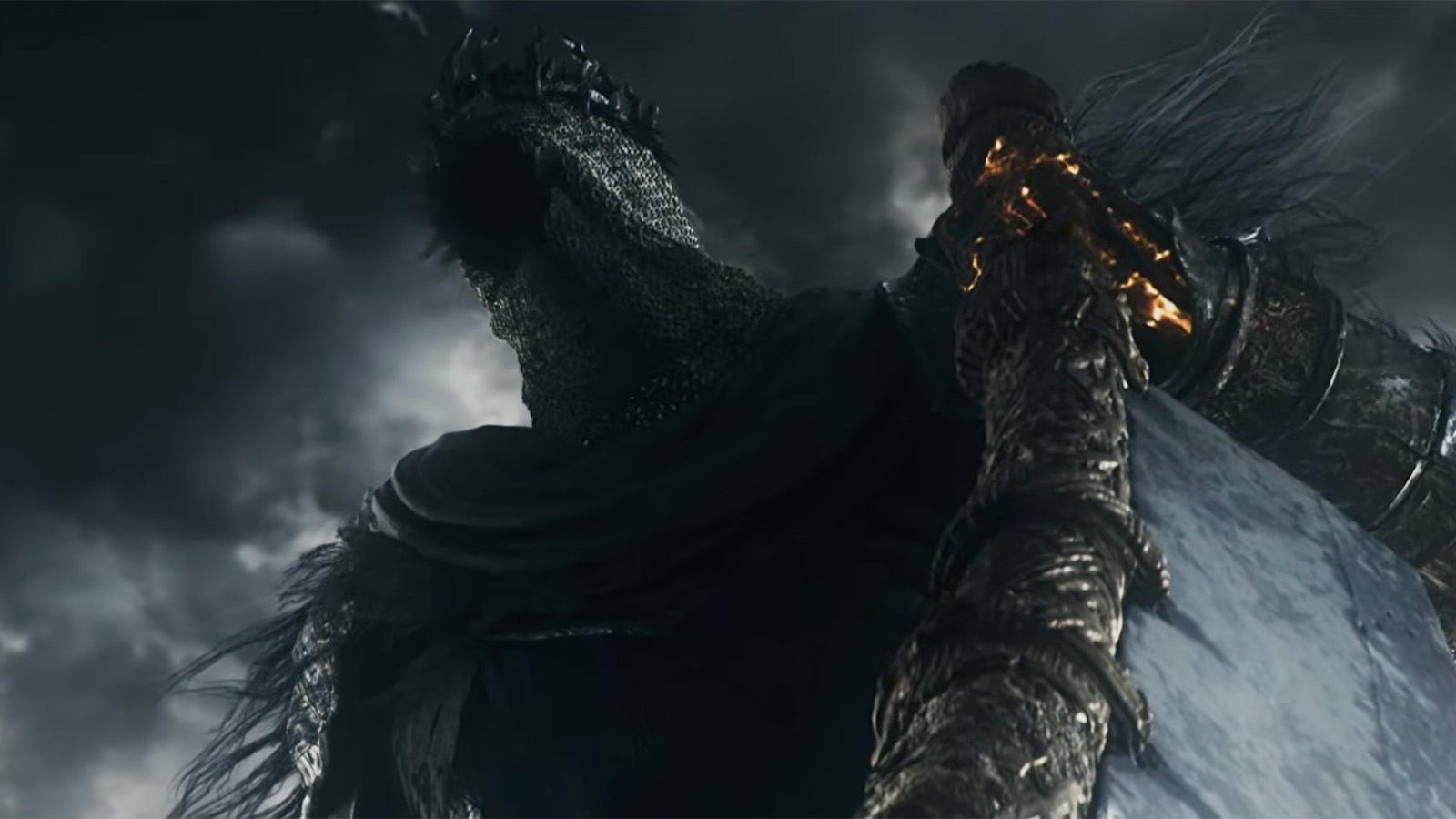 © FromSoftware
Introduction: The Throne of Emptiness and the Twilight of the Age of Fire
As the world sinks into a sea of ash, the tolling of the bell echoing through the land of Lothric is the scream of a system pushed to its absolute limit, attempting to call back the Lords of Cinder who once sat upon their thrones to partake in the Linking of the Fire once more. However, the resurrected Lords abandoned their duties and returned to their respective homelands. This is because they all understood the despair that lies at the end of the act of linking the fire, and the futility of the Linking of the Fire system that binds the world to eternal stagnation. “Yhorm the Giant,” the subject of this essay, possesses an exceedingly unique origin even among these Lords, and is an entity that embodies unfathomable sorrow and the karmic destiny of tragedy.
Though born as a “descendant of an ancient conqueror,” Yhorm was asked to be a “Lord” by the very humans his ancestors likely oppressed or ruled over, and he became their vanguard. Yet, the present Yhorm sits alone on a solitary throne in the deepest reaches of the “Profaned Capital,” a place completely devoid of any signs of life, where worthless gold and silver treasures are scattered in vain. Around him, there is no trace of the people he once risked his life to protect. All that remains are countless charred corpses.
This essay will unravel the text of the weapons and armor left behind by Yhorm the Giant, the environmental storytelling conveyed by the unique setting of the Profaned Capital, and his causal relationship with Siegward of Catarina, the knight with whom he exchanged a vow. Yhorm’s life is a symbol of the “deterministic tragedy” peculiar to this work, where devotion to others invites the worst kind of ruin, and it vividly embodies the “aesthetics of ruin” of those who struggle on the extended line of a world that has reached its limit. By logically separating the undeniable facts presented in the game from the speculations derived from circumstantial evidence, we will delve into the profound inner workings of this solitary conqueror and the faint humanity that still shines in the age of ash.
1. The Genealogy of Giants and the King of the Marginalized
In unraveling the story of Yhorm the Giant, the first fact that must be established is that he is a “being of giant blood” and, at the same time, a “descendant of an ancient conqueror.” In past history, the relationship between giants and humans (or gods) has always been one of conflict and subjugation. From their servitude in Sen’s Fortress in ancient times to the invasion of the giants in Drangleic, giants have been depicted as objects of terror for humans, and simultaneously as a barbaric force to be controlled.
1.1 Historical Causality and the Crowning of a King
As a fact that can be read from the in-game text and environment, Yhorm chose the path of becoming a “Lord” for the humans who asked him to be their vanguard, even while knowing the people’s fear of his immense power and origins. It is worth noting that the reason he reigned as a Lord was not through usurpation by force, but through the entreaty of the people.
What must be considered here is “why did the humans ask a giant, a descendant of former conquerors, to be their Lord?” Hidden beneath the Profaned Capital was the “Profaned Flame,” which would later become the cause of the city’s destruction. It is presumed that in order to counter this incomprehensible threat that consumed the hearts of men, or to protect themselves from the curse swirling within the city, the humans needed the “overwhelming martial prowess and resilient flesh of a giant,” which was far beyond their own capabilities. Yhorm accepted this request, overcoming the history of hatred associated with his lineage, and exercised his “free will” to become the protector of humans.
1.2 Storm Ruler: Governance through Mutually Assured Destruction
However, the fact that he reigned as a Lord and the proposition of whether the people truly trusted him are not synonymous. There is the fact that upon becoming a Lord, Yhorm prepared two greatswords capable of striking him down, the “Storm Ruler,” entrusting one to “the humans who doubted him” and the other to “a dear friend.”
The emotional subtlety behind this act is profoundly sorrowful. Yhorm himself understood better than anyone the fear of the people—that even as they crowned a giant as their Lord, they never knew when his overwhelming violence might turn against them. The fact that he could only guarantee his legitimacy and peace as a Lord by giving them “the means to kill the Lord” highlights the desperately profound loneliness he harbored. A governance established by constantly having the blade of rebellion pointed at his own throat, despite being the ruler. This was an extreme self-sacrifice that prioritized the mental peace of “those he must protect (the people)” over his own life, and at the same time, it was a proof of his noble will that “he would never betray them.”
2. The Philosophy of “Loss” Seen in the Abandonment of the Greatshield and Transforming Weapon Arts
Yhorm’s combat style and the evolution of the armaments he used vividly narrate the history of “loss” he experienced through environmental storytelling. From the text of Yhorm’s weapons and armor present in the game, the fact that his way of fighting changed dramatically over his lifetime can be confirmed.
2.1 The Lord as a Shield: The Embodiment of Self-Sacrifice
It is clearly recorded that Yhorm once used a “Great Machete” and a “Greatshield” as a pair, and as a Lord, he always stood alone in the vanguard. The text for Yhorm’s Greatshield explicitly states: “Increases the wielder’s poise. As a lord, Yhorm fought tirelessly as a one-man vanguard. With this shield, not even the most staggering blows could defeat him.” Furthermore, the Skill of this shield is “Shield Bash,” a solid and defensive combat style in which he would put his weight into pushing enemies away while maintaining his guard.
The fact that the Lord himself stood at the most dangerous front line (the vanguard) of the army indicates that he was not an arrogant authority figure sitting in the rear, but rather the very shield that protected the people, using his own massive body as a “bulwark.” For him, fighting was not about slaughtering enemies, but about “protecting” the weak behind him.
2.2 The Collapse of Identity and the Fall to a Destroyer
However, the present Yhorm does not possess that massive shield. The reason is told with ruthless brevity in the text. “And when he lost the one he wished to protect, he abandoned his shield.” Furthermore, the text for Yhorm’s Great Machete describes his change after abandoning the shield as follows: “After Yhorm abandoned his shield, a left handhold was added. This gave birth to a unique, crushing swordplay, which became the stuff of legends regarding his fearsome battles in his later years.”
The following table summarizes his internal transformation and its philosophical significance, as read from the changes in Yhorm’s armaments and Skills.
| Era | Facts of Equipment and Skills | Internal State and Role (Analysis) | Philosophical Significance |
|---|---|---|---|
| Era of Protection (Early Period) | Great Machete (One-handed) + Greatshield Skill: Shield Bash | Solid combat to protect the people or “someone specific.” The Lord as a bulwark. | A Being with Purpose Self-realization through service to others. The embodiment of self-sacrifice. |
| Era of Loss (Late Period) | Great Machete (Two-handed, left handhold added) Skill: Warcry | Complete loss of the reason to protect. An avatar of destruction driven by anger or despair. | Fall into Nihilism Regression to pure violence due to the loss of a reason to exist. The death of identity. |
The fact that his Skill transformed from the defensive “Shield Bash” to “Warcry,” which rouses oneself and increases attack power, symbolizes the collapse of his inner self. The “unique crushing swordplay” with the Great Machete is a manifestation of the pure destructive impulse reached by one who has lost the purpose of defense. The act of abandoning the shield is not merely a change in tactics, but the complete relinquishment of his self-definition (identity) as a “protector”—in other words, it signifies a spiritual suicide.
3. The Profaned Capital and the Madness of the Court Sorcerers
To understand Yhorm’s tragedy more deeply, one must unravel the nature of the “Profaned Capital” he ruled and the “Profaned Flame” that swirled within it. The Profaned Capital was a cursed city of sorcery, tied to an unquenchable fire discovered deep underground.
3.1 Court Sorcerers as Oracles and the Lineage of Logan
In the Profaned Capital, there existed those known as “Court Sorcerers.” The text records the fact that they claimed to be the heirs of the famous “Big Hat” Logan, and modeled their staves after his. The Court Sorcerer’s Staff of the Profaned Capital was an item that could draw out high power if used by one with superior Intelligence, and its Skill “Steady Chant” could temporarily boost the strength of sorceries.
Furthermore, the text of their attire, the Court Sorcerer Set, notes: “The tall, dark headpiece suggests they may have also been oracles.” Oracles are those who commune with unseen forces and the future.
The historical continuity inferred from this is extremely ominous. In the past, Big Hat Logan, in his excessive pursuit of profound knowledge, lost his sanity and was swallowed by madness in the Duke’s Archives. It is highly likely that the Court Sorcerers who revered him as their forefather also attempted to touch the abyss of the world using the magical and mystical means of oracles, and as a result, invited ruin upon their own city. High Intelligence and madness are always two sides of the same coin in the world of Dark Souls.
3.2 The Mutated Inhabitants and the Origin of the “Profaned Flame”
In the depths of the Profaned Capital exists an unquenchable fire known as the “Profaned Flame,” which is said to have consumed the hearts of men in an instant. The text of the weapon Eleonora presents a clear fact regarding the origin of this flame.
“A strange weapon found among malformed inhabitants of the Profaned Capital. The Profaned Flame was triggered by the curse of these women, relatives of a certain oracle, but despite their culpability, they went on living without any cares.”
This text clearly indicates that the Profaned Flame was not a naturally occurring phenomenon, but a product of “karma” brought about by human deeds (the curse of the oracle’s family).
The following table compares the nature and origins of the major “flames” that appear in the work.
| Name of Flame | Facts/History of Origin | Nature and Results (Including Analysis) |
|---|---|---|
| The First Flame | The light that emerged at the beginning of the world. Brought forth the Lord Souls. | Creates “disparity” such as light and dark, life and death. The fundamental system that maintains the world. |
| Chaos Flame | Created by the Witch of Izalith in an attempt to duplicate the First Flame. | Mutates life chaotically, giving birth to the “aberrations” known as Demons. |
| Profaned Flame | Triggered by the “curse” of the oracle’s family in the Profaned Capital. | Consumes the hearts of men, mutates inhabitants into aberrations, and ultimately burns only human flesh. |
The Skill of Eleonora, “Feast Bell,” has a gruesome, life-devouring nature: by holding the axe aloft and shaking it, a solemn bell tolls, and upon landing attacks, it restores HP (while also applying a bleeding effect). This “life-siphoning” nature is the very essence of the Profaned Flame, which is rooted in human curses. The repetition of history (cycle and stagnation)—where the Witch of Izalith once lost her city because she could not control the flame—is being repeated here as well.
4. The Resolve to Become a Lord of Cinder and Deterministic Despair
The “unquenchable fire (Profaned Flame)” discovered underground plunged the city into madness. It is theorized that behind Yhorm the Giant’s decision to link the First Flame as a “Lord of Cinder,” there was a clear purpose: to quell this Profaned Flame.
4.1 Fire Raining from the Sky and Complete Betrayal
Yhorm used his own massive soul as kindling and linked the First Flame. After he became a Lord of Cinder, the situation did not proceed in the direction he had hoped. The facts indicated by environmental storytelling and prominent community theories point to a gruesome conclusion: “After Yhorm linked the fire, fire rained from the sky and incinerated only the flesh of the humans in the Profaned Capital.”
Why were only humans burned? It is because the “Profaned Flame” was an impure fire originating from a human curse (the curse of the oracle’s family). The sacred ritual of the Linking of the Fire is a system designed to restore order to the world. However, it can be interpreted that by Yhorm linking the fire, the First Flame (the system) exerted a purifying effect against the curse swirling in the Profaned Capital, and as a result, it indiscriminately incinerated “human flesh”—the very source of the Profaned Flame—using it as fuel.
4.2 Abandonment of Duty and the Throne of Emptiness
This event was a despair profound enough to completely destroy the very foundation of Yhorm’s existence. He tried to protect his people (from the Profaned Flame) even at the cost of burning his own life. But as a result, the people he sought to protect were all burned to death by the backlash of the Linking of the Fire that he himself caused (or triggered). His noble choice made of free will was mocked by the world’s massive system (determinism) and twisted into the worst possible outcome.
The reason why Yhorm, after resurrecting from the ashes as a Lord of Cinder, abandoned his journey to the throne of Lothric and returned to his homeland, the Profaned Capital, is obvious. He no longer had any faith in the “Linking of the Fire system” to save the world, nor any reason left to sit upon the throne.
Around the throne where he sits, countless charred human corpses and a disproportionate mountain of gold and silver treasures are piled up. This is extremely melancholic environmental storytelling that demonstrates just how powerless “a Lord’s authority” and “wealth” are in the face of death and emptiness. He simply bore his own sins (the failure to protect, or having indirectly killed them), and in an eternally unending solitude, waited for someone to come and “put an end” to him.
5. The Vow with Siegward of Catarina and Salvation
In the story of the solitary conqueror sitting on the throne of emptiness, the only salvation, and simultaneously the most sorrowful light, is the existence of Siegward of Catarina.
5.1 Trust in an Old Friend and the Exchange of Humanity
Yhorm once entrusted one of the two Storm Rulers he prepared to a “dear friend.” That friend is none other than the cheerful and dutiful knight, Siegward of Catarina. There is no explicit text detailing how the two met and fostered their friendship. However, as a theory derived from the circumstances, it is believed that Siegward met Yhorm while traveling on his own duty, and by treating the feared existence of a giant as an equal without prejudice, he deeply saved the lonely Yhorm’s heart.
What was the “promise” that Siegward exchanged with Yhorm? Calculating backward from the progression of the story and their conclusion, it is surmised that it was a heartbreaking plea from Yhorm: “If I should ever succumb to madness, unable to bear the heavy burden of being a Lord of Cinder, or if I become unable to fulfill my duties as a Lord, strike me down with this sword (Storm Ruler).”
Siegward traveled the land of Lothric, tormented by the curse of the Undead, solely to fulfill this overwhelmingly heavy promise. Along the way, the player encounters this Onion Knight numerous times, witnessing him pondering, fighting alongside them, giving items, and sharing a drink (Siegbrau). Behind his cheerfulness, a dark and profound resolve was always hidden—the resolve that he must kill his closest friend with his own hands.
5.2 The Encounter in the Audience Chamber and the Rite of Burial
When the player reaches the deepest part of the Profaned Capital, Yhorm’s throne, if certain conditions are met, Siegward quietly steps forward. And, to confront the giant, he loudly declares:
“Yhorm, old friend. I, Siegward of the Knights of Catarina, have come to uphold my promise!”
This line is passed down as one of the most epic and sorrowful quotes in this work. The sight of Siegward raising the Storm Ruler, cloaking it in the power of the storm, and striking down the giant is not merely a killing between adversaries. It is a rite of burial performed with the utmost “respect” and “love,” to grant peaceful rest to a friend who had sunk into madness and emptiness, trapped in eternal regret upon his throne.
5.3 A Toast to the Sun and the Fulfillment of Duty
After a fierce battle, when Yhorm the Giant falls and his massive soul is released from its owner, Siegward quietly sighs and proposes a final toast to the player.
“Once again my thanks, I could have not kept my promise without you. Now for a final toast to your valor, and my old friend Yhorm. Long may the sun shine.”
And he continues: “Well I’m going to have myself a little nap the only thing to do really after a nice toast you are a true friend best of luck with your duty. unkind one.”
This declaration of a short rest, a “little nap,” while feigning the habit of a Knight of Catarina, indicates a gentle acceptance that his own “reason for existence (duty)” has completely ended. In the world of Dark Souls, it is a deterministic law of fate that an Undead who loses their purpose (duty) will be reduced to a “Hollow.” However, before losing his sense of self as a Hollow, Siegward completely fulfilled his promise to his friend. The fact that he quietly passes away (or fades away) afterward is the ultimate “self-completion” in a cursed world, and can be said to be the most beautiful and dignified form of death.
In a dark and sunken world of ash, the prayer “Long may the sun shine” contains not a resistance against a dying world, but the “aesthetics of ruin” that permeates this work—the idea that things are precious precisely because they will one day end.
Conclusion: Faint Humanity and the Aesthetics of Ruin in the Age of Ash
The story of Yhorm the Giant can be deciphered as a collision between “deterministic tragedy” and the “free will” of an individual attempting to transcend it.
While bound by the fate imposed upon him by his bloodline as an ancient conqueror, he chose the “free will” to become a Lord for the people who once opposed him. Furthermore, he chose the “Linking of the Fire,” the ultimate self-sacrifice, in an attempt to quell the Profaned Flame even at the cost of his own life. Cruelly, however, his proactive choices were entirely distorted by the world’s system, drawing in the worst possible outcome. Those he was meant to protect were burned by fire, and having abandoned his shield, he fell into a being that exercised only the power of pure destruction. In the face of the irresistible, massive fate that is the system of fire, his individual noble will held no power whatsoever.
The fact that upon his resurrection he abandoned his duty as a Lord and did not return to the throne of Lothric is a complete “despair and rejection” of the world’s system (the cycle and stagnation of the Linking of the Fire) that had reached its limit. Understanding that his actions were meaningless, or even harmful, he chose the path of simply waiting for his own judgment amidst the emptiness of the Profaned Capital.
However, at the end of that story filled with overwhelming emptiness and sorrow, the only ray of light was the “promise with a friend.” Even as the grand system of the Linking of the Fire that dictates the fate of the world collapses, as even the gods disappear, and as everything returns to ash, only the greatsword raised by a single knight for his friend, and the cup of drink shared after the battle, shine with a faint yet certain warmth.
The greatest legacy left behind by the solitary conqueror, Yhorm the Giant, is neither his massive soul nor his mighty Great Machete. It was the exceedingly pure “humanity” itself, in the name of “friendship,” that he once forged with a single, small human knight. And Siegward’s devotion, risking his life to fulfill that promise, is also a silent resistance against a world filled with despair.
The world inevitably heads toward ruin, and all efforts may be reduced to the futile labor of ash. However, the personal bonds and vows exchanged in that process do not become worthless. This melancholic and beautiful contrast is the profound philosophy flowing in the undercurrent of the work known as Dark Souls, and it is the greatest reason why we are drawn to the Age of Ash and continue to pass down the story of its end.
Thank you very much for reading to the end. To help support the activities of this archive, a warm donation of a cup of coffee would be highly appreciated.