Lore.03: The Ringed City and the "Dark Soul"
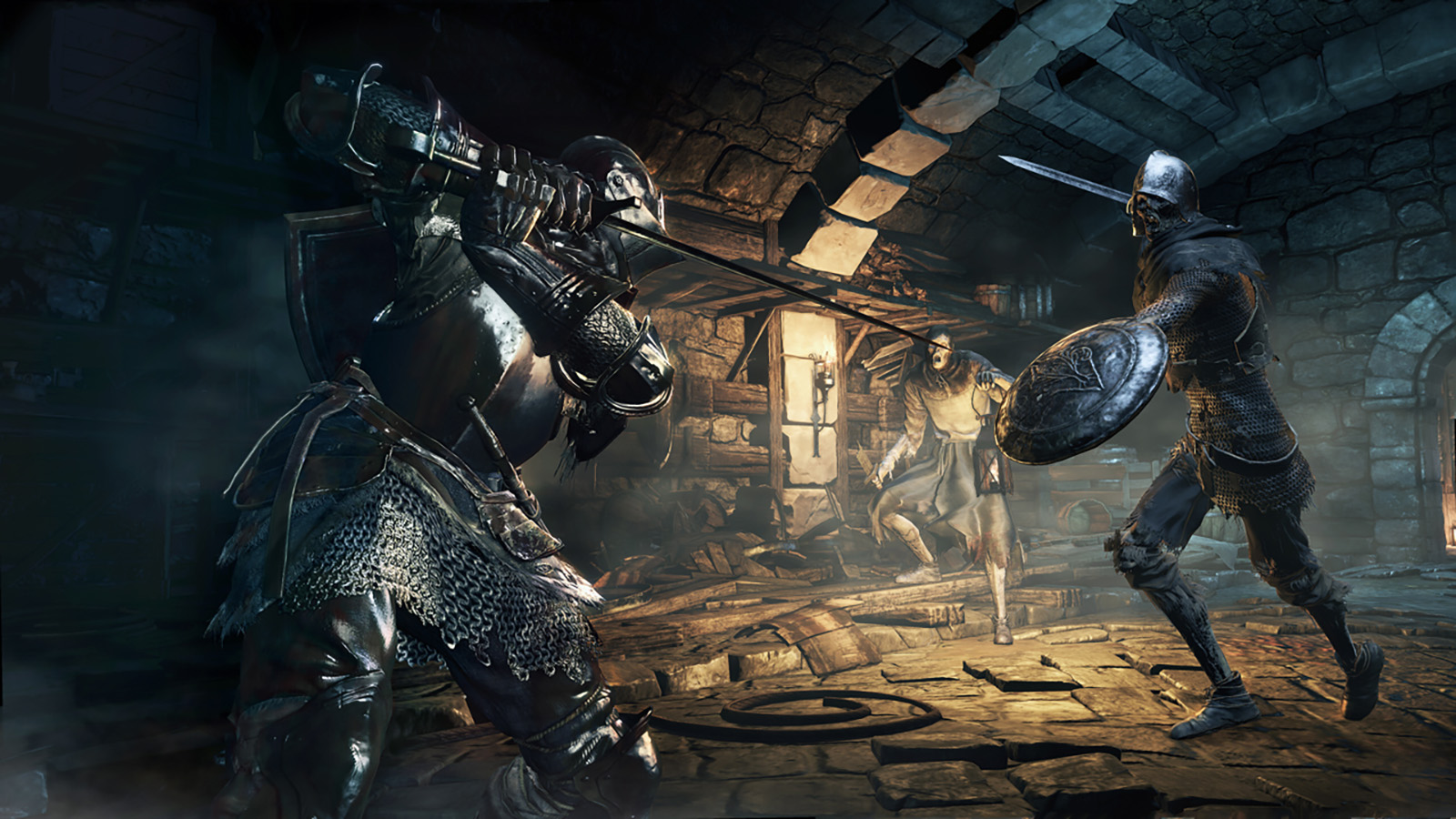 © FromSoftware
1. The Dreg Heap of the World and the Descent to the City at the End of the Earth
As the Age of Fire reaches its absolute limit, an apocalyptic landscape emerges where all eras, lands, and past histories themselves crumble and converge into a dreg heap. At the deepest, darkest, and most absolute end of this convergence lies “The Ringed City.” As the world literally turns to ash and former glories pile up as mountains of rubble, the descending journey toward the end of the earth signifies more than mere geographical movement. It is a profoundly philosophical pilgrimage leading to the truth of the “Dark Soul”—the root of life and the world, which the gods have continuously concealed.
Just before reaching The Ringed City, at the bottom of The Dreg Heap, a definitive end is brought about. This is the fact that the “Demon Prince” is slain—the last survivor of the demon race that originated from Izalith, the stage of the original Dark Souls, and built its own ecosystem behind the history of gods and humanity. As explicitly stated in the game, the Demon Prince was the vessel for the final flame shared by the demon race. His defeat signifies the complete eradication of the life system born from the Chaos Flame.
As an observation derived from this, this event functions as a highly significant “ritual” symbolizing the end of the Age of Fire. Only after stepping over the corpse of a species whose lineage has been severed, where even the feverish Chaos Flame has been completely extinguished, is the seeker permitted to set foot into The Ringed City—the true Abyss where the Dark Soul is sealed. It ruthlessly presents the world’s causality: only after fire, the symbol of “disparity” (life and death, light and dark), has completely vanished from the world does the realm of pure darkness (the Dark Soul), the essence of humanity, open its maw.
2. Confinement in the Name of Divine Grace: Princess Filianore’s Eternal Slumber
The Ringed City is a metropolis granted by Lord Gwyn, the Lord of Sunlight, as a haven for the Pygmies. However, beneath its luxurious and beautiful cityscape lies the gods’ fundamental fear of the Dark Soul and their hidden intention of eternal isolation. Fearing the multiplication of the Dark Soul and the expansion of The Abyss that would threaten the Age of Fire, Gwyn gave the Pygmies a prison disguised as the end of the world. He then sent his youngest daughter to that land as a hostage, or perhaps an overseer.
The greatest symbol of The Ringed City, and arguably the root cause of the prolonged stagnation of time in this world, is Princess Filianore, the master of the church. She lies in an eternal slumber within the church at the end of the earth, and her sleep itself serves as a steadfast anchor, severing The Ringed City from the collapse of the outside world and the flow of time, confining it within a false eternity.
As an explicit fact within the game, there exists “Filianore’s Chime,” which was bestowed with her favor. According to the text of this chime, her favor is “boundless and indiscriminate,” possessing the property of expanding the area of effect for miracles that encompass the surroundings, such as recovery, healing, and reinforcement. Furthermore, the chime’s weapon art, “Pray for Favor,” exerts an effect that “restores HP very slowly” not only to the one praying but also to those nearby.
As a profound observation constructed from these facts, it is highly likely that Filianore’s love and favor did not stem solely from a sense of duty as a cold-hearted warden over the Pygmies, but rather from a pure, maternal, and all-encompassing affection. However, this very “indiscriminate love” forms the core of The Ringed City’s tragedy.
A love that equally envelops all things and continuously, slowly restores them means, conversely, an “ultimate stagnation” that denies all change (the cycle of life and death, aging, and evolution), attempting to preserve everything permanently exactly as it is. Her grace, which denies the “disparity” that is the fundamental principle of the Age of Fire and traps everything in an eternal slumber, can be said to have been the sweetest and most cruel shackle for the Pygmies.
Her sleep is another “obsession with stagnation,” existing as an extension of the system of the “Linking of the Fire” by her father Gwyn, which had reached its limit. Just as Gwyn artificially prolonged the Age of Fire by offering himself as kindling, Filianore, too, stopped the time of the cage known as The Ringed City by sinking her consciousness into an eternal slumber, thereby sealing away the Dark Soul from wielding its true power (its expansion as The Abyss).
2.1 The Contrast of Existence and Philosophy in The Ringed City
The beings residing in The Ringed City each harbor different stances and tragic natures regarding the “Dark Soul” and “stagnation.” Below is a contrast of the major factions and their internal philosophies, as read from the in-game environment and texts.
| Entity / Faction | Origin and Explicit Role | Current Circumstances and Hidden Philosophical Implications |
|---|---|---|
| Princess Filianore | Lord Gwyn’s youngest daughter. Master of the church. | Maintenance of stagnation through her favor. Her indiscriminate love functions as a “sweet cage” that rejects change. |
| Ringed Knight | Early humanity wielding weapons and armor of The Abyss. | Beings feared by the gods and subjected to the seal of fire. The embodiment of suppressed history and an eternal march devoid of purpose. |
| Shira, Knight of Filianore | A knight serving Filianore. Keeper of the Mad King. | Blind fanaticism toward the system of stagnation. She views change as a blasphemy against the world, leading her down a tragic, fatal path. |
| White-Faced Locust | Evangelists who beckon men to the dark. | Descent into gluttony. The abandonment of their mission and the manifestation of the negative aspect of the Dark Soul: “infinite craving.” |
| Pygmy Lords | Descendants of those who found the Dark Soul. | Waiting upon eternal thrones. The Blood of the Dark Soul has dried up, making them victims of a fatalism without salvation. |
3. The Sealed “Dark Soul” and the Fierce Sorrow of the Ringed Knights
Indispensable when discussing The Ringed City is the existence of the “Ringed Knights,” early humanity who fought alongside the gods against the Everlasting Dragons. They clad themselves in weapons and armor forged in The Abyss, joined the ranks of the gods with that power, and made immense contributions during the dawn of the world. However, the gods harbored an unfathomable fear of the power of the “Dark Soul” they possessed—namely, the infinite potential drawn from The Abyss and the nature of the dark that might overturn the order of fire.
As an explicit fact, the arms and armor of the Ringed Knights were cast with a “seal of fire” by the gods. This is a testament to the gods’ oppression and fear, indicating that their power and very existence were intentionally erased from history. The “Ring,” from which The Ringed City derives its name, is the very “Darksign” (the seal of fire surrounding the Dark Sigil) that appears on the bodies of the Undead, serving as the symbol of the ultimate curse placed by the gods to physically and magically contain humanity’s power of darkness.
As a causal relationship inferred from circumstantial evidence, the Ringed Knights bear a fierce sorrow: despite dedicating themselves to the world and surviving the mortal struggle against the Everlasting Dragons, their existence was feared, and they were confined to the end of the earth. They continue to march through endless time without decaying within the false time created by Filianore, but their steps no longer hold any mythological purpose or warrior’s glory. They merely wander, cursed by the gods and forgotten by history, harboring The Abyss within themselves. This absolute sense of nihilism is the true identity of the melancholic atmosphere that blankets the entirety of The Ringed City, accentuating the aesthetics of ruin.
4. The Mire of The Abyss and the White-Faced Locusts: The Abandonment of Mission and the Philosophy of Gluttony
As one proceeds to the lower levels of the beautiful city, an appalling dark swamp (the abyssal swamp) spreads out before them. This is a place where the sealed darkness has stagnated, settled over an immense span of time, and undergone a transformation akin to putrefaction. Whereas The Abyss depicted in Oolacile in the original Dark Souls was an aggressive, madness-filled, surging power caused by the rampage of humanity, The Abyss settling in the lower levels of The Ringed City is portrayed as a more primordial, quiet “mire” accompanied by bottomless gravity.
Symbolizing this abyssal swamp and serving as the core of its environmental storytelling are the preachers, also known as the “White-Faced Locusts.” As a fact revealed by in-game texts, these White-Faced Locusts were originally beings whose primary vocation was “preaching to beckon men to the dark.” However, most of them have now completely forgotten their original mission as preachers, drowning in endless appetite and reducing themselves to beings that merely devour the abyssal swamp. Their corruption, coldly described in item texts as “a pitiful tale,” conceals an extremely profound philosophical proposition.
The essence of the Dark Soul, and thus The Abyss, is “craving.” The nature of the dark—the source of life that multiplies and seeks to swallow everything—leads directly to mere “gluttony” if not given a firm purpose or will. In combat, the preachers exhibit a gruesome ecology, performing consecutive thrusts using branches with magic attributes, and even firing wax-like mucus from their backs. However, what most symbolizes their nature is their predatory act of “skewering restraint (time to feast).” They have abandoned their highly intellectual mission of manipulating words, preaching teachings, and guiding people to the true dark, regressing instead to the most primal and base desire of instinctive appetite.
Here, one can observe an important theme that runs throughout this work: “the abandonment of mission and the loss of free will.” Just as those continuously bound by the karma of the Linking of the Fire ultimately return to ash (nothingness) incapable of even becoming kindling, those on the side of The Abyss also degrade into monsters that merely surrender to endless greed if they lose their purpose amidst eternal stagnation. The sorrow of the White-Faced Locusts lies in the fact that they are oblivious to their own corruption, enjoying the process of assimilating into the mire of The Abyss as “pleasure (a feast).” This is nothing less than the ultimate fate of a spirit that has given up on creating its own existential meaning within a system that has reached its limit (the unnatural prolongation and stagnation of the Age of Fire).
5. The Collapse of the Illusion and the Shattering of the Shell: Breaking Free from Fatalism and the Manifestation of Nihility
The climax of the narrative in The Ringed City arrives at the moment the Ashen One (the seeker) reaches the innermost church and touches Princess Filianore, who remains in eternal slumber, and the bizarre “shell (or egg)” she cradles in her arms.
This “shell” is the heart of the illusion and stagnation that forcibly contained the time of The Ringed City, maintaining the false eternity exactly as the gods desired. The act of touching it is a fatal and irreversible interference with the “false eternity” fixed by the system, and from a certain perspective, it is a destructive act equivalent to scattering and murdering the beautiful rose named Filianore. The moment the shell is shattered, the firmly maintained illusion of light abruptly vanishes, and before the seeker’s eyes spreads a “desolate wasteland (a desert of ash)” as far as the eye can see, born as a result of all time advancing at once.
This dramatic environmental shift is a philosophical revelation that transcends mere visual change. It exposes the cruel “fact” that the Age of Fire had already met its end long ago, and the world had long since collapsed. The luxurious sight of The Ringed City and the warm favor of Filianore were all fictions that should have been buried in ash long ago. The act of breaking the shell signifies the shattering of the “fatalism (the fate of being eternally isolated and continuously stagnating)” imposed by the gods, achieved through the free will of the Ashen One themselves.
However, what this exercise of free will brings is not a liberation filled with hope. It is the manifestation of absolute nihility. In the true world, there are no longer any others to save, nor any order to protect; only an endless wasteland of ash stretches out.
5.1 The Fanaticism of Shira, Knight of Filianore, and Her Tragic End
The one who bears the deepest sorrow from the collapse of this illusion is Shira, Knight of Filianore, who serves the princess. She blindly adhered to the teachings of the gods and the order of The Ringed City, holding supreme pride in her mission to contain the Mad King of the gods. For Shira, Filianore’s slumber and the city’s stagnation were the entirety of the world she had to protect, and the absolute truth.
However, when the seeker touched the shell, ending the life of the beautiful rose Filianore and transforming the city into its true form—a desolate wasteland of ash—everything Shira cherished was shattered without a trace. In a corner of the desert where everything has turned to ash, as if hiding among the rubble, she tracks down the seeker and turns her blade, filled with hatred and despair, against them.
At the root of Shira’s actions are her “fanaticism” toward a system that has reached its limit, and her “rejection” of being confronted with the truth (the fact that the world has already perished). She likely was not entirely oblivious to the deception of remaining within the illusion. Rather, it was precisely because she instinctively feared the nihility of a world where nothing remained outside the illusion that she clung to the laws of the gods with near-madness. The conclusion where the seeker slays Shira in this wasteland is an unavoidable rite of passage to completely sever the delusions of the past and accept the reality of the empty wasteland. Shira’s death is nothing less than the final death knell announcing that the old era and its order have been completely extinguished.
6. The Pygmy Lords, the Depletion of the “Dark Soul,” and the Thirst for Blood
At the end of the desert of ash, the true terminus of the world, exist the descendants of the Pygmies who are said to have once found the “Dark Soul”—namely, the “Pygmy Lords.” As the direct lineage of the “Furtive Pygmy,” who harbored the potential to fundamentally overturn the myth of the Linking of the Fire told in the original Dark Souls, they are the true masters of The Ringed City. However, when the seeker discovers them, they are already meeting an utterly gruesome end.
Once likely seated upon luxurious thrones wearing crowns as proof of their kingship, they are now smeared in mud and ash, crawling about and begging for their lives. In the land of isolation granted by the gods, they neither participated in the transformation of the world nor wielded the power of The Abyss hidden within them; they merely passed the time in idleness, ultimately reducing themselves to nothing more than powerless, decrepit beings.
The most important insight to be gleaned from this is the “depletion of the Dark Soul.” The power of the Dark Soul that the gods feared above all else—namely, “infinite humanity” and the “power of blood”—had completely dried up amidst eternal stagnation. When Slave Knight Gael devoured them and sought their blood, the Blood of the Dark Soul within the Pygmy Lords had already dried up, rendering it unsuitable to be used as the “pigment of the Dark Soul” to paint a new painted world.
The Dark Soul manifests its essence (The Abyss) by flowing, expanding, and being passed down from person to person. However, in the isolated space of The Ringed City, where change was sealed and it was completely severed from the outside world, even the Dark Soul lost its vitality, rotted, and depleted. This is the greatest achievement brought about by Gwyn’s seal of fire, and simultaneously the decisive factor that led the entire system of the world to complete death. As a result of forcibly prolonging the Age of Fire, not only fire but even the dark exhausted its strength, leaving nothing but “ash” in the world.
7. The Acceptance of Nihility and a Faint Hope: What Remains at the End of Stagnation
The tale surrounding The Ringed City and the “Dark Soul” is an epic depicting the end of mythology, permeated by an extremely melancholic aesthetic of ruin.
The Ringed City that Gwyn bestowed upon the Pygmies was not an honorable citadel, but a grand and luxurious coffin designed to shut the darkness out of history. Filianore’s indiscriminate favor functioned as a sweet anesthetic to prevent the Hollows from harboring discontent and rioting within that coffin. The preachers forgot the mission of the Dark Soul and devoured the mire, while the Ringed Knights continued their meaningless sentry duty as they burned from the seal of fire. Shira believed without a doubt that the order of the coffin was the will of the gods, and lost her sanity when all of it was destroyed.
What the player (the Ashen One) accomplished at the end of the earth was neither saving the world nor establishing a new order of light. They merely shattered the shell of the “deception named stagnation” that had long shrouded the world, exposing the reality (the desert of ash) that the world had already died out to the light of day.
However, within that absolute sense of nihility and desolation, a faint glimmer of humanity can be glimpsed. In a world where everything has depleted and been buried in ash, the truth of the Dark Soul exists no longer as a terrifying Abyss that swallows the world, but as the final lingering scent of quietly fading life. The act of Slave Knight Gael, who went so far as to make his own body a vessel to squeeze the Blood of the Dark Soul from the dried-up Pygmy Lords, attempting to forge it within himself. And the causal relationship where this is ultimately inherited as the pigment (a seed of hope) to paint a “new painted world” is something that can only be realized after the cursed cage known as The Ringed City is completely destroyed and the time of the world has advanced to its absolute limit.
The lineage of the Pygmies and the Dark Soul, bound by fatalism and driven into the shadows of history by the gods. The conclusion where all of this returns to the desert of ash is tragic, yet simultaneously a profoundly tranquil liberation. The karma of the Linking of the Fire, and the curse of isolation born from the fear of it. When both have completely burned out or depleted, the world is finally able to break free from eternal stagnation and welcome a “perfect end” unbound by anyone or anything.
All the battles and exploration in The Ringed City can be said to have been a ritual to witness this quiet end. The city as a beautiful illusion, the grotesque gluttony of the preachers, the unrewarded loyalty of the knights—all melt equally into the ash. What remains there is the melancholy of an endless wasteland ruled only by silence, devoid of both fire and dark, and only at the end of that nihility is a single drop of blood born to paint a new world. This intersection of ultimate nihility and a thread of hope is nothing less than the literary and philosophical pinnacle that this work has reached.
Thank you very much for reading to the end. To help support the activities of this archive, a warm donation of a cup of coffee would be highly appreciated.