Tome.01: Genesis of the Diablo Universe and the Eternal Conflict
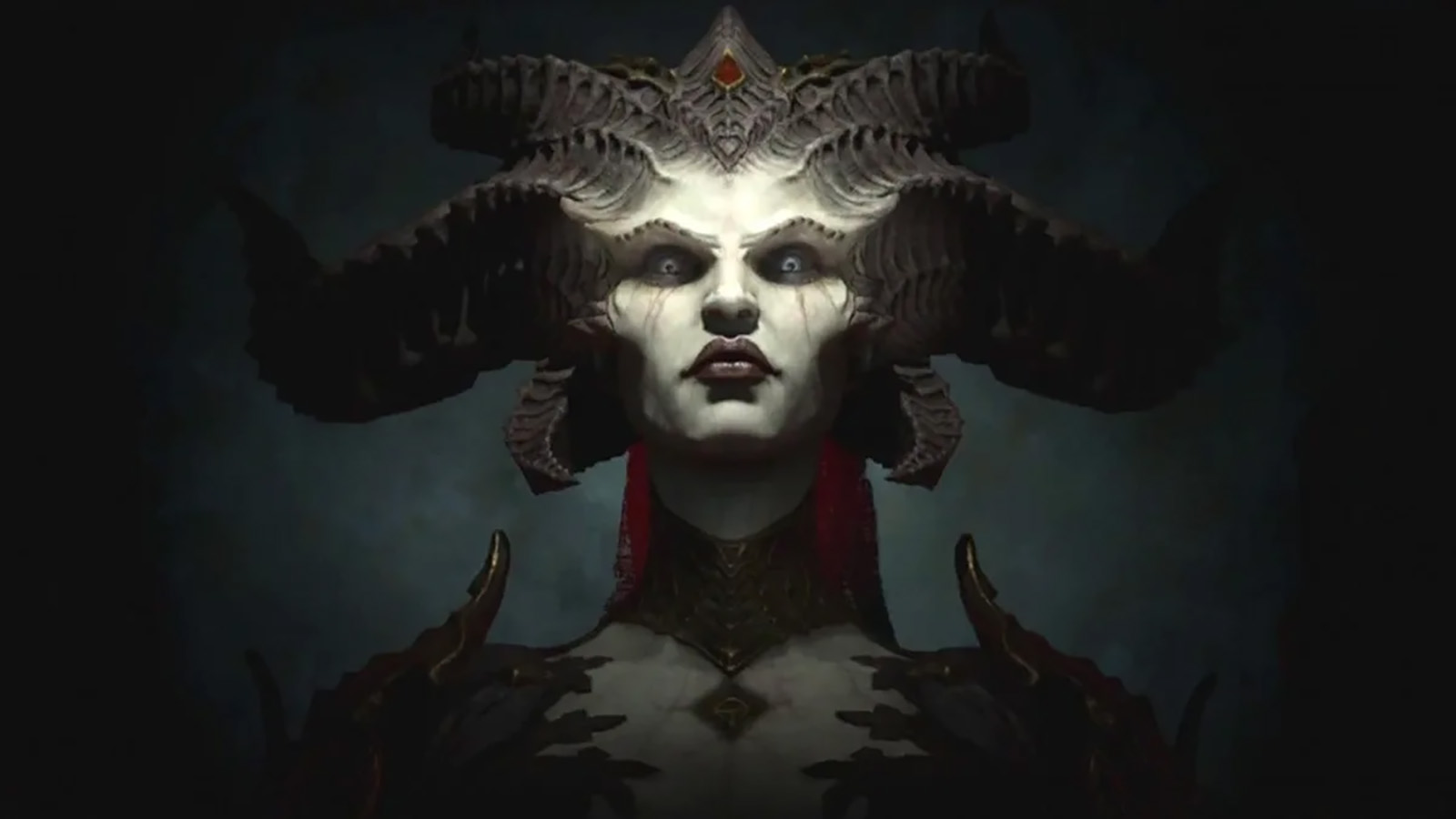 © Blizzard Entertainment
Introduction: The Dawn of an Existential Universe Smeared in Blood and Mud
The fundamental despair in the universe of Diablo is rooted in the grim reality that humanity’s home, Sanctuary, was not created through divine grace or benevolence. Rather, it is a false miniature garden forged from cosmic ennui, twisted ambition, and the grave sin of “stealing” omnipotent power. In this profound Dark Fantasy world smeared in blood and mud, both light (angels) and darkness (demons) are equal calamities for humanity, and no absolute, benevolent savior exists.
This treatise integrates all available literature and fragmented lore—including the latest historical discoveries revealed in the expansion Vessel of Hatred and the upcoming 2026 release Lord of Hatred—to comprehensively unravel the historical and philosophical background from the genesis of the universe to the outbreak of the Eternal Conflict, and ultimately to the birth of Sanctuary by the angel Inarius and the demon Lilith. This exploration highlights the awakening of humanity’s existential free will in defiance of the crushing weight of absolute determinism and fate.
1. The Struggle Within The Pearl and the Genesis of an Imperfect Universe
To understand the history of merciless struggle that shrouds the horizons of Sanctuary, one must trace back to the “primordial state” before the dawn of all time. According to the oldest recorded myths, before creation, there existed only a single, colossal entity known as The Pearl. Within it slumbered Anu, the primordial singular being and supreme god who encompassed all things, resting in a dreamlike state.
1.1 Anu’s Self-Purification and the Incarnation of Tathamet
In his pursuit of ultimate good and perfection, Anu committed a fatal error. He attempted to sever and expel from himself all internal dissonances—the concepts of malice, hatred, terror, and destruction. However, these severed negative aspects did not vanish; instead, they coalesced and incarnated as a colossal seven-headed dragon named Tathamet. This marked the birth of the first Prime Evil.
This mythological structure shares a striking archetypal resemblance to the schism between the supreme god Ahura Mazda and his antithesis, the evil god Ahriman, in Zoroastrianism, as well as the struggle between the sky god Anu and the primordial dragon in Sumerian-Babylonian mythology. The fact that ultimate evil was born as a consequence of Anu seeking his own purity serves as a fundamental metaphor for the overarching theme in the Diablo universe: “pure good does not exist, and blind faith in good breeds ruin.”
1.2 The Primordial Explosion and the Formation of the High Heavens and Burning Hells
Trapped within the confined space of The Pearl, the ultimate good (Anu) and the ultimate evil (Tathamet) waged an endless struggle that spanned eons. Neither could gain a decisive advantage, and upon reaching the absolute limits of exhaustion, both unleashed their final, full-force strikes simultaneously, mutually annihilating each other. The energy unleashed by this collision triggered an unimaginable explosion of light and matter, giving birth to the current universe itself.
Anu’s radiant spine drifted to the apex of the universe, becoming the Crystal Arch, which served as the foundation of the High Heavens, from which the archangels were born. Conversely, Tathamet’s putrefied corpse sank to the very bottom of the universe, forming the Burning Hells. From Tathamet’s seven heads were born the Prime Evils—Diablo, the Lord of Terror; Mephisto, the Lord of Hatred; and Baal, the Lord of Destruction—along with the four Lesser Evils, serving as the seedbed of flesh and blood for countless demons.
And at the center of the universe, in Pandemonium, Anu’s colossal “eye” remained. This is the Worldstone, an omnipotent cosmic artifact possessing the power to shape reality and create new worlds and life.
2. The Futility and Deterministic Stagnation of the Eternal Conflict
Even after the deaths of Anu and Tathamet, their remnants—angels and demons—continued their creators’ proxy war. This marked the beginning of the cosmic-scale war known as the Eternal Conflict.
1.1 The Endless Slaughter Over the Worldstone
The primary objective of this struggle was to establish dominion over the Worldstone, which possessed the power to alter reality. Angels and demons built fortresses in Pandemonium to protect or monopolize the Worldstone, engaging in blood-soaked battles over countless ages. Control of the fortress changed hands time and again, and the fires of war occasionally reached the deepest sanctums of the High Heavens and the Burning Hells, yet neither faction ever achieved a decisive victory.
1.2 The Relativity of Angelic “Order” and Demonic “Chaos”
The most profound issue brought about by the Eternal Conflict was its philosophical stagnation. The angels, led by the archangel Imperius and the Angiris Council, blindly believed that absolute “order” should govern all things. To them, “good” was not moral compassion or mercy, but perfect harmony and immutability. They were totalitarian beings who permitted absolutely no individual free will or deviation.
On the other hand, the demons of the Burning Hells possessed “chaos” and “destruction” as their instincts, craving only to shatter all order. Demons fed on emotions such as hatred and terror, defining their own existence through the suffering of others.
Both angels and demons were akin to programs subordinated to their respective existential concepts of “order” and “chaos,” lacking the free will to deviate from their own natures. Furthermore, even in death, they would be reborn, taking shape once more from the Crystal Arch, The Void, or the abysses of the Burning Hells, meaning this war could have no intrinsic end. The struggle was completely deadlocked, and the universe was trapped in a colossal void of meaningless cycles of destruction and rebirth.
3. The Flight of the Rebels and the Creation of Sanctuary
In response to the meaningless repetition of the Eternal Conflict, individuals harboring heretical thoughts emerged from both the High Heavens and the Burning Hells. Foremost among them were the archangel Inarius and the demon Lilith, daughter of Mephisto, the Lord of Hatred.
3.1 Inarius’s Escape and Lilith’s Ambition
Inarius was deeply exhausted by the endlessly continuing war. His fundamental motive was “escape”; he desired only to build a perfect stasis (a utopia) where angels and demons could coexist peacefully, and to hide himself from the clamor of battle.
In contrast, Lilith’s motives were exceedingly ambitious and pragmatic. She too was frustrated by the stagnation of the Eternal Conflict, not because she rejected the war itself, but because she wished to shatter the “boredom” of a status quo that showed no signs of resolution. Lilith schemed to create a “new army” by combining the powers of angels and demons, intending to conquer both the High Heavens and the Burning Hells and establish herself as the new ruler of the universe.
“Escape” and “shattering the status quo.” Despite harboring conflicting motives, their interests aligned on the single point of “withdrawing from the front lines.” The two conspired together, gathering sympathetic angels and demons from both factions.
3.2 The Theft of the Worldstone and the Concealment of the Dimension
They committed the grave sin of infiltrating Pandemonium and stealing the Worldstone, the singularity of the universe. Using the omnipotent power of the Worldstone, they created a pocket dimension concealed from the watchful eyes of the High Heavens and the Burning Hells, and constructed a new world within it. Inarius named this world Sanctuary.
With the disappearance of the Worldstone, the High Heavens and the Burning Hells lost the objective of their war, and the Eternal Conflict temporarily fell into a state of suspension. Sanctuary is a pocket dimension isolated from both the High Heavens and the Burning Hells, existing shrouded in the veil of the Spirit Realm. According to some lore, Sanctuary rests upon the back of the colossal stellar dragon Trag’Oul, possessing its own sun, moon, and stars in the sky, with the movement of these celestial bodies serving as the source of magic.
Inarius secretly deceived the other rebels, binding the power of the Worldstone to himself to establish his position as the de facto absolute god of Sanctuary. He was under the illusion that he had obtained a perfect divine kingdom to satisfy his own egoism.
4. The Awakening of the Nephalem and the Primordial History in the Skovos Isles
Following their escape to Sanctuary, the union of Inarius and Lilith, along with the interbreeding of other rebel angels and demons, gave birth to the hybrid species known as the Nephalem. The first generation of Nephalem were called the Ancients, and they are the direct ancestors of modern humanity. The first child of Inarius and Lilith was Linarian (Rathma), who would later become the progenitor of the Necromancer.
4.1 The Cradle of Genesis: The Skovos Isles
The land where this first generation of Nephalem was born and built their first civilization was none other than the Skovos Isles. These islands, which will serve as a crucial setting in the 2026 expansion Lord of Hatred, are not merely a remote frontier, but the cradle of genesis in Sanctuary. Comprising islands such as Themis, Philios, Lycander, and Alhulua, Skovos would later foster the advanced cultures of the Amazons (Askari) and the Oracle. Yet, deep beneath its surface slumber primordial holy sites harboring the echoes of the Worldstone.
4.2 A Power Surpassing Angels and Demons
The greatest miscalculation that occurred here was the inherent power possessed by the Nephalem. Because they inherited the blood of both angels and demons, their potential far surpassed that of their creators, their parents. The first generation of Nephalem were immortal, boasting astonishing magical power and physical resilience, and never falling to illness.
This overwhelming power caused panic among the rebel angels and demons who had fled to Sanctuary. They feared that these overly powerful children would attract the attention of the High Heavens and the Burning Hells, exposing the existence of their hiding place, Sanctuary. Consequently, a debate erupted over whether the Nephalem should be eradicated for the sake of their own self-preservation.
4.3 Lilith’s Frenzy and Inarius’s Castrating Suppression
In response to this debate, Inarius adopted an indecisive stance, postponing a conclusion. However, Lilith’s reaction was exceedingly extreme. To her, the Nephalem were not merely children, but the “ultimate weapon” to end the Eternal Conflict and destroy both the High Heavens and the Burning Hells. Driven into a frenzy at the prospect of her greatest masterpiece being destroyed, Lilith mercilessly slaughtered her former comrades, the rebel angels and demons.
Witnessing this tragedy, Inarius fell into despair. Though enraged, Inarius could not bring himself to kill the Lilith he once loved with his own hands, and instead permanently banished her to a dark dimension known as The Void.
Left alone, Inarius resorted to the drastic measure of tuning the frequencies of the Worldstone to seal away the overly powerful abilities of the Nephalem. Through this manipulation, the power and lifespan of the Nephalem were lost with each passing generation. Over thousands of years, the Nephalem, who once possessed godlike power, degenerated into a fragile and short-lived race—namely, modern “Humans.” While Inarius’s action could be interpreted as a desperate measure to avoid harming his own children, in reality, it was a self-righteous and colossal macrocosmic castration designed to maintain the perfect order (the miniature garden) he had created.
5. The Curse of Genesis Continuing to the Present and the Machinations of the “Lord of Hatred”
The history of humanity, reduced to fragile beings by Inarius, would follow a further chain of tragedies due to the intervention of the Prime Evils. This causality is deeply intertwined with the resurrection of Mephisto in the 2026 release Lord of Hatred.
5.1 The Incarnation of Akarat and the Lineage of the Paladin
At the conclusion of Vessel of Hatred, Mephisto achieved full incarnation by using the remains of Sanctuary’s great prophet, Akarat, as his vessel. Akarat was a divine figure born long ago in Xiansai, who preached the teachings of the “inner light” to the people and laid the foundation for the faith of the Zakarum Church and the Spiritborn of Nahantu.
Crusaders and Paladins who adhere to Akarat’s teachings have long fought against demons, using their faith as a shield. However, by hijacking the body of Akarat—the object of their absolute faith—Mephisto completed an exceedingly insidious and perfect strategy to manipulate the Zakarum followers across all of Sanctuary as his own army. This is nothing less than a cruel psychological violation characteristic of Mephisto, inverting the human virtue of “faith” into “hatred.”
5.2 The Plot to Corrupt the “Pools of Creation” in Skovos
The ultimate objective of the incarnated Mephisto was to corrupt the Pools of Creation, which slumber deep within the Skovos Isles, with hatred. As previously mentioned, Skovos is the land of genesis where the first generation of Nephalem was born. The Pools of Creation were a sacred dimensional singularity governing the spiritual and essential essence of humanity.
Mephisto’s aim was not merely to slaughter humanity, but to rewrite humanity’s fundamental DNA (spiritual structure) by filling these pools with hatred. It is a cosmic-scale poisoning plot to infect all of humanity with hallucinations (such as The Black Sails Illusion) that amplify terror and paranoia, causing allies to slaughter one another, thereby remaking humanity into his own “weapons” in the Eternal Conflict.
5.3 The Warlock and the Sins of the Vizjerei
Meanwhile, the existence of the Warlock, who emerges as a new power for The Wanderer (the protagonist) in this desperate situation, also symbolizes humanity’s precarious standing in the Eternal Conflict. Warlocks are dark practitioners descended from the Vizjerei, the sinful mage clan that once exposed the existence of Sanctuary to the Burning Hells through demon summoning. They bind and command demonic powers as Soul Shards, but this is an exceedingly dangerous existential gamble that embodies the Gothic Horror theorem: “If you gaze long into an abyss, the abyss also gazes into you.”
6. The Abyss of The Void and the Prophesied Terror
In the final stages of Lord of Hatred, Mephisto is defeated through the valiant efforts of The Wanderer and Tyrael, and the Tree of Whispers that bound them is burned. At first glance, this appears to be a victory for humanity, but deep within Sanctuary, the seeds of the next despair had already begun to sprout.
6.1 The Sightless Eye and the Prophecy of Terror
In the side quest “Ashes in the Eye” in the Skovos Isles, a grave truth is uncovered. The artifact known as the Sightless Eye, which the Oracles used to foresee the future, has been corrupted by hatred and ceased to function. Investigators who ignore the warnings of the angel Lycander and delve deep into the eye (the Profaned Eye) experience a vision of a blood-soaked prophecy: the rise of “terror” and Sanctuary being swallowed once again by complete darkness. This prophecy clearly suggests that, hidden in the shadow of Hatred (Mephisto), the Lord of Terror (Diablo) has already begun to make his move.
6.2 Interference from The Void and the Infant Vessel
The true nature of this terror manifests decisively in the side quest “Of Void and Vessel.” Deep within a Derelict House in Skovos, heretical midwives such as Istel and Ezkarel were conducting a horrifying ritual. They summoned “He Who Waits From the Void” and offered a newborn infant as a vessel.
The master of the calling voice referred to The Wanderer as the “Slayer of his kin.” A kin to Mephisto and Baal, a colossal shadow belonging to The Void—it was undoubtedly Diablo. The passage in the prophecy, “I saw a child give birth to a mother, as Hatred’s sun set and that of Terror and Destruction dawned,” signifies that Diablo has achieved a direct incursion into Sanctuary using this infant as a medium. The Void, where Inarius once sealed Lilith, has now become a backdoor for the Prime Evils to crawl out into Sanctuary.
7. Logical Separation of Facts and Speculation
In deciphering the lore concerning the genesis of Sanctuary and the Eternal Conflict, it is necessary to clearly distinguish between the historical “facts” explicitly stated in the game and the “speculations” inferred from community theories and circumstantial evidence, thereby organizing logical boundaries.
| Analytical Theme | Confirmed Historical “Facts” (In-Game Descriptions/Lore) | “Speculations” Based on Circumstantial Evidence and Community Theories |
|---|---|---|
| The Worldstone and the Birth of Humanity | Inarius and Lilith stole the Worldstone, and the first generation of Nephalem was born in the Skovos Isles. Subsequently, Inarius tuned the Worldstone, intentionally stripping the Nephalem of their power and lifespan, causing them to degenerate into fragile “Humans.” | It is evaluated that this act by Inarius was not out of pity for his children, but a “castration” to maintain absolute superiority over the miniature garden (Sanctuary) he ruled, making it his greatest sin that caused later humanity to be ravaged by both angels and demons. |
| Mephisto’s Objective and the Pools of Creation | Mephisto used Akarat’s body as a vessel for incarnation and schemed to corrupt the Pools of Creation in Skovos with hatred. | It is speculated that his true objective was not mere destruction, but to fundamentally rewrite humanity’s spiritual structure (DNA), transforming all of humanity into a military force deployed to the front lines of the Eternal Conflict as slaves to “hatred.” |
| Rathma’s Prophecy and the Pierced Heart | Rathma’s Prophecy, “A Spear of Light piercing hatred’s heart,” was ultimately fulfilled in Lord of Hatred when the Warlock pierced Mephisto with Lilith’s dagger and banished him to The Void. | A prevailing view is that Rathma foresaw even his own death (his murder by Inarius) and intentionally left an ambiguous prophecy to guide The Wanderer toward the “optimal timeline” to completely bury Mephisto. |
| Lilith’s Death and the Possibility of Rebirth | By the hands of The Wanderer, Lilith’s body was turned to dust, and the Blood Tie bound to her was severed. The Wanderer was freed from Lilith’s control. | According to the laws of demonic immortality, Lilith was not obliterated but entered a dormant period of reconstruction in the Burning Hells. With Mephisto now banished to The Void, the throne of hatred in hell is vacant, strongly suggesting this is a stepping stone for her return as the true “Queen of Hatred.” |
| Diablo’s Return and the Vessel | In the side quest “Of Void and Vessel,” an entity speaking from The Void as the “Slayer of his kin” acquired an infant as a vessel through a ritual. | From the content of the dialogue and the vision of terror in “Ashes in the Eye,” it is concluded that this entity is Diablo, the Lord of Terror, and that he incarnated into a human infant via The Void rather than the standard route from hell, lying completely concealed within Sanctuary. |
8. Theme and Philosophy: Beyond Good and Evil and the Price of “Choice”
Unraveling the genesis myth of Sanctuary and the history of struggle derived from it leads directly to the profound philosophical propositions of “Existentialism” and the “relativization of good and evil” within the Diablo universe.
8.1 Angels and Demons: Equivalent Cosmic Calamities for Humanity
The greatest philosophical turn in Diablo is the thorough deconstruction of the classical and pastoral dualism that equates “angels (light) = absolute good” and “demons (darkness) = absolute evil.”
As previously mentioned, angels are merely the embodiment of “order,” the remnants of Anu, while demons are merely the embodiment of “chaos,” the remnants of Tathamet. As represented by the archangel Imperius, to the High Heavens, Sanctuary is an “Abomination” born outside their knowledge and laws—an impure product of sin that disrupts the perfect order of the universe. Therefore, far from saving humanity, the High Heavens would rather exterminate them if possible. The fundamental flaw of angels is that they possess no “human morality” or “mercy,” seeking only to prune the universe according to cold laws and standards.
On the other hand, demons set their sights on the mighty Nephalem power inherent in humanity, seeking to brainwash, corrupt, and consume them as an “infinite military force” in the Eternal Conflict. From humanity’s perspective, both the “arrogant light” that seeks to burn them away as worthless filth and the “greedy darkness” that seeks to devour their souls as slaves are nothing but colossal cosmic violence that fundamentally threatens their right to exist. Good and evil are completely relativized; siding with either faction awaits only ruin for humanity.
8.2 Inarius’s Despair: The Fate of Religious Fundamentalism
The fate of the creator, Inarius, embodies the dangers of “deterministic fundamentalism” that befalls those who escape from existential freedom. The once-calm archangel who created Sanctuary fell into a fatal self-deception amidst madness and despair, believing that killing Lilith with his own hands and piercing her with a Spear of Light was the “ordained prophecy” for his return to the High Heavens.
His faith was not meant to save the world, but mutated into a fanatical justification solely to satisfy his own egoism. Becoming a maddened lion, Inarius mobilized the blindly devoted followers of the Cathedral of Light into a march on hell that amounted to mass slaughter, needlessly scattering countless lives. This resonates eerily with real-world cultish eschatology and political fanaticism, which justify the ruin of others for the salvation of one’s own soul. He was no savior chosen by destiny, but merely a prisoner of the arrogant ego he himself had invited.
8.3 The Sprouting of Existentialism: Archangel Tyrael’s Realization and Free Will
While angels and demons are deterministic beings bound by their own concepts (instincts), humanity (the Nephalem) possesses the unique trait of being able to “choose” their own way of being precisely because they encompass both good and evil.
The one who realized this existential singularity earlier than anyone else was Tyrael, the Archangel of Justice. Initially, he too viewed humanity as “Abominations,” much like Imperius. However, witnessing humanity “choose” self-sacrifice for the sake of others out of their own free will, even under desperate circumstances, fundamentally overturned his perception. Marveling at that “freedom of choice” and indomitable spirit—things angels could never possess—Tyrael was the sole member to cast a vote for the survival of humanity during a past vote in the Angiris Council.
Tyrael later tore off his own wings, choosing to discard his immortality and become a mortal being (a human). This is an exceedingly Sartrean embodiment of Existentialism—abandoning a given essence (being an angel) and choosing existence (defining oneself through one’s own actions).
In contrast to angels and demons, for whom “essence precedes existence,” for humanity, “existence precedes essence.” Despite possessing mud-smeared bodies weakened by Inarius, the will to accept the price of choice and carve out their own destiny is depicted as the sole light of hope in Sanctuary.
Conclusion: The Affirmation of “Battle” Chosen Amidst Inescapable Despair
The history from the genesis of the universe to the birth of Sanctuary is a tragedy of creations continuously tossed about by overwhelming “violence” and “egoism.” In the polarized universe brought about by the struggle between Anu and Tathamet, humanity—born from the twisted love and ambition of Inarius and Lilith—was by no means a blessed existence. They were shunned and oppressed by their creators, permitted to exist only to be utilized as weapons to end the Eternal Conflict.
The primordial Nephalem who rose from the dense jungles of Skovos had their power castrated by the fear of their father, Inarius, falling into ruin as fragile humans. And now, the plot to corrupt the Pools of Creation by Mephisto, who seized the remains of Akarat, and the approaching footsteps of Diablo, the Lord of Terror, who crawled out from beyond The Void using an infant as a vessel, cruelly prove that Sanctuary is by no means a place of rest.
However, it is precisely within this inescapable chain of despair and corruption characteristic of Gothic Horror that the literary essence of Diablo, the pinnacle of Dark Fantasy, exists. Now that both the protection of their mother Lilith and the light of their father Inarius are lost, all that remains for humanity is to stand on their own two feet.
The journey of The Wanderer (the protagonist), who yields neither to the cold order of angels nor the ferocious chaos of demons, is the embodiment of ultimate anti-Nihilism: “crossing the blood-soaked boundaries to slaughter gods and demons by one’s own free will.” They are no longer lost sheep awaiting the return of their creators. The “abominable half-breeds” born in a false miniature garden must continue to prove their right to exist beyond good and evil through overwhelming violence and a will of steel, tearing apart both light and darkness with their own two hands.
Theology of Guilt and Salvation: Diablo IV: 10 Meditations on the Sanctuary and Demons
The book version is now available. Read for free with Kindle Unlimited.
Thank you very much for reading to the end. To help support the activities of this archive, a warm donation of a cup of coffee would be highly appreciated.