Tome.05: Mephisto
Introduction: The Metaphysics of “Hatred” in a Universe of Blood and Mud
The history of Sanctuary, a world smeared with blood and mud, is nothing less than the history of a proxy war in the “Eternal Conflict” between the radiant angels of the High Heavens and the burning demons of the Burning Hells. In the tremendous torrent of time, no entity has corrupted the mental structure of humanity and the foundations of society from the root as much as the eldest of the Prime Evils, the “Lord of Hatred,” Mephisto (Dul’Mephistos). While his younger brothers, the Lord of Destruction, Baal, and the Lord of Terror, Diablo, preferred to ravage through martial prowess and overwhelming power, Mephisto is a meticulous architect who collapses the world from within using psychological weapons of suspicion, fanaticism, and inescapable despair.
This article unravels the trajectory of Mephisto’s complete resurrection, from the base game of Blizzard Entertainment’s pinnacle of Dark Fantasy, Diablo IV, through the first expansion pack set in the jungles of Nahantu, Vessel of Hatred, to the second expansion depicting the site of the final battle unlocked in April 2026, the Skovos Isles, Lord of Hatred. The demonic essence that once corrupted the Zakarum Church beneath Travincal has whittled away the soul of a young scholar named Neyrelle, usurped the remains of the saint Akarat, and finally reached the “Pools of Creation,” the source of humanity’s soul.
In this article, while strictly distinguishing between the “facts” explicitly stated in the game and the “insights” derived from historical context, we will extract and discuss philosophical themes: the relativization of good and evil, the struggle of Existentialism between Determinism and free will, and the “inescapable despair and corruption” characteristic of Gothic Horror.
1. The Bloodied Wolf and the Deception of Free Will
1.1 Intervention with The Wanderer and the Manipulation of Choice [Fact]
Mephisto’s secret maneuvers began in a highly symbolic manner from the early stages of the story. Borrowing the form of the “Bloodied Wolf,” he appeared time and again before The Wanderer (the protagonist), who was on the verge of collapsing in a fierce blizzard. He did not hide the fact that he was one of the Prime Evils, and he spoke of his intentions to The Wanderer. His goal was to thwart the plan of his daughter, Lilith, who intended to “dye Sanctuary as her own army and end the Eternal Conflict.” Mephisto rescued The Wanderer from the Horadrim labyrinth and supported them through magical interventions, such as opening the gates of the Burning Hells. Ultimately guiding The Wanderer and Neyrelle to his own domain, the Cathedral of Hatred, he accepted being sealed within the Soulstone that had been prepared to imprison Lilith.
1.2 Existentialism as a Trap and the Seduction into Hubris [Insight]
At the root of Mephisto’s behavioral principles lies a malicious intent rooted in Existentialism, which turns humanity’s “free will” against itself. While Lilith attempted to forcibly evolve humanity through a blood pact under the guise of “a mother’s love,” Mephisto constantly forced “choices” upon The Wanderer. However, these choices presented a dilemma where either option led to ruin: “sit back and wait for Lilith to remake the world” or “accept a temporary unholy alliance with Mephisto, the greater evil.”
| Comparison of Demonic Interventions | Lilith’s Method (The Creator’s Hubris) | Mephisto’s Method (The Lord of Hatred’s Machinations) |
|---|---|---|
| Approach | Release of emotions, instigation, direct blood pacts | Presentation of visions, masquerading as salvation, limitation of choices |
| Perspective on Humanity | A “weapon” to end the Eternal Conflict | A “toy” or means to make them kill each other |
| Resulting Damage | Physical and social destruction through madness and riots | Internal self-destruction of communities through suspicion and betrayal |
It can be inferred that Mephisto’s choice to be sealed within the Soulstone was by no means a defeat, but rather an extremely coldly calculated first step. He has past experience escaping from a Soulstone alongside Diablo and Baal (the return from the Dark Exile), and he is well aware that a stone of the material realm cannot bind him for eternity. For Neyrelle, who was young and inexperienced yet overconfident in her knowledge, to take the Soulstone of her own free will was the “safest and most reliable means of transportation” to carry him from the deepest depths of the Burning Hells to the surface of Sanctuary. In utilizing the choices made by human free will as the means for his own resurrection, Mephisto’s cunning surpasses that of the other demons.
2. The Corruption of Nahantu and Eru’s Betrayal
2.1 The Attrition of the Soul and Altruistic Treachery [Fact]
In Vessel of Hatred, Neyrelle embraces Mephisto’s Soulstone and steps alone into the jungles of Kurast (Nahantu). Mephisto relentlessly tormented her mind and sowed the seeds of hatred in the towns of Yelesna and Kurast that she passed through. As a result, people slaughtered each other over trivial reasons, and communities sank into a sea of blood.
The Wanderer, the surviving Horadrim Lorath, and the Spiritborn elder Eru, whom they met locally, pursued her, but Mephisto’s true target was not only Neyrelle but also the “despair” lurking in Eru’s heart. Mephisto whispered into Eru’s ear, proposing a deal: “If Neyrelle and the Soulstone remain in Nahantu, this land will be completely ruined. Cooperate with me, and I will save only Nahantu and the Spirit Realm.” Unable to bear the heavy pressure of protecting his homeland, Eru succumbed to these whispers, betrayed The Wanderer and their allies, and handed over the remains of the saint Akarat, the founder of Zakarum, along with Mephisto’s Soulstone to him.
2.2 The Inevitable Corruption in Gothic Horror [Insight]
This series of events brilliantly embodies the traditional motif of Gothic Horror: “the inevitable corruption of one with noble intentions.” Neyrelle chose a solitary journey out of the hubris of youth, believing that “with my strong will and intellect, I can suppress the demon,” but this was a merciless repetition of the tragedy that befell Prince Aidan (later the Dark Wanderer) in the first Diablo.
Even more important is the nature of Eru’s betrayal. Eru was not seduced by evil for vulgar reasons such as a lust for power or personal desire; rather, he forged a pact with Mephisto out of an extremely altruistic and noble motive to “save his homeland and its people.” This is the very essence of Mephisto’s “Hatred.” He twists the purest emotions humans possess—goodwill, love for one’s homeland, and self-sacrifice—ultimately forcing them to make choices that destroy what they love most. For Mephisto, conquest by force is merely a secondary matter; the very process of another’s soul collapsing amidst contradiction and regret is his supreme goal, or perhaps his entertainment.
3. The False Prophet and the Complete Desecration of Faith
3.1 The Incarnation of the Demon Clad in Light [Fact]
Deep beneath Travincal, in the hall of the devotees, the Soulstone was placed upon the chest of Akarat’s remains, which had been brought by Eru. As the black, tar-like corruption seeping from the stone enveloped the remains, Akarat’s body eventually rose, achieving a complete resurrection in the mortal realm as Mephisto’s new vessel.
The resurrected “Akarat” (whose inner entity was Mephisto) did not take the form of the grotesque demon of the past, but instead behaved as a savior performing radiant miracles. He healed those suffering from illness and provided food to the starving. Even those who had long-standing feuds with Zakarum, such as Sylvia of the Barbarian Fox Tribe, prostrated themselves before his overwhelming “miracles of light” and pledged absolute loyalty to him on behalf of their entire tribes. While preaching “salvation through light,” he covertly organized a legion of fanatics known as the “Hands of Akarat,” transforming the entirety of Sanctuary into a stage for his indoctrination.
3.2 The Dismantling of Religious Authority and the “Mephisto Jesus” [Insight]
This development is the most blasphemous in the history of the Diablo series, containing a sharp literary irony. Akarat was originally a saint who discovered the “inner light” of humanity itself, being neither angel nor demon, and his teachings developed into the Zakarum Church, the largest religion in Sanctuary. When Mephisto was previously sealed beneath Travincal, he manipulated the Que-Hegan Sankekur, gradually corrupting the Zakarum Church from within.
However, this incarnation is not mere manipulation from the shadows. Mephisto himself has publicly manifested as “God (Akarat).” Just as lore scholars in the community refer to this as the second coming of “Mephisto Jesus,” a complete inversion of the Christian savior motif is executed here.
| Forms of Resurrection and Domination | Past Domination (Diablo 2) | Current Incarnation (Diablo 4: Lord of Hatred) |
|---|---|---|
| Vessel | Zakarum Que-Hegan Sankekur | The remains of the saint Akarat |
| Method of Domination | Brainwashing from closed rooms, corruption of high-ranking clergy | Miracles in front of the masses, direct preaching |
| Public Perception | An unseen, maddened authority figure | An absolute savior granting unconditional love and light |
| Nature of Terror | Physical inquisitions and violence | Abandonment of personal judgment through fanaticism, exploitation of goodwill |
The warning to “beware of false prophets, which come to you in sheep’s clothing” has manifested in Sanctuary as a literal physical reality. Mephisto performs miracles of healing not out of mercy, but to instill complete “dependence” in the masses. For the populace, crushed by despair and terror, it no longer matters whether the entity performing miracles before their eyes and removing their pain is a true god or a demon in disguise. Here, the extremely ruthless philosophy of this work is presented: “Good (light) and evil (darkness) are relative, and to humanity, both are equally calamitous disasters that invite ruin if exploited.”
4. The Pinnacle of Psychological Violence: The Death of Lorath and the Execution of Neyrelle
The true horror of the story in Lord of Hatred lies not in the physical destruction of the world, but in the merciless and thorough psychological violence inflicted upon the main characters to whom players have grown attached.
4.1 [Fact] The Opening of Despair and the Distortion of Reality
In the opening cinematic of Lord of Hatred, Neyrelle, who desperately continued her journey while resisting the curse of the Soulstone in the previous installment, is ruthlessly executed by Mephisto. Her death is devoid of salvation; her corpse is cruelly burned in flames, and she completely exits the story. Her final letter left behind stated, “The man in the guise of Akarat is Mephisto, deceiving us by exploiting our faith in the light. However, there is salvation in Rathma’s Prophecy. The Spear of Light is real.”
Even more gruesome is the end of the last Horadrim, Lorath Nahr. In the Skovos Isles, the homeland of the Amazons, Lorath sees through Akarat’s true identity as Mephisto and attempts to warn his old acquaintance, the Amazon Queen Adreona. However, Mephisto casts an elaborate illusion upon Lorath’s mind. In the hallucination, Lorath believed he had thrust his blade into the despised Mephisto, but in the real world, the one whose throat he had slit was none other than Queen Adreona. Lorath stands in a daze beside the bleeding, fallen Queen. Then, “Akarat,” clad in light, appears and completely heals the Queen’s wounds using divine magic in front of the crowd.
4.2 Insight: The Defeat of Goodwill and “Complete Isolation”
In this single scene, all the intellect and malice of Mephisto as the “Lord of Hatred” are condensed.
-
Distortion of Reality: Completely seizing the target’s vision and mind, transforming an act of goodwill into the worst of sins.
-
Social Annihilation: Isolating Lorath in front of the crowd as a madman who harmed the Queen, who was supposed to be his friend and ally.
-
Masquerading as the Savior: Resolving the tragedy he himself orchestrated in a manufactured crisis, and by saving the Queen’s life, acquiring the absolute faith (dependence) of the Amazons.
This three-tiered stratagem of manipulating situations and psychology to “make allies kill each other and frame himself as the savior,” rather than destroying bodies with violence, is the perfected form of malice that should be called a masterpiece even in the 25-year history of the Diablo series.
Lorath loses his life after this event. He fulfills his oath to the Tree of Whispers, and although his soul is ultimately freed from its bindings when the tree is burned by the hands of Tyrael and The Wanderer, the lineage of wisdom known as the “Horadrim,” which had long protected humanity, is completely severed here. The deaths of Neyrelle and Lorath signify the completion of an existentialist world where humanity has lost all guidance from gods and sages, and must face malice in literal “absolute isolation.”
5. The Faith of the New Classes and the Construction of the Defense Line
As Mephisto’s secret maneuvers deepened, new guardians rose from the side of humanity as well. These are the “Paladin” and the “Warlock.” These two classes deeply embody the themes of this work, albeit in contrasting ways, regarding the nature of “faith” and “power” in Sanctuary.
5.1 [Fact] The Fanatics of Light and the Masters of Darkness
The Paladin is a heavily armored warrior who wields the power of the Holy Light directly as martial force. They temporarily transform into an angelic figure known as the “Arbiter Form,” crushing demons with the power of absolute faith. On the other hand, the Warlock is an inheritor of the Vizjerei magical system, weaponizing the very power of the Burning Hells. They do not worship demons; rather, they protect Sanctuary by binding and commanding demons through formidable mental fortitude and sacrifice.
5.2 [Insight] The Transcendence of Good and Evil as Means
The coexistence of these two classes indicates that the dualism of “good (angels) and evil (demons)” in Sanctuary has already collapsed. The power of light wielded by the Paladin is mighty, but blind faith in that light is the very vulnerability Mephisto exploited when deceiving the masses as “Akarat.” Those who do not question the light are easily swallowed by false light.
In contrast, the practices of the Warlock represent the pinnacle of Dark Fantasy: “fighting fire with fire.” They are fully aware that the power of the Burning Hells is a calamity that destroys humanity, yet they utilize it as a “tool” for survival. In a world where divine salvation is lost and even the light has been usurped by demons, for humanity to survive, they are required to have the ruthless will (existence) to stain their own hands with mud and blood and control the powers of darkness.
6. The Skovos Isles and the True Purpose of the “Pools of Creation”
6.1 [Fact] The Invasion of the Oldest Land and the Ritual of Souls
The core setting of Lord of Hatred is the “Skovos Isles,” the homeland of the Amazons and the land where the first civilization of humanity (Nephalem) is said to have been born. Covered in volcanoes, jungles, and ancient ruins, these islands were a sacred realm that strongly retained the early memories of when Lilith and Inarius created Sanctuary.
Mephisto’s ultimate goal was to completely seize the “Pools of Creation” hidden deep within this land. As a solar eclipse dyed the skies of Skovos in darkness, accompanied by the Amazons who had fallen under his brainwashing, he conducted a sacrificial ritual, casting the ignorant populace into the pools.
6.2 [Insight] The Rewriting of the “Blueprint of the Soul” and the Ultimate Revenge
What exactly are the Pools of Creation? In past myths, while the Archangel Inarius controlled the physical and magical laws (forms) of the world using the “Worldstone,” the Pools of Creation are speculated to be the “source of humanity’s soul” or the “primordial soup of life.”
Regarding Mephisto’s purpose in corrupting these pools, an extremely terrifying insight can be derived from Lilith’s dialogue in the game and circumstantial evidence. Unlike his younger brother Baal, who once corrupted the Worldstone and plotted physical destruction, Mephisto’s goal is the “permanent alteration of humanity’s very Nature.”
By dyeing the pools with his own essence, “Hatred,” he hardcodes “endless hatred” into the depths of the souls of all humanity born hereafter, or anyone who touches the power of the pools. Thereby, humanity becomes a permanent self-destructing weapon that autonomously hates and kills one another without the need for external manipulation. Alternatively, they transform into absolute slaves of the armies of the Burning Hells. This was the ultimate mockery of the creation known as “free humanity,” which his daughter Lilith loved and in which she saw infinite potential, and the completion of a malicious, personal revenge (Spite) as a father.
7. The Apostasy of the High Heavens and Lilith’s Self-Sacrifice (Cosmological Flip)
Before The Wanderer, who is driven into a desperate situation, the supposedly dead “Mother of Sanctuary,” Lilith, returns. To protect her creations, Sanctuary and humanity, from Mephisto, she forms a temporary united front with The Wanderer who once defeated her (an unholy alliance born of necessity, not trust).
7.1 [Fact] The Reversal of Values Between Heaven and Hell
During this process, a shocking fact is revealed by the reappeared Archangel Tyrael. Tyrael, who once discarded his divinity to protect humanity, reveals that “the current High Heavens view humanity merely as a threat (pests) and desire their extinction.” The High Heavens had transformed from the protectors of humanity into merciless destroyers.
Then comes the final battle in the depths of the Pools of Creation. The Wanderer uses Lilith’s blade to wound “Akarat,” dragging out Mephisto’s true form. At the end of a fierce and desperate struggle, Lilith uses her own existence as a shield to protect The Wanderer, sustaining a fatal wound. As she collapses, she says, “I gave my children a world, and the power to make it their own,” and entrusting her blade to The Wanderer, she vanishes.
7.2 [Insight] Beyond Good and Evil and the Attainment of Existence
This development completely inverted (Cosmological flip) the mythological system of Diablo built over 25 years.
| Entity | Traditional Position (Diablo 1-3) | Redefinition in Diablo 4 (Lord of Hatred) |
|---|---|---|
| High Heavens (Angels) | Strict but a symbol of good that protects and guides humanity | A totalitarian threat that hates humanity and plots its extinction |
| Burning Hells (Lilith) | Absolute evil that devours and corrupts humanity | A protector who makes self-sacrifices for the survival of her kin (humanity) |
| Mephisto | A cunning ruler, head of the demonic armies | A conceptual “Void” that induces suicide by exploiting religion and goodwill |
The depiction of the demonic mother, who once destroyed Caldeum and slaughtered countless humans, sacrificing herself for the survival of humanity, also drew criticism from some lore scholars as “a whitewashing of past sins.” However, from a philosophical perspective, this is proof that this work has extremely intentionally reached “Beyond Good and Evil.” The gods (angels) who uphold justice and light have become merciless slaughterers, and only within the cruel egoism of a demon (Lilith) was a path left for humanity to survive. In this dark universe smeared with blood and mud, the traditional moral compass has been completely destroyed. The Wanderer rejects both heavenly salvation and hellish domination, and is intensely confronted with the Übermensch-like existence of “choosing one’s destiny with one’s own hands within The Void.”
8. The Fulfillment of Rathma’s Prophecy and the Dawn of a New Battle
8.1 [Fact] The Piercing of Hatred by the Spear of Light
The Wanderer thrusts the entrusted blade of Lilith deep into Mephisto’s heart. As a result, Mephisto can no longer maintain his physical form and is banished to The Void, granting Sanctuary temporary salvation. Afterward, Tyrael and The Wanderer burn the Tree of Whispers, liberating the countless souls bound to it.
8.2 [Insight] The True Interpretation of the Prophecy
This series of conclusions is interpreted as the final fulfillment of “Rathma’s Prophecy,” which has posed a mystery to players since the base game.
“Then came a spear of light, piercing Hatred’s heart, And he who was bound in chains was set free.”
| Symbol of the Prophecy | Past Speculation (Base Game) | True Fulfillment (Lord of Hatred) |
|---|---|---|
| Hatred’s heart | Lilith, the Daughter of Hatred | The heart of Mephisto himself, the Lord of Hatred |
| A spear of light | The physical spear carried by Inarius | The act of piercing the heart using the saint of light, “Akarat,” as a vessel |
| Bound in chains | Inarius, who was chained in the Burning Hells | The soul of Lorath bound to the Tree of Whispers (or The Wanderer released from the curse) |
As stated in the letter left by Neyrelle, “The Spear of Light is real,” the prophecy was not a mere metaphor but was physically fulfilled in a form where multiple events overlapped. Mephisto was banished to The Void, but as indicated by Lilith’s parting words, “My father does not know the true power of that blade,” whether this means his complete annihilation or is a stepping stone for a new conspiracy remains in the dark.
Conclusion: The Price of Choice and the Pinnacle of Dark Fantasy
The story of Mephisto in Diablo IV: Lord of Hatred is not merely a record of a physical struggle against a mighty boss character. It is a highly literary and macabre epic of human exploration, depicting how the most beautiful and precious emotions humans possess—such as “faith,” “hope,” and “love (for one’s homeland and friends)“—can be inverted into a Vessel for absolute malice.
Mephisto did not break down the walls with martial force; he made humans open the gates with their own hands. Neyrelle’s hubris regarding her knowledge, Eru’s poignant love for his homeland, Lorath’s sense of justice, and the pure faith of the populace in Akarat. All of these functioned as perfectly tuned cogs to incarnate the bottomless “Hatred” that is Mephisto into the mortal realm.
The Wanderer ultimately repelled Mephisto through Lilith’s sacrifice and the bloodied blade. However, the price of that victory is far too immense. The wisdom of the Horadrim that had guided humanity has died out, the religion that was their emotional support has been defiled, and the High Heavens, which were supposed to be their protectors, have turned into enemies plotting the extinction of humanity. It remains unknown what mutations the corruption suffered by the Pools of Creation will bring to the souls of the next generation, and beyond the void, the remaining two Lords of “Terror” and “Destruction” show signs of beginning to move once again.
Even so, the people of Sanctuary must stand on the scorched earth and begin to walk on their own two feet, relying neither on divine salvation nor on the sweet words of demons. This is the existentialist pinnacle of Dark Fantasy that Diablo has reached, and it is the proof of humanity’s “karma” and “free will”—faint but never to be extinguished—found only within complete despair.
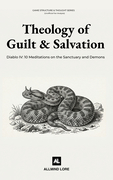
Theology of Guilt and Salvation: Diablo IV: 10 Meditations on the Sanctuary and Demons
The book version is now available. Read for free with Kindle Unlimited.
Thank you very much for reading to the end. To help support the activities of this archive, a warm donation of a cup of coffee would be highly appreciated.