Code.10: Neo
Amor Fati and the Synthesis of Machine and Human
In the abyss of a perfectly controlled virtual reality, how did the “doubt” of a single individual transform into an Anomaly that shook the entire system?
It is the liberation from the chains in Plato’s “Allegory of the Cave,” the spiritual independence from the Demiurge in Gnosticism, the enlightenment of “Form is emptiness” in Buddhism, and the attainment of Nietzsche’s existential “Übermensch.” The trajectory of the protagonist, Neo, is an epic odyssey of the soul that transcends blind faith and the limits of logic against the “illusion of choice” forced by the system, ultimately leading to absolute “enlightenment” and “Amor Fati.”
In the final chapter of this book, we will unravel the full picture of how a single human being, trapped in the cage of Causality, dismantled that cage by his own Free will and guided a new Synthesis between machines and humanity.
The Cipher Carved in Identifiers and the Overcoming of Nihilism
In the virtual reality space, a name is not merely a designation, but a part of the source code that defines its programmatic raison d’être. The two names held by the protagonist represent the duality torn within him, while also serving as an elaborate cipher of theological metaphors.
In the surface world, working for a software company called “MetaCortex” (meaning transcendence and the cerebral cortex), his name is “Thomas Anderson.” Anderson derives from the Greek word “Andros” (man), which literally translates to “Son of Man.” This is the title Christ used to refer to himself, implying that he is the messiah who will bring salvation to the world. Furthermore, “Thomas” is linked to “Doubting Thomas,” who refused to believe in Christ’s resurrection until he saw it with his own eyes and touched the scars. He was burdened with the persona of an ignorant cog, constantly harboring doubts about the reality he faced.
On the other hand, the alias “Neo,” which he uses in the nocturnal world as a hacker, means “new” in Greek and is simultaneously an anagram of “The One.” This naming clearly indicates that he is the “chosen one” destined to rewrite the internal structure of The Matrix and liberate humanity.
Before his awakening, he hid illegal data in the hollowed-out chapter “On Nihilism” inside Jean Baudrillard’s Simulacra and Simulation. This embodies the fact that the world of The Matrix itself is an empty shell devoid of meaning, and that he was on the verge of falling into Nihilism, believing that no truth exists. However, by having the deception of the Simulation shattered by Morpheus and being dragged out into The desert of the real, he begins his quest for truth to overcome the void.
While the savior in orthodox Christianity aims for salvation from “original sin,” Neo, who shatters the prison of the Demiurge (The Architect) in the cosmology of Gnosticism, takes on the role of a “Gnostic Christ” whose purpose is liberation from “ignorance.”
Temet Nosce — Form is emptiness and Self-Transcendence
In order for Neo to bend the rules of virtual reality and manifest supernatural powers, he needed to destroy the framework of Western logical thinking and embody the concept of “emptiness,” the core of Eastern philosophy.
The telekinetic boy he meets in the waiting room of The Oracle tells Neo, “There is no spoon. It is not the spoon that bends, it is only yourself.” This is the truth of “Form is emptiness” in Buddhism, and the teaching of Yogacara, which posits that all phenomena are merely illusions (consciousness) created by one’s own mind. The spoon within The Matrix is mere code and possesses no physical mass. When he discards the dualistic illusion that separates the Self (subject) and the world (object), and reaches the absolute truth that “the mind defines reality,” Neo becomes free from the Causality of the system.
At the same time, what guides his quest for the Self is the Latin oracle hung in The Oracle’s kitchen: “Temet Nosce.” The Oracle did not tell him “You are The One,” but rather left whether he was The One up to his own internal conviction. This is because the power of The One is not a program bestowed from the outside, but something generated in the process of looking into one’s inner Self, recognizing one’s limits, and voluntarily transcending them. Neo manifests the source code as “The One” by confronting his own doubts and voluntarily accepting the truth.
Resurrection through Love and the Surpassing of Logic
In the climax of the first film, Neo completely reconstructs the story of Christ’s passion and resurrection within a cyberpunk context.
After a mortal combat with Agent Smith, Neo falls to a fatal bullet in “Room 303.” The number “303” is a symbol hinting at the Trinity and the resurrection of Christ, and it coincides with the prophecy “Mark III No. 11” (Mark 3:11) engraved on the Nebuchadnezzar.
What resuscitated the in-cardiac-arrest Neo was Trinity’s kiss and her confession, “The man I love would be The One.” The absolute Anomaly energy of “love,” which could never be calculated in The Architect’s equations, shocks Neo’s Residual Self Image and revives him from the brink of death. Having achieved resurrection, Neo is entirely unbound by the physical laws of The Matrix and destroys Smith, the system’s most powerful weapon, from the inside.
Furthermore, Neo, as the sixth The One, rejects the deterministic rail of “the salvation of all humanity (Universal love)” designed by The Architect, and chooses the life of an individual, Trinity (Exclusive love). This ultimate illogical choice is the very explosion of “Free will” that shatters the Determinism of the machines, and he steps off the mythological rails into an unknown territory where no one has ever walked.
The Golden Light and Amor Fati
In the final chapter of the trilogy, Neo’s philosophical journey transcends the dualism of virtual and real, reaching a purely spiritual realm. After a mortal combat in the real world with Bane, who had been taken over by Smith, Neo’s eyes are burned, and he completely loses his physical sight. However, in exchange for losing his physical eyes, he awakens a true vision that perceives the machines and all things surrounding the system as a “golden light (The Source).”
Just as the prisoner who escaped from Plato’s cave has his eyes burned by the sunlight, Neo looks directly at the absolute Idea through his blindness. He comes to perceive the machines not as hateful enemies, but as beings of light emanating from the same origin. The acquisition of this spiritual vision becomes the bridge to the Synthesis that puts an end to the war between humans and machines.
Then comes the final battle with Agent Smith, the greatest Shadow to Neo. Smith, who has lost his purpose and become the incarnation of destructive Nihilism and Ressentiment, seeking to reduce everything to nothingness, screams at Neo, “Why do you fight?!” Neo’s answer to this was the pinnacle of the philosophy of the Übermensch advocated by Friedrich Nietzsche.
“Because I choose to.”
He accepted the struggle not because he was forced by the system, nor out of a sense of duty, but as a pure “choice of his own.” And in the final phase of the battle, seeing Smith blurt out the words of The Oracle, Neo completely understands the final destination of his own fate. The only way to defeat Smith was not through subjugation by force, but by accepting his own assimilation into Smith, balancing the equation to zero while connected to The Source (self-sacrifice).
Neo ceases all resistance and practices “Amor Fati,” deeply loving and affirming the inevitable fate of his own death. A golden cross of light overflows from his chest, and the error code known as Smith is purged from the entirety of The Matrix. It was neither hatred nor power, but the complete self-acceptance (enlightenment) toward inevitability that liberated the system from its infinite loop.
Conclusion: The Synthesis of Machine and Human
The cold, pure logic of The Architect (Thesis) and the rebellion of human Free will (Antithesis) finally reached a higher-dimensional integration (Synthesis) through the leap of love that was Neo’s self-sacrifice.
He set out as “Thomas (the doubter),” awakened to the truth of “Form is emptiness” in the desert of nothingness, and became a Christ-like The One through his resurrection by Trinity’s love. In the end, by losing his physical eyes, he came to see the golden light that is the origin of the universe, and by loving his own fate, he enveloped Smith’s nothingness. He is the very being who integrated the logic of machines and the intuition of humanity, pioneering the dawn of a new dimension beyond conflict.
The green Digital Rain, pouring down inorganically, continues to flow without end. However, the fervor of the “choice” left behind by a single cybernetic The One named Neo has eternally rewritten the regularity of the system, continuing to vividly prove in the darkness of virtual reality that human consciousness harbors a sublime spirituality that can never be fully reduced to code.
“There is no spoon.”
The laws of this world are always waiting, promising true freedom only in the moment of “choice” that rewrites the code of your own perception.
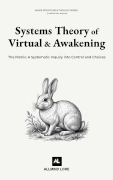
The Matrix: Systems Theory of Virtual and Awakening
The book version is now available. Read for free with Kindle Unlimited.
Thank you very much for reading to the end. To help support the activities of this archive, a warm donation of a cup of coffee would be highly appreciated.