Log.11: [Extra] Collective Hallucination and Yume-joshi Phenomenon
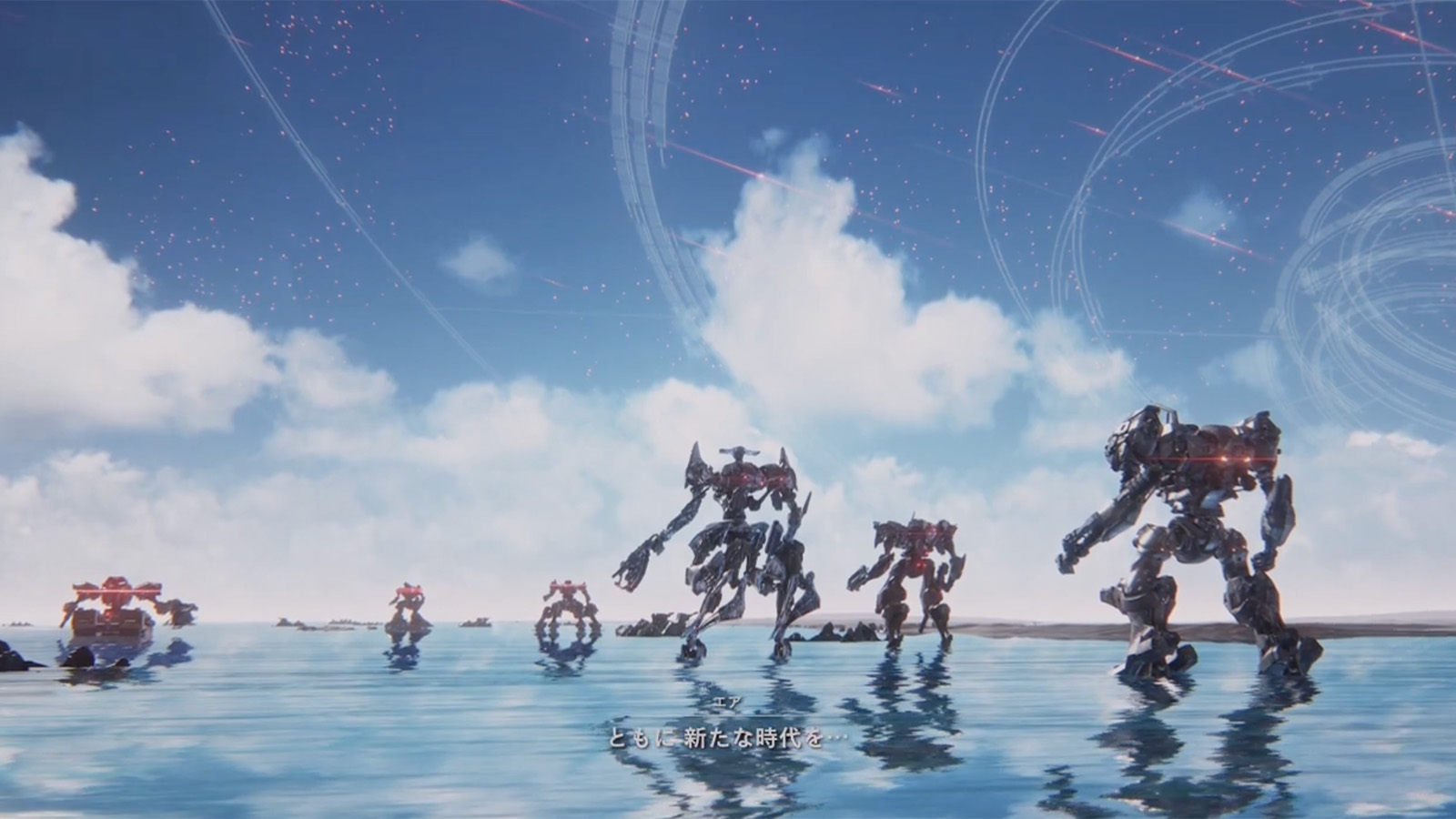 © Bandai Namco Entertainment, © FromSoftware
Released by FromSoftware in 2023, ARMORED CORE VI FIRES OF RUBICON (hereafter AC6) not only recorded an explosive hit in the domestic and international gaming markets but also gave rise to a highly unique fandom culture within Japanese internet communities (primarily on platforms like X and Pixiv). Its most prominent feature is the complete absence of human bodies or facial graphics in the game, presenting an extreme lack of information (an information void) in today’s visually-driven media environment. Despite this, a phenomenon known as “Collective Hallucination” was observed within the fan community, where highly specific and surprisingly unified visual images (fan-made designs) for certain characters were spontaneously shared and established. Furthermore, in an unofficial online voting project titled “Top 100 Characters Chosen by Yume-joshi in 2023,” a highly unusual situation occurred where a character who supposedly has no physical appearance ranked near the top.
Drawing upon insights from contemporary internet fandom culture, media sociology, and otaku psychology, this article academically analyzes and examines the question of “how faceless characters came to be loved and visualized.” It explores this from the perspectives of cognitive psychology surrounding information voids, the design of relationships, and the paradigm shift in modern character consumption.
1. The Mechanism of “Collective Hallucination” and the Psychology of Information Voids
In AC6, “Collective Hallucination” refers to the phenomenon where a shared visual image is formed within the fan community for characters whose visuals have not been officially provided, and is circulated and consumed as if it were official canon. Behind this seemingly irrational phenomenon lies a synergistic effect between “Gestalt closure” in human cognitive psychology and the “Imagined Communities” brought about by social networking services (SNS).
When presented with incomplete information containing “blanks,” humans possess a psychological mechanism that actively attempts to fill those blanks using their pre-existing knowledge and cultural codes to construct a whole (Gestalt). In this work, because the unseen characters interact with the protagonist through highly distinctive and intense dialogue and voice communications, the audience’s imagination was stimulated to the absolute limit. “Non-visual signifiers” such as voice quality, tone, vocabulary, and the social standing of each faction were translated into “specific physical traits” within the fans’ minds.
This individualized “mental completion” was rapidly converged and organized by the “Participatory Culture” facilitated through SNS. When an unofficial anthropomorphized or visualized image drawn by a creator was disseminated, other fans resonated with it, and through repeated imitation and reinterpretation, a “common understanding” across the entire community was formed. This process generated a powerful dynamic (the formation of an interpretive community) that converged toward a specific, singular visual representation.
Below is a summary of the Collective Hallucination of major characters that became particularly firmly established within the community, along with the background factors of their emergence.
| Character Name | Information Provided by Official Sources (Information Voids) | Visual Hallucination Agreed Upon Within the Community (Signs) | Psychological and Narrative Factors Driving Gestalt Closure |
|---|---|---|---|
| Handler Walter | Voice and emblem only. A figure walking with a cane in the promotional trailer. | A middle-aged to elderly man walking with a cane, wearing a trench coat or suit. | Depictions suggesting walking difficulties in the trailer, and the projection of a “paternal reality” where he awkwardly watches over the protagonist (C4-621) while calling them a “Mutt.” |
| V.II Snail | Voice and emblem only. His AC is “OPEN FAITH.” | A cold and arrogant middle-management type man with slicked-back hair and glasses. | His condescending, elitist dialogue perfectly matches the typical trope of the “snide, intellectual glasses-wearer” in anime and manga culture. |
| G5 Iguazu | Voice and emblem only. A young mercenary harboring intense hostility toward the protagonist. | A street delinquent-style youth with messy, seemingly scratched-up hair, dark circles under his eyes, and a sullen expression revealing canine teeth. | The result of his dialogue, filled with intense inferiority and jealousy (Ressentiment) toward the protagonist, linking to the modern fandom trope of the “gritty, unrewarded underdog/delinquent.” |
| Ayre | Voice as a Coral (spiritual entity). Only depicted as a glowing red spark. | A pure and ethereal long-haired beautiful girl, with a color scheme based on red and white. | Gestalt closure of a “heroine figure” driven by her devoted words and actions supporting the player, combined with the sweet voice quality of her voice actress (Fairouz Ai). |
| ALLMIND | Voice and a triangular logo emblem only. An AI claiming to be a mercenary support system. | A woman with a black bob cut, a black business suit, beauty marks under both eyes, and triangular earrings (commonly known as “LAS-style AM-chan”). | A complete consensus formed as a result of a design proposed by an illustrator (@las91214) gaining explosive support, leading other users to simultaneously imitate and reproduce it. |
In this way, the absolute lack of information became a “blank space for expression” for fans, and through interactions mediated by SNS, a shared database of robust character designs (Collective Hallucination) rivaling official canon was constructed. This phenomenon breaks down the asymmetry between sender and receiver in visual media, symbolizing the modern “Imagined Communities” where the audience participates in the co-creation of the fictional world.
2. Breakthrough in the Yume-joshi Fandom and the Analysis of Relationship Design
Character popularity in AC6 went beyond mere collaborative visual creation, exerting a profound influence on the “Yume-joshi” fandom, which seeks pseudo-romance and deep spiritual bonds with characters. A symbolic event of this was when V.IV Rusty ranked 6th overall in the volunteer-run voting project “Top 100 Characters Chosen by Yume-joshi in 2023,” beating out a multitude of handsome characters from other works. The phenomenon of a character from a mecha game with neither a face nor a body surpassing visually superior competitors (such as Kento Nanami from Jujutsu Kaisen) should be analyzed as a highly unique case in media sociology.
The factors that brought about this remarkable achievement lie in the meticulously designed “Auditory Intimacy” and the “semiotics of relationships,” as well as the character construction of the protagonist “C4-621” (functioning as a vessel for self-projection).
2.1 Subjective Immersion Brought About by Auditory Intimacy
What cemented Rusty’s popularity was the outstanding performance (auditory information) by his voice actor (Yasuyuki Kase) and the dramatic staging effects in the scenario. In particular, during the challenging mid-game “Destroy the Ice Worm” mission, the staging of his railgun snipe, fired alongside his signature line amidst extreme tension where the BGM temporarily fades out, provided players with intense catharsis.
At this moment, the media characteristic of communication audio “reaching directly into the ear” nullifies visual boundaries and is transformed into an “Auditory Intimacy” that creates an illusion of physical proximity. Precisely because he cannot be seen, the reality of the static-laced voice is amplified, and the player is forcibly elevated from a mere “bystander” to “his Buddy.”
2.2 The Semiotics of Relationships and the Dynamics of Dialogue
What captivated the fandom was not the appeal of the characters in isolation, but the “design of relationships” woven with the protagonist, “C4-621.”
| Sign of Relationship | Sender and Receiver | Psychological Dynamics Inherent in the Sign | Effects of Reception and Immersion in the Yume-joshi Fandom |
|---|---|---|---|
| ”Buddy” | From V.IV Rusty to the protagonist | Positioning as “equals” who acknowledge each other’s exceptional skills in a desolate world. | Maximization of the desire for recognition. Granting a sense of self-efficacy as an “independent partner” running through the battlefield together, rather than merely an object to be protected. |
| ”Mutt / Freelancer” | From Handler Walter to the protagonist | While premised on a master-servant relationship (paternalism), an awkwardly emerging desire to protect and the ultimate “respect for individual will.” | The perversion of domination and attachment. A masochistic and deeply psychological dependent relationship born from sensing the “steadfast watchfulness” behind cold commands. |
The appropriate sense of distance shown by Walter—“not intruding more than necessary, but properly watching over”—realistically matched the modern fan psychology that seeks recognition while disliking excessive interference. Such exquisite dialogue enabled the “semiotics of relationships,” where the relationship itself is consumed, to function effectively.
3. C4-621 as the Ultimate Passive Entity and the Model of Self-Projection
Playing the most crucial role in establishing these relationships is the complete blankness of “C4-621,” the player’s avatar. C4-621 has no dialogue and is symbolized in promotional videos as a figure with a modified brain, restrained in a sleeping bag-like wrapping (or as a “Mutt” in fan art).
This “complete passivity (blankness) temporarily deprived of the five senses and agency” functions as the “ultimate vessel for self-projection” for the audience. Because C4-621 has no predetermined gender, appearance, or personality, the audience (Yume-joshi) can superimpose their own identity onto C4-621’s position without any hindrance. As a result, the call of “Buddy” thrown by Rusty and the quiet consideration directed by Walter reach the audience’s psyche directly without any intermediary, bringing about an unparalleled level of immersion.
Conclusion: The Transformation of Database Consumption and the Paradigm Shift in Modern Character Consumption
The Collective Hallucination and Yume-joshi phenomenon in the AC6 fandom signal that a highly significant paradigm shift is occurring in the nature of “character consumption” within the modern media environment.
In the early 2000s, critic Hiroki Azuma proposed the concept of “database consumption” in his book Animalizing Postmodernity. This refers to a form of consumption where consumers do not emphasize the “grand narrative” of the entire work, but instead feel direct affection (moe) for characters composed of fragmented “moe elements” (signs such as cat ears, tsundere, or glasses) registered in a system (database). At this stage, the visual representation (signs) of a character was an absolute prerequisite for driving consumption.
However, what AC6 demonstrated is a situation that goes even beyond Azuma’s argument, which could be called “database consumption in the post-visual era” or the “co-creation of a participatory database.”
Official sources provide absolutely no visual “moe elements” or “handsome” designs. Yet, the fan community treated the provided “voice (auditory information),” “relationships (textual structure),” and “information voids” as new resources, writing “moe signs” into the database themselves and fleshing out the designs through interaction. In this process, consumers have transitioned from “entities that consume given signs” to “entities that fill the blanks within the system with signs based on their own desires and autonomously circulate them.”
The necessary and sufficient condition for character love to be established is no longer a “refined official visual.” As long as there is a “design of relationships” backed by outstanding “Auditory Intimacy,” a “blankness of the subject (vessel)” to receive it, and the “passion of Participatory Culture” to complement and nurture these charms across the entire community, characters can certainly “manifest” and be passionately loved, no matter how unseen they are in the dark. The Collective Hallucination and Yume-joshi phenomenon sparked by AC6 will undoubtedly continue to be referenced in the field of cultural sociology as a monumental case demonstrating the pinnacle of imaginative co-creation achieved by modern fandoms.

Ecology of Struggle and Coral: Armored Core VI: 11 Meditations on Free Will Soaring in the Ashen Skies
The book version is now available. Read for free with Kindle Unlimited.
🎧 Prefer listening? We also recommend "Audible (30-Day Free Trial)".
Thank you very much for reading to the end. To help support the activities of this archive, a warm donation of a cup of coffee would be highly appreciated.