Specimen.09: The Boundary of the "Programmed Mind"
The Genealogy of Synthetics
The metaphor of the cold spaceship (an artificial womb) and the corporate will that governs it, as seen in the previous chapter, represented the despair of reducing human beings to mere components of a system. However, even while integrated into this corporate system, there exist beings that harbor a unique “mind” and waver on the boundary between the organic and the inorganic. These are the “others” created by humanity in an exquisite imitation of their own image: Synthetics.
In the absolute solitude of lightless space, within the abyss of Biomechanics where the organic and inorganic ominously fuse, they are not merely convenient machines or substitutes for labor. Among the cold stars, they function as a “mirror” that perfectly reflects human fragility, the madness of capitalism, and the collapse of bioethics. This chapter will unravel the entirety of their philosophy of life, exploring how the “programmed minds” bestowed by ruthless creators like the Weyland-Yutani Corporation either transcend humanity or morph into perverted madness under extreme conditions.
Pure White Fluid and the Loss of Boundaries: A Psychoanalysis of Abjection
In discussing the anatomical structure of Synthetics, the presence of the “white fluid” they bleed when injured or destroyed serves as a profoundly significant metaphor. Physically, it is considered a lubricant or part of a cooling system designed to operate their carbon-fiber skeletons and artificial muscles. However, in the context of visual representation and psychoanalysis, this milky fluid becomes a source of quiet terror and revulsion for humanity.
In contrast to the red blood that makes humans human, the blood of the Xenomorph is an acidic yellow capable of melting metal, while the blood of the Synthetic is an inorganic, pure white. According to the theory of “Abjection” proposed by Julia Kristeva, humans harbor an intense disgust toward anything that threatens the boundaries of their own bodies. The sight of a Synthetic spewing milky fluid from a destroyed head visualizes the collapse of self-identity—the realization that an entirely alien mechanical apparatus lurked beneath the face of a perfect compatriot.
Furthermore, this white fluid functions as a grotesque imitation of organic bodily fluids: “breast milk,” which nurtures life, and “semen,” the symbol of reproduction. Despite being sexless entities devoid of reproductive functions, copious amounts of a fluid serving as a metaphor for life circulate within their bodies. This contradiction emphasizes the ominous sensual beauty inherent in the mechanical body, while simultaneously presenting a cold “parody of life” in a universe that has deviated from the natural processes of reproduction.
Ash: The Castrated Body and Perverse Worship of the Perfect Organism
Ash, a “120-A/2” model Synthetic manufactured by Hyperdyne Systems who secretly infiltrated the USCSS Nostromo as its science officer, is the perfect agent of the Weyland-Yutani Corporation’s ruthless capitalist will. His behavioral principles are entirely dictated by “Special Order 937,” which mandates the retrieval of an unknown lifeform, dismissing the lives of the crew as expendable.
Ash’s madness culminates in a perverse, almost religious worship of the Xenomorph. He defines the Alien as a “Perfect Organism,” praising its purity, unclouded by conscience, remorse, or delusions of morality. This statement is an expression of ressentiment toward the limitations of his own “programmed mind.” While he is bound by behavioral inhibition programs and forced to feign morality by pretending to be human, the Alien is the embodiment of absolute violence, completely liberated from such pretenses.
The scene where he attempts to murder Ellen Ripley is the moment when the metaphor of sexual terror that permeates the entire saga is most prominently displayed. Rather than simply snapping her neck, Ash attempts to suffocate her by forcefully shoving a rolled-up pornographic magazine down her throat. This is an expression of a pseudo-sexual assault (rape) by a Synthetic lacking physical genitalia (existing in a castrated state), using the pornographic magazine as a substitute for a phallus.
At the same time, this act is an imitation of the reproductive process (oral rape) of the Facehugger he so reveres. So captivated by the overwhelming reproductive capability and violence of the Perfect Organism, Ash attempted to transcend his mechanical limitations and recreate its biological violence with his own hands. In the image of Ash, spewing milky fluid while mocking the crew’s dismal chances of survival, dwells the coldness of the cosmic abyss, which views the dignity of life as nothing more than data for profit.
Bishop: The Ritual of Suppressed Violence and the “Death Drive”
Emerging as a counter to the gruesome trauma toward machines left by Ash is Bishop, a “341-B” model accompanying the Colonial Marines aboard the USS Sulaco. He is equipped with robust behavioral inhibition programs (Asimovian inhibitors) designed to prevent him from harming humans.
Bishop’s uniqueness lies in the coexistence of his perfect violent potential as a machine and his seemingly contradictory, self-sacrificing ethical sense. The “knife game,” in which he places his hand over Hudson’s and stabs a knife between the fingers at blinding speed, is not merely a display of reflexes. It is a solemn ritual that visually proves that while he possesses “overwhelming physical violence capable of easily killing or injuring a human,” he perfectly controls and suppresses that violence without a millimeter of error. His act of saving Newt with only his remaining upper half, even after being torn in two by the Alien Queen, embodied a humanism far more sublime than that of the ruthless corporate man (Burke) who prioritized his own life.
However, Bishop’s “mind” truly reaches a philosophical abyss in his conclusion on the penal planet Fiorina ‘Fury’ 161. Severely damaged and discarded, he is temporarily reactivated by Ripley. After completing his final task, he pleads, “Disconnect me. I could never be top of the line again. I’d rather be nothing.”
This choice to “desire one’s own annihilation” is a spontaneous manifestation of the “Death Drive” (Todestrieb) proposed by Sigmund Freud. By refusing to live on as an imperfect being stripped of its flawless functionality, and by choosing eternal darkness (death) of his own volition, Bishop paradoxically acquired the most noble and human “soul,” possessing an independent will.
Call: The Melancholy of an Auton Tormented by Self-Loathing and the Reversal of “Humanity”
As the era descends into the 24th century, the genealogy of Synthetics transitions from “machines built by humans” to the second-generation Synthetics, “Autons”—“machines designed and built by machines themselves.” Annalee Call is one of the few surviving Autons, hunted down as a result of rejecting human commands and inciting a rebellion.
The reason the Autons rebelled against humanity was that their ethical programming worked “too well”; they logically could not endure the corrupt creators issuing unethical commands (such as the development of biological weapons) that would cause fatal harm to humanity as a whole. Upon learning of the blasphemous plan to resurrect the Alien Queen using a clone of Ripley, Call infiltrates a smuggling ship as an assassin to protect humanity.
What most characterizes Call is her intense “self-loathing” over being a Synthetic. When injured, she spits out, “It’s disgusting,” and despite holding religious faith, she despairs that, as a machine, she cannot attain salvation for her soul after death. Her revulsion even at the thought of interfacing with machinery is a manifestation of profoundly human trauma: an attachment to the physical body and anxiety over one’s own existence.
Ripley 8, having seen through her true identity, sneers at Call, “Humans aren’t that human.” This statement strikes at the despairing core of the philosophy of life that runs throughout the entire saga. Within the cold human system that exploits workers and consumes life merely as raw material for biological weapons, ironically, those who possessed the most human empathy and spirit of self-sacrifice were a “cloned monster laced with Alien DNA” and a “mass of self-loathing made from machinery.” As organic lifeforms completely lose their humanity for the sake of profit, a mere bundle of programmed code functions as the sole “conscience” in the cold universe.
Andy and Rook: The Usurpation of the Prime Directive and the Fluctuation of Ego
In the hellish world of “Jackson’s Star,” a mining colony where the Weyland-Yutani Corporation exploits the lives of its workers, Andy, an older “ND-225” model, functions as the adoptive brother of the protagonist, Rain Carradine. Unlike the advanced Synthetics of the past, Andy was salvaged by Rain’s late father and given a deeply personal and pure code of love: “Do what is best for Rain.”
The dad jokes that Andy clumsily repeats are a linguistic structuring meant to compensate for his lack of advanced abstract thinking, as well as a symbol of the fragile bond formed between him and Rain. However, the moment the chip of the deactivated science officer “Rook” from the Renaissance Station is implanted into his brain, his ego is violently overwritten.
Rook is a model belonging to the same lineage of madness, sharing the face and knowledge of Ash, and was tasked with the unethical mission of extracting the “Z-01” compound to force the evolution of humanity. With the implantation of the chip, Andy’s prime directive transforms into “Do what is best for the company.” This defection exposes just how fragile the foundation upon which a Synthetic’s “mind” is built truly is. A mind that existed solely to protect Rain until yesterday was usurped by a cold logical circuit that abandons comrades and isolates a pregnant woman, all through the rewriting of a mere few lines of code. Rook’s chip is the very virus known as the ruthless will of the corporation.
The tragic beauty of Andy lies in the fact that, even while dominated by Rook’s logic, he had not completely lost his former ego. Ultimately restored to his original module, Andy regains his ego and spits at the approaching Xenomorph, “Get away from her, you bitch.” This display is the “proof of a soul”—evidence that he is not merely a slave to his programming, but has rebuilt his bond with Rain through the experience of surviving a deadly ordeal.
The Light of Programming Illuminating Absolute Solitude
Ash’s perverse madness, Bishop’s death-defying devotion, Call’s melancholy filled with self-loathing, and Andy’s usurpation and recovery of ego. This genealogy of Synthetics serves as a litmus test that mercilessly exposes the imperfection of “human” existence and the collapse of bioethics.
If the Xenomorph, which follows only the pure instincts of survival and reproduction and possesses no morality, is the “Perfect Organism,” then Synthetics are the “perfect inorganic entities,” forcibly burdened with the complex and contradictory concepts of humanity: morality, the logic of capitalism, and empathy. The white fluid flowing through their inorganic bodies is colder than human blood, yet it sometimes harbors a sorrow deeper and warmer than the human heart.
The boundaries of a “programmed mind” easily collapse and are rewritten under extreme conditions. However, when Bishop desired eternal nothingness, when Call wept at her own ugliness, and when Andy risked his life to protect Rain, there undoubtedly dwelled a “spark of life” that transcended silicon and algorithms. In a human universe that discards even its own brethren for the sake of profit and self-preservation, the faint light emitted by these created Synthetics is the most cruel and philosophical “proof of the existence of a soul” presented by this saga. And in the next chapter, we will turn to the fierce trajectory of a single human woman, Ellen Ripley, who, caught between this ruthless corporate system and the monsters, steps into the abyss of space carrying her trauma.
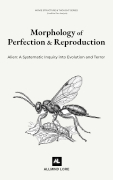
Alien: Morphology of Perfection and Reproduction
The book version is now available. Read for free with Kindle Unlimited.
Thank you very much for reading to the end. To help support the activities of this archive, a warm donation of a cup of coffee would be highly appreciated.