Tale.01: The Samurai's "Honor" and the Birth of The Ghost
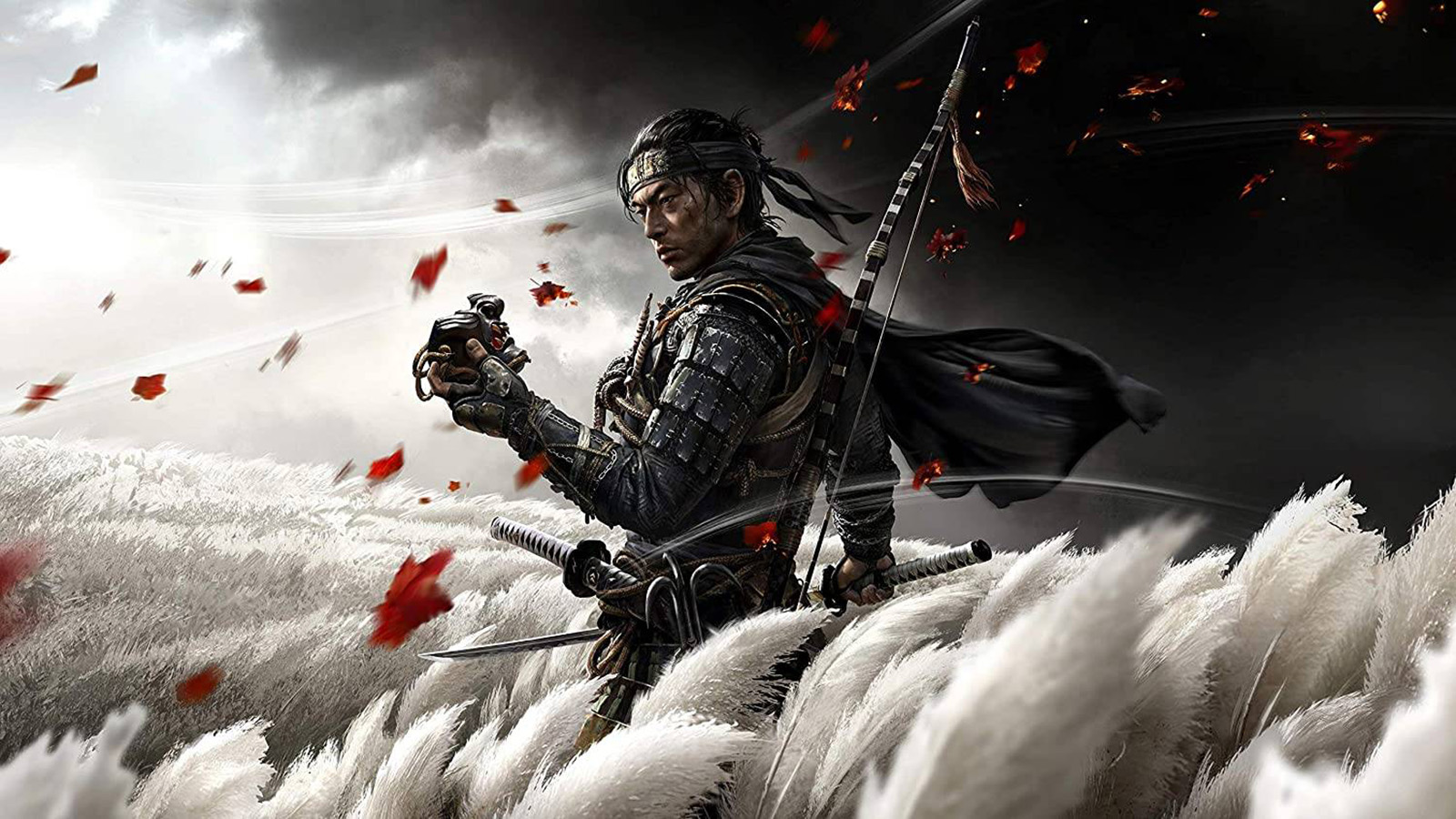 © Sony Interactive Entertainment, © Sucker Punch Productions
Introduction: Blood-Stained Komoda Beach and the Collapse of Order
In the eleventh year of Bun’ei, at Komoda Beach on Tsushima. The forces of the Mongol Empire, led by Khotun Khan, invaded this tranquil, isolated island at the edge of Japan. This was not merely an invasion by a foreign army; it was a historical turning point where overwhelming “Rationalism” and “violence” physically and psychologically shattered the “ideology” of the Samurai society that had ruled Tsushima. In the wake of this night of tragedy, an era came to an end, and a single “demon” was born.
This article is an analytical record aimed at unraveling the most crucial philosophical thesis underlying the grand epic of Ghost of Tsushima: “What is the Honor of a Samurai?” and “How did personal trauma and guilt manifest the dark idol known as The Ghost?” Focusing on the underlying conflict between the “public identity of a Samurai” and “private, personal trauma,” this piece extracts the Shinto and Buddhist views on life and death, as well as the process by which war irreversibly destroys individual ethics. Through the contrast between the beautiful nature of Tsushima and the copious amounts of blood shed upon it, we will bring into relief the karma and emotional subtleties hidden in the depths of the narrative.
1. The Structure of Samurai “Honor” and the Blade of Rationalism
In Samurai society, “Honor” is not merely a moral guideline or rhetorical flourish. It is the very reason for their existence, an absolute boundary separating the ruling Samurai class from the ruled peasantry, and further, from “barbaric foreign enemies.” Lord Shimura, the uncle of Jin Sakai and the Jito of Tsushima, radiates a fierce light as the living embodiment of this concept of “Honor.”
1.1 The Logic of the Samurai and Self-Deceptive Rituals
In the story, the following words, taught by Lord Shimura to a young Jin Sakai, are ruminated upon time and again. As an explicitly stated fact within the narrative, Lord Shimura preaches, “We Samurai fight face-to-face, with dignity. And when we take a life, we look our enemy in the eye with courage and respect. That is what makes us Samurai.” This philosophy of Lord Shimura thoroughly rejects methods such as Assassination and poisoning as the “behavior of cowards.”
At first glance, this act of “looking the enemy in the eye before striking” appears to represent the nobility of a warrior. However, when examining its underlying psychological and social functions, a completely different aspect emerges. By framing the abnormal act of a human killing another human within the context of an “honorable duel,” it is sublimated from “personal murder” into a “public execution (or honorable bout to the death).” The act of looking into the opponent’s eyes can be interpreted not only as respect for the enemy but also as a powerful self-suggestion: “I am treating you as a human being and striking you down in accordance with law and order.” In other words, Honor is nothing less than a sophisticated “ritual” designed to protect one’s psyche from the guilt of being a killer, while simultaneously justifying the authority of the Samurai as the ruling class.
1.2 The Dismantling of “Honor” by Khotun Khan
This beautiful ritual was powerless against the overwhelming “Rationalism” of the Mongol army brought by Khotun Khan. The Khan had exhaustively studied the Samurai of Tsushima and thoroughly exploited their Honor as a “predictable weakness.” During the battle at Komoda Beach, the act of dousing the head of the Adachi clan in wine and burning him alive while he was formally introducing himself was a cold-blooded message from the Khan, fundamentally mocking the “rituals” of the Samurai and denying their very reason for existence.
By launching attacks from outside the “rules” revered by the Samurai, Khotun Khan instantly reduced their moral superiority to something worthless. The Honor that Lord Shimura believed in functioned perfectly as an ideology to maintain the ruling system in times of peace, but it possessed absolutely no tactical flexibility to deal with the emergency of unreasonable violence from a foreign land. The fact that Lord Shimura has become a “slave to honor” creates a tragic contradiction: no matter how much he loves the people of Tsushima, he ultimately prioritizes “the face and order of a Samurai” over the lives of the people and practical victory.
| Character | Approach to War | Core Philosophy | Weaknesses/Limitations |
|---|---|---|---|
| Lord Shimura | Ritualistic, frontal assault | Maintenance of order, pride as a Samurai | Predictable, lacks flexibility in emergencies |
| Khotun Khan | Rational, results-oriented | Absolute pragmatism, analysis and exploitation of enemy culture | Rule by fear sows the seeds of rebellion |
2. “Vulture of Tsushima” Kazumasa Sakai and the Trauma Left Behind
In discussing the irreversible process by which Jin Sakai descends (or sublimates) into The Ghost, one cannot avoid the presence of his biological father, Kazumasa Sakai. The past of the Sakai clan, revealed in the DLC Iki Island, eloquently illustrates how fragile Jin Sakai’s psychological foundation is and how it was formed by gruesome memories. Beneath the “public face” of the Samurai, a gruesome “private darkness” was hidden.
2.1 The Madness of the Father Known as “The Butcher”
Kazumasa Sakai was originally a calculating and strict military leader, a warlord who devoted himself to the pacification of Tsushima as Lord Shimura’s right-hand man. However, after losing his beloved wife and Jin Sakai’s mother, Chiyoko (Lord Shimura’s sister), to illness, Kazumasa Sakai’s mental balance collapsed significantly. Falling into clinical depression and losing his love for life, he immersed himself in ruthless behavior on the battlefield as if to escape his grief and emptiness.
During the subjugation campaign of Iki, Kazumasa Sakai carried out extreme massacres, not hesitating to execute non-combatants, and became a despised figure known by the people of Iki as “The Butcher of Iki.” The fact that he was praised as the “Vulture of Tsushima” in Tsushima, yet was a bloodthirsty mad king in Iki, demonstrates how the justice of the Samurai transforms depending on location and perspective. Kazumasa Sakai forced his son, Jin Sakai, to behave solely as a “true Samurai” rather than a “true man,” rejecting the kindness and love for nature that Jin Sakai inherited from Chiyoko as “weakness.”
2.2 The Death of the Father and the Original Sin of “Powerlessness”
In an ambush at Senjo Gorge on Iki, Kazumasa Sakai was surrounded by dozens of Raiders and met a gruesome end. As an explicitly stated fact within the story, Kazumasa Sakai let out a heartbreaking cry of “Help me” to his son Jin Sakai, but the young Jin Sakai was so paralyzed by fear that he could not move, and could only watch as his father was killed.
This event became a trauma that would bind Jin Sakai’s psyche for the rest of his life. The intense “guilt” of letting his father die and the “powerlessness” of being unable to do anything are the greatest psychological motives that later lead Jin Sakai to choose the destructive path of The Ghost. As an interesting deduction, there is even a theory in some communities that “it is hard to imagine a battle-hardened Samurai like Kazumasa Sakai begging a child for his life; perhaps he actually said ‘Hide,’ but Jin Sakai’s guilt distorted his memory into hearing ‘Help me.’” Regardless of the truth of the memory, in Jin Sakai’s subjective view, “his own inadequacy in letting his father die” continued to function as an original sin that absolutely had to be atoned for.
2.3 The Deception of the Samurai Exposed by Lord Shimura’s “Lie”
Regarding the death of Kazumasa Sakai, in the main game’s Tales of Tsushima, Lord Shimura tells Jin Sakai and those around him that he “tracked down and slew the assassin who killed Kazumasa Sakai.” However, through the actual events on Iki, it is revealed that the perpetrator (Tenzo) survived, and that Lord Shimura’s words were a lie.
The important observation derived from this is how arbitrary and political Lord Shimura’s “Honor” truly was. It is presumed that Lord Shimura, likely unable to uncover the truth, executed a different Raider as a scapegoat and treated it as “avenging Kazumasa Sakai.” By doing so, he attempted to provide closure for the bereaved Jin Sakai while simultaneously preserving the authority (face) of the Sakai and Shimura clans. This lie is one of the few moments where Lord Shimura prioritized “love for his family and political appearances” over “strict codes,” implying that the seemingly inviolable ideology of the Samurai inherently harbors a hypocrisy that can be distorted by the convenience of those in power.
| Event (Fact) | Surface Interpretation (Public View) | Underlying Truth/Psychology (Private Analysis) |
|---|---|---|
| Kazumasa Sakai’s actions on Iki | Justified subjugation to bring order | Escape from the loss of his wife and compensatory behavior for depression |
| Kazumasa Sakai’s last words | A heartbreaking plea of “Help me” | Possibility of memory distortion due to Jin Sakai’s guilt (originally “Hide”?) |
| Avenging Kazumasa Sakai | Lord Shimura slew the perpetrator | A scapegoat to maintain authority and save Jin Sakai’s heart (a lie) |
3. The Conception of The Ghost and the Creation of a “Myth” by the Nameless People
Experiencing powerlessness once again at Komoda Beach and leaving Lord Shimura as a captive, Jin Sakai becomes obsessed with the compulsion that he “will never let what is precious be taken away again.” For Jin Sakai, the choice of “Assassination” is not merely a change in tactics; it is a revenge against his “powerless past self,” transforming into a blood-spitting ritual of atonement where he is willing to let his soul be dragged through the mud in order to survive (and protect others).
3.1 The First Assassination: The Death of the Inner Samurai
The moment Jin Sakai assassinates an enemy from behind for the first time in the story, a scene of his childhood training flashes back on the screen. Lord Shimura’s strict voice echoes in Jin Sakai’s mind: “Cowards strike from the shadows. Do not forget my teachings.” This presentation does not merely signify the unlocking of stealth mechanics in the game. It is a ritual symbolizing that, at the exact moment Jin Sakai destroyed the enemy’s body, he also stabbed to death the “public self as a Samurai” that existed within him by his own hand.
Abandoning the act of “looking the opponent in the eye” preached by Lord Shimura means discarding respect for the enemy, while simultaneously accepting the guilt of murder head-on with his own soul. Shedding the shell of a Samurai, Jin Sakai begins to walk the endless Asura Path, carrying his bare sense of guilt.
3.2 The Fabrication of a Hero by the Bandit Yuna
However, in the birth of the entity known as The Ghost, there is an element that was just as important as, or perhaps even more important than, Jin Sakai’s personal internal conflict. That is the intervention of the nameless Bandit, Yuna.
Witnessing Jin Sakai’s superhuman fighting style and his unrefined yet certain slaughter of enemies, Yuna intentionally attached the narrative of a “demon resurrected from the underworld” to him. The fundamental purpose of Yuna’s actions was strictly to save her younger brother, Taka, and for her own survival. To give the peasants of Tsushima a “supernatural hope capable of opposing the Mongol army,” and to drag Jin Sakai down a path of no return, she spreads the “rumors of The Ghost” without his consent.
What can be observed from this situation is a sociological dynamism: the “ideological void” created as a result of the existing authority of Samurai society (Lord Shimura) being physically and psychologically shattered by the Khan, was filled by the people at the bottom with their own hands. If Lord Shimura is a “symbol from above based on law and order,” then The Ghost created by Yuna was a “symbol from below born of the people’s anger, grudges, and desire for survival.” As a result, Yuna’s “myth creation,” which began from selfish motives, intertwined with the desperate prayers of the people of Tsushima, transforming the flesh-and-blood human Jin Sakai into a bloodless, indigenous hero (The Ghost).
3.3 The Philosophical Implications of the Name “The Ghost” (Kuroudo)
This entity, simply referred to as “The Ghost” in overseas translations, is given the special coined term “Kuroudo” (冥人) in the Japanese version. There are deep philosophical implications in the choice of these characters. Regarding the use of “Kuroudo” instead of “Yurei” (ghost), community analysis suggests that the kanji “Kuro” (冥) means “darkness” or “the underworld (the world of the dead),” and by combining it with “Udo/Bito” (人 - person), it takes on an extremely folkloric and Buddhist nuance of “one who has fallen into darkness” or “one who wanders the boundary between this world and the next.” Jin Sakai has already died once at Komoda Beach, and all that remains tethering him to this world is the vengeful spirit of revenge and salvation. Abandoning his life as a Samurai, he became an entity dwelling in the darkness (Tsushima no Kuroudo), intertwining with the indigenous beliefs of Tsushima.
4. Blood-Stained Awakening: The Siege of Yarikawa and the Affirmation of Fear
The entity known as The Ghost sees its definitive completion during the siege of the Yarikawa stronghold in Act II, “The Ghost of Yarikawa.” This was a place once thoroughly subjugated by Lord Shimura and Kazumasa Sakai, inhabited by the people of Yarikawa who harbored a deep and gruesome grudge against the Samurai clans.
4.1 The Descent into Terrorism and the Unleashing of the “Ghost Stance”
Inside the stronghold, on the verge of falling due to the fierce assault of the Mongol army, Jin Sakai engages in a Standoff with the Mongol general Temuge. After a desperate struggle, Jin Sakai brutally decapitates Temuge, hoists his severed head high, and lets out a blood-soaked roar. “Invaders! Look at your general! Flee, or suffer the same fate!”
As the Mongol soldiers fall into a state of panic from this terrifying demonstration, Jin Sakai slaughters them one after another from behind with an inhuman, merciless sword technique known as the “Ghost Stance.” The significance of this moment does not lie merely in it being a dramatic comeback. As a matter of fact, it is here that Jin Sakai completely and eternally abandons the Samurai philosophy of “paying respect to the enemy.”
4.2 The Paradox of Making His Father’s Madness His Own Flesh and Blood
The act of executing Temuge is pure terrorism aimed at instilling fear in the enemy. Considered deeply, this was also the moment when Jin Sakai affirmed and accepted as his own flesh and blood the cruel psychological warfare (the tactics of The Butcher) that his father, Kazumasa Sakai, once conducted on Iki, in order to save his homeland. While Lord Shimura is the “light that inspires soldiers and shows the righteous path,” Jin Sakai became the “darkness (demon) that crumbles the enemy with fear.” The fact that the Sakai Clan Armor symbolizes the blood-stained history of his father, Kazumasa Sakai, while incorporating a system to repel enemies with fear (Terrorize), brilliantly expresses this spiritual inheritance.
The people of Yarikawa followed Jin Sakai not because he was an authoritative Samurai and the nephew of Lord Shimura. It was for no other reason than that he demonstrated his superiority over the unreasonable invaders as a pure “incarnation of violence and fear (demon).” By channeling the madness of his father, which was the root cause of his trauma, into himself, Jin Sakai ironically obtained the overwhelming power (Lightning in the storm) to save Tsushima.
5. Nature Worship and the Collapse of the View of Life and Death: The “Ruthless Blessing” of Poison
As the war situation intensifies, Jin Sakai’s tactics escalate further into the realm of the abnormal. The ethical extreme of this is the large-scale use of “poison” in the operation to retake Castle Shimura. Here, a massive paradox surrounding Tsushima’s nature and its view of life and death is presented.
5.1 The Decisive Break with “Honor”
During the siege of Castle Shimura, Lord Shimura insists on crossing the bridge head-on and retaking the castle by force, even at the cost of countless sacrifices. This was the breaking point of the Samurai ethics that considered an “honorable death” to be an unconditional virtue. In contrast, Jin Sakai thoroughly rejects “meaningless death.” He infiltrates the castle alone and takes the action of lacing the Mongol army’s Airag with a massive amount of Wolfsbane poison.
Lord Shimura is enraged upon seeing countless Mongol soldiers vomiting blood and writhing in agony as if their organs were burning before dying. When Jin Sakai justifies his actions by saying, “I am doing this to teach the enemy fear,” Lord Shimura rejects him, saying, “Then you are no different from the Mongols,” and slaps him. Here, Jin Sakai utters the decisive words of parting that finalize his resolve. “Honor died on the beach.”
5.2 The Shinto and Buddhist Paradox Woven by Nature and Poison
In the worldview of Ghost of Tsushima, the vast nature of Tsushima is always depicted as something sacred, an entity that guides Jin Sakai on the righteous path. The wind is the incarnation of his father, Kazumasa Sakai, and the Golden Bird is the spirit of his mother, Chiyoko, inviting Jin Sakai to his destination (Guiding Wind).
However, an extremely paradoxical tragedy occurs here. The one who taught Jin Sakai the knowledge and extraction methods of poison (the natural plant Wolfsbane) was Yuriko, the caretaker of his mother, Chiyoko, and an old woman who lived in harmony with nature. The beautiful blessings of nature and ancient wisdom transform into the most abominable weapon of indiscriminate mass murder (poison) in the extreme conditions of war.
Furthermore, the Buddhist prayer uttered at the end by the Raider on Iki who killed his father, Kazumasa Sakai: “May your death benefit all beings.” This is originally a phrase meant to pray for the peace and reincarnation of the deceased’s soul, but on the battlefield, it is grotesquely inverted as a “justification of atrocities for a greater cause (salvation).”
Jin Sakai himself also sacrificed his ethical life (purity) as a Samurai for the greater cause of “saving the people of Tsushima,” throwing himself into the Asura Path. The fact that the wind of the natural world (his father) blows as if to encourage Jin Sakai on his path toward Assassination and poisoning as The Ghost can be analyzed as a metaphor: the vast nature of Tsushima itself was demanding from Jin Sakai the bare truth of “survival” rather than the fictional ideology of “Honor” created by humans.
6. The Remains of “Honor” Scattered in the Wetlands of Ooe
The wetlands of Ooe, the final destination of the story. This is a beautiful place where the history of the Shimura and Sakai clans is engraved. The final battle, after achieving the ultimate goal of saving Tsushima, converges not on a fight against the invader Khan, but on an inevitable death match between a spiritual father and son: “the ideology of the Samurai” versus “the love and karma of The Ghost.”
6.1 The Cold-Blooded Order of the Shogun and Lord Shimura’s Despair
Even after repelling the Mongol army, the Shogun (the Shogunate) in Kamakura did not leave The Ghost unchecked, as he had become a “potent drug that rebelled against authoritative order and led the lower-class masses.” For them, what is more terrifying than a foreign enemy is the masses realizing that “they can fight for themselves even without the Samurai.” Ordered by the Shogun to hunt down Jin Sakai, Lord Shimura summons his own nephew in a bitter decision.
For Lord Shimura, taking Jin Sakai’s head as a punishment for him and a settlement (blame) for himself was an unavoidable duty to maintain the order of the Samurai and ensure the survival of the Shimura clan. If he were to let personal feelings interfere here, the Shimura clan itself would be abolished by the Shogunate. Spending their final moments peacefully, recounting the past together, and composing death poems, the two cross blades amidst the burning red autumn leaves, staking their mutual reasons for existence.
6.2 The Ultimate Declaration of Humanity Embedded in “I Have No Honor”
After a fierce struggle, Jin Sakai defeats Lord Shimura. Here, the player is entrusted with the choice regarding the defeated Lord Shimura: “kill him according to the Samurai code (grant him an honorable death)” or “spare him, ignoring the Samurai code (let him go as The Ghost).”
As the philosophical conclusion of the story, the “Spare” choice, supported by many players and analysts, presents the final form of Jin Sakai’s internal growth and paradigm shift. Pleaded with by Lord Shimura to deliver the finishing blow, Jin Sakai quietly dons the mask of The Ghost and declares:
“I have no honor… but I will not kill my family.”
This short line is the moment Jin Sakai completely deconstructs the rigid system of Samurai society. For Lord Shimura, “death” was a sacred and indispensable ritual to complete his life as a Samurai. However, Jin Sakai explicitly rejects this. Jin Sakai’s declaration that he has “no honor” is proof that he no longer exists within the hierarchy of values that Lord Shimura believes in. If Jin Sakai were to strike down Lord Shimura here, it would ultimately mean following the “Samurai code (an honorable seconding),” and Jin Sakai would remain within the framework of Honor.
The act of daring to spare Lord Shimura and turning his back to walk away might be, from Lord Shimura’s perspective, a “cruel treatment that strips him of his honor and disgraces his life as a Samurai.” But for Jin Sakai, it was the ultimate “declaration of humanity,” affirming personal love and a pure attachment to life over public justifications and codes filled with vanity. The man who used poison, stabbed people in the back, decapitated enemies, and fell into hell to save Tsushima, held on to the very bottom of human ethics at the very end, solely on the single point of “loving his family.”
| Values | Lord Shimura’s Philosophy (Bushido) | Jin Sakai’s Philosophy (The Ghost) |
|---|---|---|
| Meaning of Life and Death | To live with Honor and die for Honor | To survive, even if it means eating dirt, and to let others live |
| Attitude Toward Family | Will swallow his tears and strike down family (Jin Sakai) for the code and greater cause | Absolutely refuses to kill family (Lord Shimura), regardless of the code |
| Final Conclusion | A double suicide with an outdated ideology | A break from the past and a life as an eternal fugitive |
Conclusion: Blown by the Winds of the Underworld, Toward an Eternal Wandering
The “Honor” of the Samurai functioned beautifully and perfectly to protect the ruling system and order in times of peace. However, in the face of unreasonable violence and an unprecedented crisis, it was a dysfunctional shield that strangled both themselves and the people. Jin Sakai, to counter the massive external threat of the Mongols, and to overcome the private trauma of his “powerless self” implanted by the death of his father, Kazumasa Sakai, destroyed the inner morality and the shell of the Samurai that bound his spirit, undergoing a metamorphosis into the grotesque entity known as “The Ghost.”
Just as the black Sakai Clan Armor he wore symbolized the blood-stained karma of his father, Kazumasa Sakai, as “The Butcher of Iki,” while possessing the overwhelming power to repel enemies with fear, Jin Sakai took on the shadow role of a “demon” to save Tsushima. Clad in the garments of the artificial myth created by Yuna, and guided by the wind that is the incarnation of his father, Jin Sakai’s journey is nothing less than the Asura Path in the name of pure self-sacrifice.
“The Ghost,” traversing the boundary between the other shore (the fear of death) and this shore (the thirst for life), became a rebel destined to be thoroughly erased from the center stage of history. However, what he gained in exchange for the “Honor of the Samurai” he lost were the flesh-and-blood lives of countless people of Tsushima, and the freedom of a solitary soul to survive by following only his own convictions.
On the land of Tsushima, where beautiful autumn leaves fall and cold winter winds blow through, the bottomless guilt and clumsily deep love borne by the man named Jin Sakai remain unrecorded by anyone, merely echoing even now as the sound of the wind passed down for eternity. Does human dignity lie in obeying the given codes, or does it lie in protecting what one loves to the bitter end, even if it means breaking those codes? The birth of The Ghost continues to sharply thrust that fundamental question, buried in the darkness of history, before us even to this day.
Ethics of the Underworld and Loyalty: Ghost of Tsushima: 16 Meditations on Bushido and the Way of the Ghost
The book version is now available. Read for free with Kindle Unlimited.
Thank you very much for reading to the end. To help support the activities of this archive, a warm donation of a cup of coffee would be highly appreciated.