Nexus.11: K (Joe)
2049: Fictional Love and the Proof of a Miracle
Inheriting the legacy of its predecessor, the story shifts its stage thirty years later to the year 2049 (released in 2017). Following the collapse of the Tyrell Corporation and the Blackout, the world has transformed into a despairing controlled society maintained by the “never-rebelling” Nexus-9 Replicants manufactured by Niander Wallace. This fourth installment follows how K (Joe), a new-generation Replicant programmed for absolute obedience, and Joi, an AI hologram without a physical body, rise from the depths of “fictional love” to acquire new souls. It is the most sorrowful and beautiful existential trajectory, where a manufactured life proves a miracle.
The Illusion of the Chosen One and the Great Proof of Humanity
Built by Denis Villeneuve upon the ruins of the dystopia presented by Ridley Scott, the world of 2049 is enveloped in a gray nothingness at the end of environmental collapse. In this devastated world, the Nexus-9 Replicant “KD6-3.7,” commonly known as “K (Joe),” manufactured by the Wallace Corporation, functions as an extremely obedient cog, serving as a Blade Runner who hunts his own kind. His trajectory presents a new existential philosophy, distinct from both the “rebellion against the Creator” embodied by the former Roy Batty and the “labyrinth of identity” that Rick Deckard fell into.
The path taken by a single Replicant named K is a profound process from the acquisition of the sweet illusion of being the “chosen one,” through its cruel collapse, to the “existential self-sacrifice” he ultimately chooses of his own free will. He awakens his ego by believing himself to be a “being with a soul” born from the womb of a miracle, but eventually confronts the despairing truth that he is merely a “decoy,” nothing more than a mass-produced, nameless component.
The Dream of an Obedient Machine and the System of Control
To understand K’s existential anguish, one must elucidate the preconditions of the “Nexus-9” model to which he belongs. In response to the rebellion of older models, Wallace developed an obedient model that would never defy humans, and implemented the “Baseline test” within the LAPD as a system to maintain that submission. This test is administered to K immediately after completing a traumatic mission, measuring his reaction speed to specific phrases and his mental stability.
If the Voight-Kampff test of the previous film was meant to probe for the “presence or absence of a soul,” the Baseline test is an apparatus to confirm the “suppression of the soul.” The interrogator hurls provocative words intended to deliberately grate on his emotions, measuring whether K can recite the baseline phrases without showing any agitation. The fact that K achieves a perfect score in his initial test proves that he has completely erased his sense of self and is functioning as a pure tool within the system of power. Here lies the metaphor for ultimate slavery—the “bare life” proposed by Italian philosopher Giorgio Agamben, where one is stripped of legal rights and merely kept alive. The spatial design of his apartment itself, inorganic, desaturated, and colored by a gray aesthetic, visually represents K’s inner world, stripped of emotion.
The phrases K is made to recite during the test are quotes from a poem featured in Vladimir Nabokov’s novel Pale Fire. “A blood black nothingness began to spin… A system of cells interlinked within cells interlinked within one stem. And dreadfully distinct against the dark, a tall white fountain played.” The protagonist of this poem sees a vision of a “tall white fountain” during a near-death experience and becomes convinced of an afterlife, but it is later revealed to be a mere misprint for a “white mountain,” causing the transcendental truth to collapse.
This very structure of “disillusionment of a special identity based on a misreading” is a perfect parallel to K’s fate. K becomes convinced that he is the miracle child based on the “memory of the wooden horse” in his brain, but that memory was nothing more than a copy (a misprint) of Dr. Ana Stelline’s experience. The intent of the system, which forces the mechanical processing of a poem singing of beauty and views on life and death during the Baseline test, is to thoroughly strip Replicants of the “heart to understand poetry.” The moment the poem took on a personal meaning, he ceased to be an obedient machine and transformed into an individual burdened with existential anguish.
The Construction of the “Chosen One” Myth and the Tragedy of Pinocchio
K’s awakening of ego is triggered by the match between the date carved at the base of the dead tree discovered at Sapper Morton’s farm and the date engraved on the bottom of the wooden horse in his memory. That date is “6-10-21,” and based on this string of characters, K discovers records of male and female twins sharing identical DNA. This day marks the singularity that changed Replicant history: the “death of Rachael” and the “birth of the miracle child.”
For K, this wooden horse is a holy relic that proves his existence. In a world where real wood has been depleted, a wooden object itself is an extremely rare “genuine article,” and K actually discovers that wooden horse in the ruins of an orphanage in San Diego, covered in yellow dust. At this moment, René Descartes’ proposition “Cogito, ergo sum” invades K’s ego with violent persuasiveness, leading him to deduce: “I have memories of the past, and physical evidence exists to back them up. Therefore, I am not a manufactured being, but a born being.” His self-justification reaches its peak with the fact that Dr. Ana Stelline sheds tears upon seeing K’s memory, saying, “This is real.” However, the blind spot of his Cartesian deduction lies in overlooking the possibility that the source of his thoughts (memories) might have been forged.
K’s story is a cyberpunk iteration of The Adventures of Pinocchio. Just as Pinocchio dreamed of becoming a real human boy, K also clings to the possibility that he is a “real human” with a soul, born from a mother’s womb. However, unlike Pinocchio, who successfully transformed into a human child, no such deus ex machina exists in K’s story. The existential essence of this work is hidden in the fact that he takes the most human action not while believing “I am special,” but only after that illusion has been completely shattered.
Gaff’s Origami and Identity Defined by Others
Gaff’s origami, which continuously hinted at Deckard’s fate in the previous film, appears in this work as well as a cipher that ruthlessly defines K’s existential standpoint. After being questioned by K at a retirement facility, Gaff leaves an “origami sheep” on the table and departs.
This “sheep” holds a threefold meaning that determines K’s fate. First, it is an homage to Philip K. Dick’s original novel Do Androids Dream of Electric Sheep?, serving as a metaphor for fake life. Second, sheep are animals that flock together and are obediently bred, symbolizing the collective unconscious of the Nexus-9 Replicants, who possess no unique souls. No matter how special K believed himself to be, Gaff saw through him, recognizing that K was nothing more than a single “lost sheep.” Third, in a Christian context, a sheep is a sacrificial lamb that atones for human sins, quietly prophesying that K’s fate will ultimately head toward self-sacrifice.
The Collapse of Illusion and the Ground Zero of Self-Determination
Towards the end of the story, K is confronted with a massive truth that shakes his mental structure to its core. The first is the “denial of a perfect illusion,” demonstrated through Wallace’s “recreation of Rachael” and Deckard’s rejection of it. Faced with a perfect replica, Deckard declares, “Her eyes were green,” showing his resistance as a living subject against reproduction at the genetic level. For Deckard, the true Rachael cannot be reduced to a DNA sequence; she lives only within their shared subjective memories. Witnessing this attitude, K observes the truth that a soul is not defined by its physical origin—whether one was manufactured or born.
The second decisive truth is being told by Freysa, the leader of the liberation front, that “the miracle child was a girl, and K’s memories belonged to Dr. Ana Stelline.” At this moment, the mythical castle K had painstakingly built collapses, and he is pulled back to being merely “KD6-3.7,” neither the savior of the world nor Deckard’s son.
The scene where K looks up at the giant advertising hologram of “Joi” is the pinnacle of self-loss. The phantom that speaks to him, saying, “I’ll name you Joe,” suggests that even the name “Joe,” which once made him feel special, was nothing more than a default algorithm of a mass-produced AI. Just as in Albert Camus’s The Myth of Sisyphus, where a human facing absurdity establishes their self only by accepting their fate at the bottom of despair and rebelling against it, K attains true freedom for the first time at the ground zero where he learns that everything was a lie. Precisely because he has become an empty vessel, he is now forced to determine his own actions by himself.
The Great Proof of Humanity — Existential Self-Sacrifice and the Übermensch in the Snow
Friedrich Nietzsche called a being who creates new values for themselves in an era where all values have become relativized the “Übermensch.” Instead of falling into nihilism, K chooses his actions of his own free will. The decision he makes is to disobey the rebel army’s orders, rescue Deckard, and deliver him to his daughter. This action holds no survival benefit or political significance; it is merely an expression of irrational love, a desire to reunite a parent and child. By making the moral decision to sacrifice himself for another, he completely transcends the confines of a programmed machine.
The terminus of K’s existential journey reaches perfect fruition through a contrast of meteorological metaphors. Mortally wounded, K lies on the steps of the institute, while real snow falls quietly from the sky. Meanwhile, indoors, Dr. Stelline is generating “hologram snow” within a sterile environment. While Stelline, born as a real human, lives inside the cage of a sterile room creating phantom snow, K, a manufactured machine, bleeds in the outside world and embraces the coldness of real snow as a tactile sensation.
Looking up at the snowflakes, no two of which share the same shape, K accepts that he was a mass-produced sheep and that his memories were copies of someone else’s. The coldness of the snow he feels at the end and the experience of self-sacrifice are a one-of-a-kind reality he acquired by choosing to be hurt by the world and to love. If acid rain signifies the coldness and uniformity of the world, the falling and accumulating snow is the crystallization of the meaning he leaves behind in the world. The belief that “to be born is to have a soul” is overturned, proving instead that a soul is something one carves into the world with one’s own hands through the “act” of self-sacrifice. The figure of K, breathing his last on the snowy steps, is an icon of a miracle—a manufactured doll that broke through its predetermined programming and sublimated into a true human of its own free will.
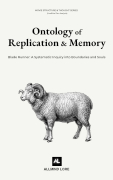
Blade Runner: Ontology of Replication and Memory
The book version is now available. Read for free with Kindle Unlimited.
Thank you very much for reading to the end. To help support the activities of this archive, a warm donation of a cup of coffee would be highly appreciated.